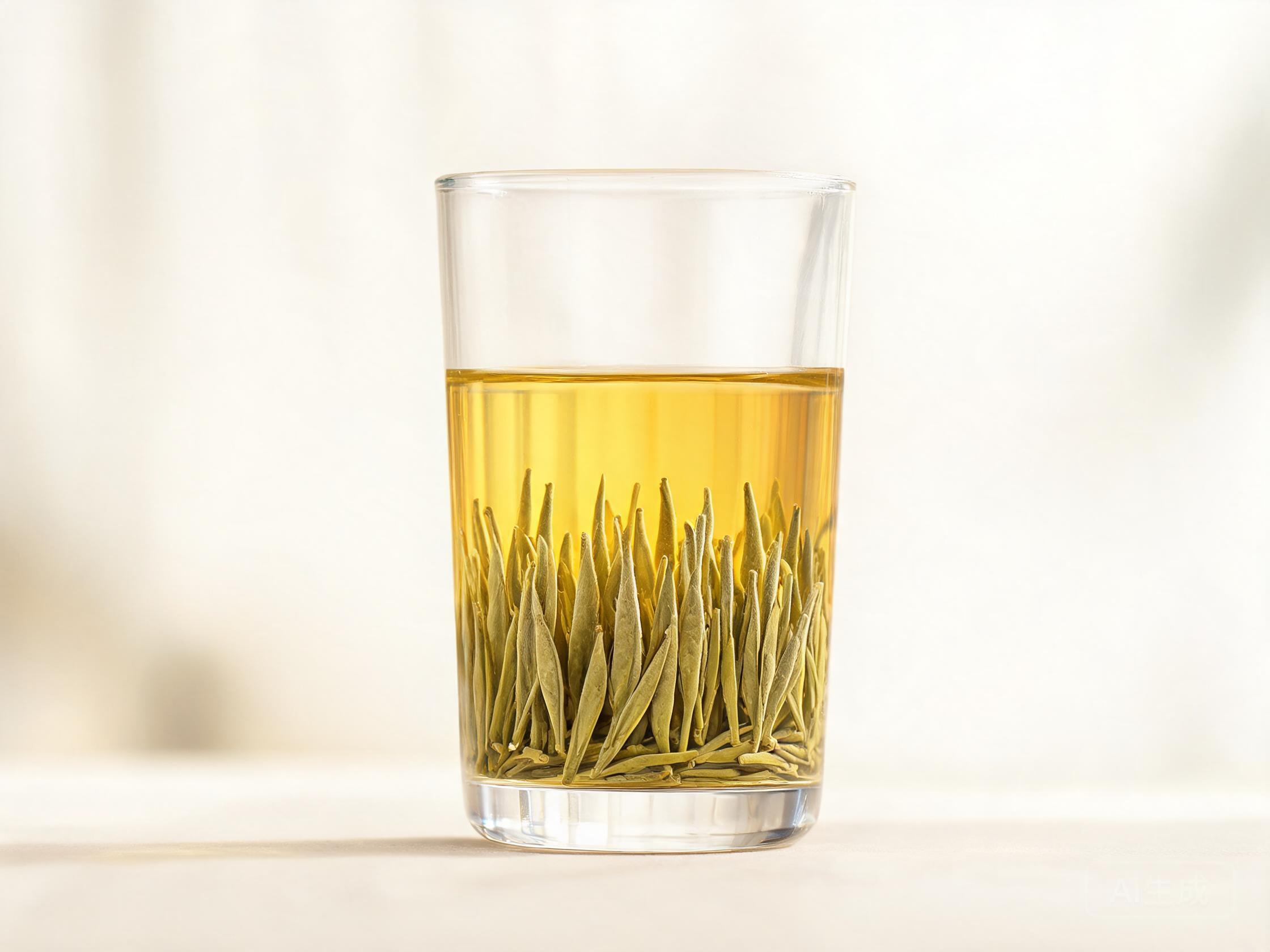
The cultivars that define the cup
Yellow tea runs on local landraces rather than on purpose bred cultivars, and that is unusual.
Junshan Yinzhen(君山银针)draws on the bushes growing on Junshan island itself.
Mengding Huangya(蒙顶黄芽)uses the Mengding mountain landrace, and the two are unrelated.
No breeder has produced a yellow specific clone at any real scale.
The reason is commercial, since the category is too small to fund a breeding programme.
A new cultivar needs years of trials and a market large enough to pay for them.
Yellow tea has neither, so the cup is shaped by place and by old bushes instead.
That makes it different from green or red tea, where named clones dominate the shelves.
It also makes the category harder to standardise, which is part of why it nearly vanished.
Every county works with its own population of plants and its own climate.
What those bushes share is a tolerance for the yellowing step rather than a pedigree.
What replaces a cultivar name here is a mountain, and a mountain is harder to fake.
That leaves 4 counties, four populations, and no common cultivar between them.
Why breeders select
Where breeders do work in this category, the targets are modest and practical.
Bud size matters most, since the top grades are sold on a single bud.
A bush that throws a fat, even bud can be picked faster and graded higher.
Aroma comes last, since the yellowing step changes whatever aroma the bush started with.
Disease resistance matters next, because a damp mountain grows fungus as well as tea.
Yield matters to the grower and very little to the drinker.
How the leaf responds to heat and moisture during men huang(闷黄)is the interesting part.
Some bushes yellow evenly and some go patchy, and nobody can fix that in the pile.
A cultivar that yellows predictably is worth more here than a high yielding one.
The same mountain can carry several populations that behave nothing alike.
Knowing which one you are drinking tells you more than the category name does.
Grade tells you the leaf, and the bush tells you what that leaf can do.
Read both together and the price starts making sense.
Clones versus landraces
Almost all yellow tea is grown from landrace populations rather than from clones.
A clone would give uniformity, and every plant in the field would behave the same way.
That suits a factory, since one picking schedule and one process setting cover the whole lot.
A landrace gives variation, and the field ripens over weeks rather than days.
Pickers go through several times, and each pass produces a slightly different leaf.
Many drinkers find those cups more interesting, and the variation is genuine rather than romantic.
Different plants contribute different aromatics to the same pile.
Neither is automatically better, and the trade is consistency against diversity.
Clones trade genetic diversity for uniformity, and the cost only shows up later.
A single disease that suits one genotype can take out an entire planted field.
Landrace leaf costs more to pick, and that is one reason this tea is expensive.
A mixed population loses part of itself and carries on.
For a category this fragile, that resilience is worth more than tidiness.
Reading the label
A cultivar name on a yellow tea is rare, and its absence is not a warning sign here.
The place name is doing the work that a cultivar name does elsewhere.
‘Junshan’ tells you the island, the bush and the climate in one word.
That is more informative than most cultivar labels, and it is easier to check.
What it does not tell you is the grade, the year or whether the yellowing was watched properly.
Those are separate facts, and a label offering one of them is ahead of most of the market.
A label with no origin at all usually means blended leaf from several counties.
That is acceptable for daily drinking and useless if you are learning the category.
Look for the county first and the grade second, and treat both as more useful than a cultivar.
Buy 25 g from 2 counties and brew them at 85 °C with 3 g in 150 ml.
The difference between Hunan and Sichuan yellow tea is larger than any cultivar difference.
Once you can taste the counties apart, the labels stop being decorative.
Two counties, one session, and the category becomes legible.