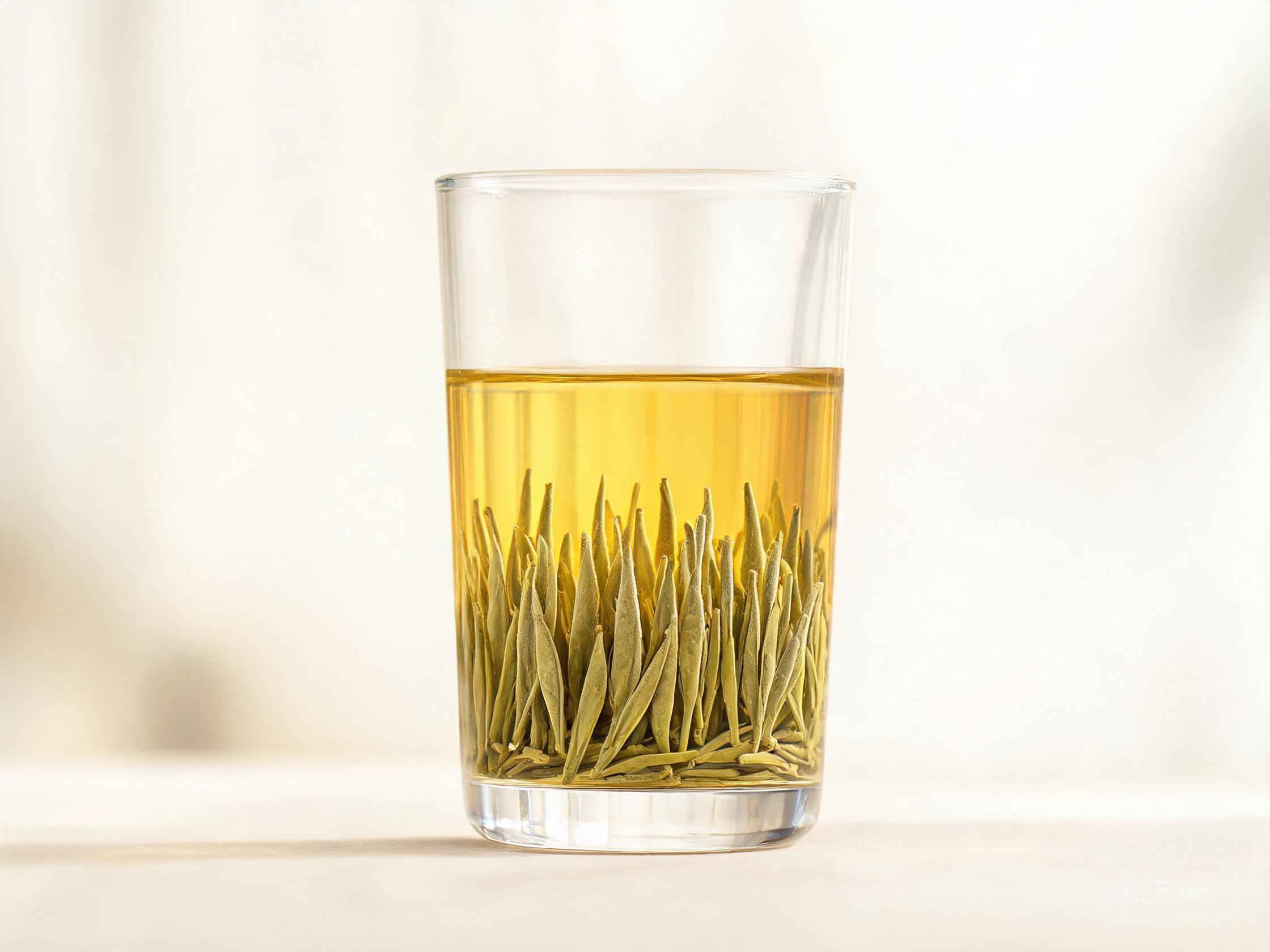
Teas named by place
Yellow tea is the smallest Chinese category, and it is also the most tightly tied to place.
Junshan Yinzhen(君山银针)comes from one lake island at Yueyang in Hunan.
The island is small, the fog is constant, and the bud grade is picked from local bushes.
Mengding Huangya(蒙顶黄芽)comes from Mengding mountain in Sichuan, where the rain is famous.
Huoshan Huangya(霍山黄芽)comes from Anhui and uses a bud with a leaf rather than a bare bud.
Beigang Maojian(北港毛尖)and Weishan Maojian(沩山毛尖)round out the Hunan cluster.
Each is tied to a single place and a local bush, and none of them has travelled well.
The bush matters more here than anywhere else, since the yellowing step is gentle.
There is no roast to hide behind and no heavy oxidation to even things out.
What you taste is the leaf and the hand that watched it turn yellow.
That is why production stayed local while demand went national.
Five names, four counties, and a category that never scaled.
Why region matters
Place matters in yellow tea because the margin for error is so narrow.
Men huan(闷黄)turns on heat and moisture, and both come out of the local climate.
A damp mountain wraps its own leaf in its own air, and that is hard to copy elsewhere.
Sichuan’s rain and Hunan’s lake fog produce different teas from the same method.
Soil and altitude set the bush, and the bush sets what the yellowing can achieve.
A region earns its name by producing a version that other places get compared with.
Junshan did that for the bud style, and Mengding did it for the tribute history.
Regional fame outlasts marketing, and it also outlasts the production itself.
Mengding’s name is worth more today than most of the tea sold underneath it.
That is the risk with a famous small region, since the name takes on a life of its own.
What the label buys you is a style, and it does not buy you the grower.
Buy the region for the style, and buy from a seller who names the farm for the quality.
A county name here is really a claim about climate, and it is worth reading as one.
When regions cross borders
Yellow tea travelling is a newer problem, because demand only recently passed local supply.
The bushes have been planted outside their counties, and the method has gone with them.
A yellow tea made in Guizhou from a Hunan cultivar can be perfectly drinkable.
It is not Junshan Yinzhen, and it should not be sold under that name.
The technique is portable and the fog is not, and the fog does more of the work.
This matters more here than in a roasted category, since nothing can correct a fault later.
For honest buying, the region should name where the leaf grew and where it was made.
A style inherited from a place is a different claim from an origin, and only one is checkable.
Ask which county, and a province level answer usually means the leaf was blended.
Sellers with real provenance volunteer it, because it is the valuable part.
Sellers without it describe the dynasty instead, and that is the tell.
Ask the origin rather than the adjective, every single time.
How to choose among them
Choosing among four counties is easier than it looks, because the profiles are far apart.
Junshan is the delicate bud, Mengding the sweet one, and Huoshan the closest to green tea.
The Hunan Maojian grades are the roasted end, and they taste of grain and light char.
Pick the profile you already like, then explore within that county.
The regional label is the largest single predictor of what will be in the cup.
Buy 25 g of two counties rather than 100 g of one, since the comparison is worth more than the quantity.
Brew both at 85 °C with 3 g in 150 ml, and taste them back to back rather than hours apart.
Yellow teas are subtle, and memory for a subtle cup lasts about 3 minutes.
Once a region suits you, named slopes and named makers are the next level down.
That is also where the price climbs fastest and the cup changes least.
Keep a note of which county you liked, since the names repeat across dozens of producers.
Treat famous slopes as a refinement, and keep buying by taste rather than by reputation.
Four counties, one session, and the rest is repetition.