Two questions people actually ask
Can white tea be aged?
Yes, and it is one of the few categories prized both young and old.
Young white tea tastes floral, hay sweet and slightly green.
After 3 to 5 years the same leaf turns darker, rounder and more like a light red tea.
The change comes from slow oxidation and from moisture still held in the leaf.
It needs a sealed but breathable wrapper and a stable environment to go well.
Is white tea just dried leaves?
Largely yes, and that simplicity is the entire point of the category.
The leaf is withered until pliable and then dried, with no rolling and no hard heating.
Nothing is added and nothing is removed, which is why origin shows through so clearly.
That minimal handling is also why white tea is so sensitive to how it is stored.
A method that does almost nothing leaves nowhere at all for a mistake to hide.
Buying and storing
White tea varies by origin and grade, and the spread is wider than its mild reputation suggests.
So the useful question is how to tell a good one rather than which one wins.
Smell the dry leaf, and match what you find to the profile the type is known for.
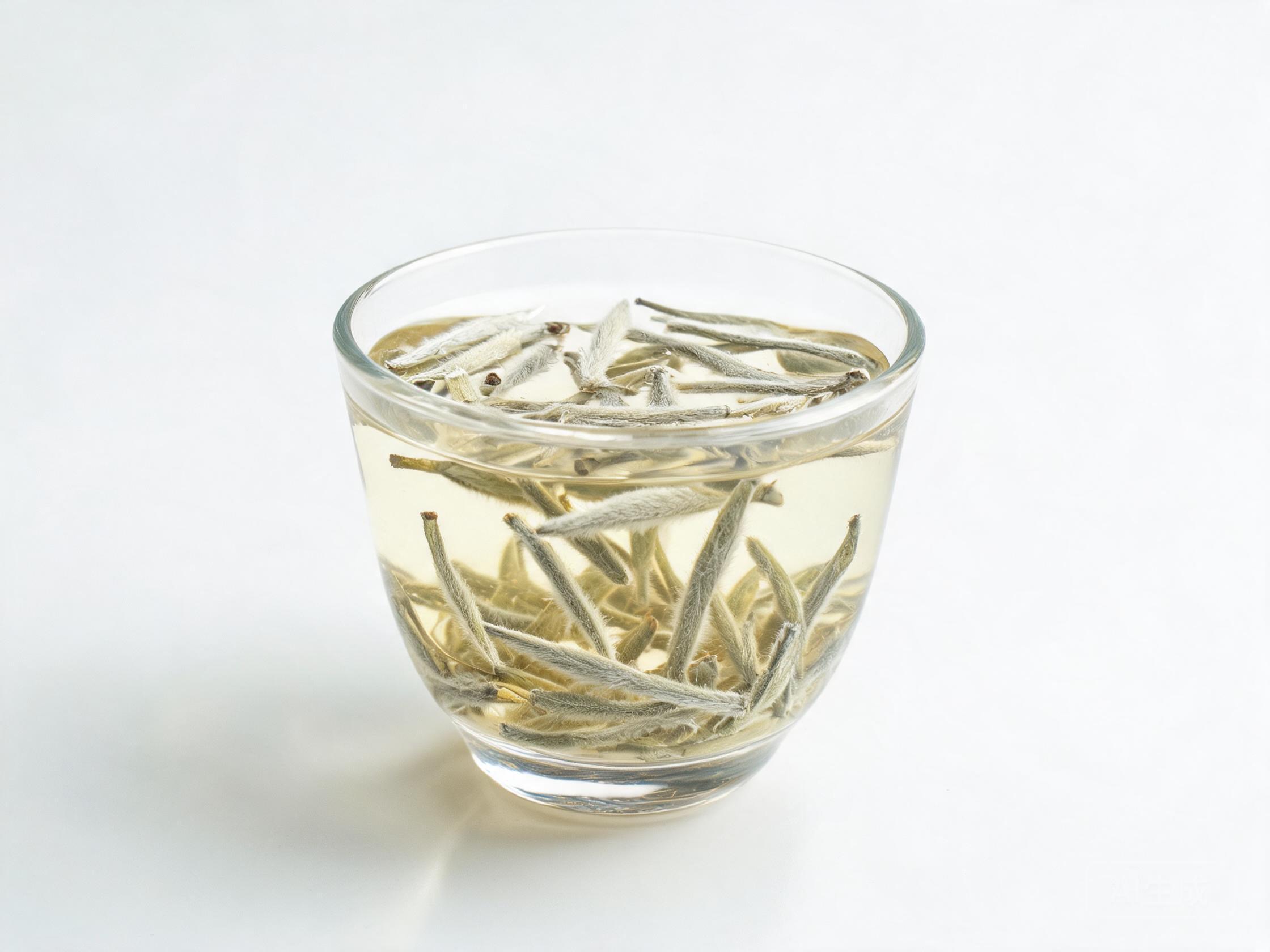
A Silver Needle should smell of fresh hay, melon and a faint sweet creaminess.
A Shou Mei should smell darker and more date like, and it should never smell sour.
Sourness in the dry leaf means it was dried badly or stored damp, and no brewing fixes that.
Look for intact leaf, and be suspicious of broken pieces sold at a premium price.
Grade names are set by the seller, so treat them as a hint rather than as a standard.
Storage matters more here than for most tea, since the category is meant to change over time.
Keep it sealed, cool and dark, and keep it away from anything strongly scented.
If you intend to age it, leave it in the wrapper it came in and check it every 12 months.
Buy a cake or a packed brick for ageing, since loose leaf loses its aroma first.
Drinking it right
The biggest question about white tea is strength, and people are usually surprised by the answer.
This leaf is often brewed too weakly, and then described as delicate by default.
Start at 3 g in 150 ml at 85 °C and give it 3 minutes.
If the cup is thin, add leaf before you add time, since extended steeps flatten the aroma.
If it is bitter, drop the temperature rather than the dose.
Bud heavy tea wants slightly cooler water than an open leaf grade, by about 5 degrees.
Older white tea wants hotter water and longer steeps, and it takes both happily.
So one leaf needs two different methods at one year and at seven.
Run the same tea at two settings side by side and the difference is obvious.
That comparison teaches more in 10 minutes than any fixed rule printed on a label.
Water matters less here than with green tea, and softness is less critical.
What matters is consistency, so measure the leaf and the time rather than guessing at both.
Myths versus facts
Several popular claims about white tea do not hold up, and they cost buyers money.
It is not caffeine free, and a bud heavy Silver Needle is among the stronger cups in the trade.
Nor is it the same as yellow tea, which adds a damp stage this category never uses.
And delicate is not the default either, since an aged Shou Mei brewed hot is a dark and sturdy drink.
What is true is that withering and drying are the whole method, and storage decides a great deal.
That pair of facts covers most of what matters when you are standing in a shop.
The common misconceptions page for this category takes the rest apart properly.
It is worth reading before paying a premium for an age claim nobody can verify.
Ask a seller how the tea was stored, and whether they have tasted it this year.
Two answers to those questions tell you more than any certificate on the tin.
A shop that has tasted its own stock is rare and worth keeping.
One that has not is selling a commodity, and should be priced like one.