Start with the source
Authenticity in red tea is mostly about the estate, the cultivar or both, and both are checkable in principle.
Indian tea is sold by estate and flush, and a good importer names both on the invoice.
Chinese red tea is sold by cultivar and place: Dian Hong, Zheng Shan Xiao Zhong, Jin Jun Mei, Keemun.
Each of those is a specific thing, and each is used loosely by sellers who should know better.
Ask which one it is and where it was grown, and expect a place rather than a province.
Then ask for the harvest. Second flush Darjeeling is picked around June, and first flush in March.
A seller who knows the flush will say so without needing to look it up.
Ask whether the importer buys direct, because that is the difference between knowledge and a label.
Be careful with the word estate when it is used as a grade rather than as an address.
A named source is not proof of anything, but an unnamed one is a reason to pay less.
Taste as proof
Red tea is easier to verify by taste than most, because the styles are distinct and stable.
A second flush Darjeeling has a muscatel note that no other tea has, and it is unmistakable once you know it.
A Dian Hong is malty and sweet with golden tips, and a good Jin Jun Mei is honeyed and thick.
Zheng Shan Xiao Zhong smells of pine smoke, or of dried fruit if it is the unsmoked version.
Keemun has a faint smoky, cocoa note that is quite different from the pine of a Lapsang.
Brew it black at 4 grams per 150ml for four minutes, and do not add milk until you have tasted it.
Then add milk to the second cup, since that is how you will drink it and it changes what matters.
A tea that tastes of nothing black will taste of nothing with milk, and that is the answer.
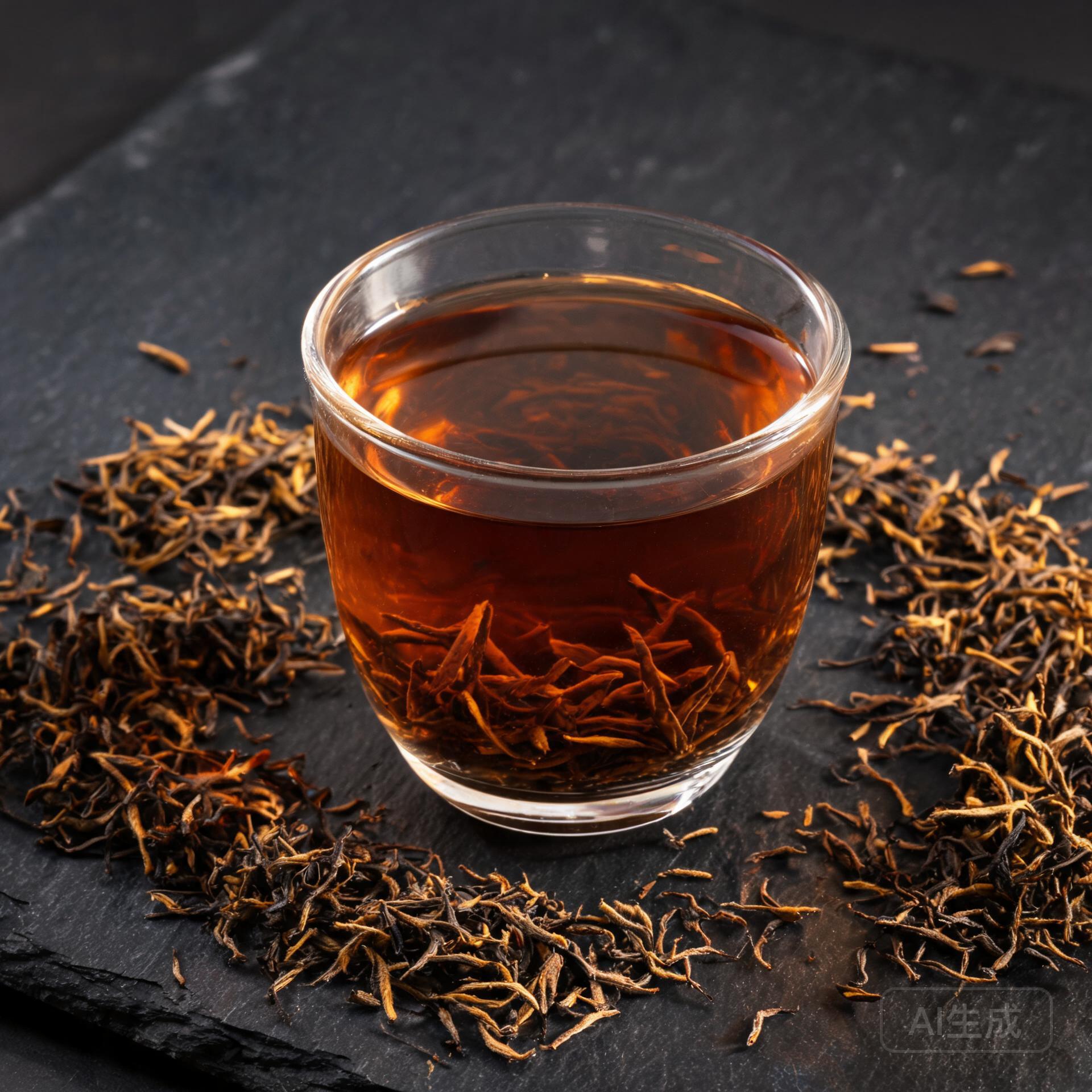
Look at the wet leaf, which should be a uniform coppery brown rather than a mix of colours and dust.
Compare against a tea you know, because the differences are subtle until you have a reference.
Packaging and provenance
Red tea packaging is honest more often than in most categories, because the margins do not reward elaborate lies.
Look for the estate or the cultivar, the flush or the harvest date, and the importer’s name.
A bag with none of those is a commodity, and it should be priced as one.
Indian tea sold with a grade but no estate is ordinary tea described in technical language.
Chinese red tea sold as a type with no place attached is the same thing in different words.
Darjeeling has a protected name and a certification mark, and both are worth checking for.
Origin marks are useful precisely because they are enforceable, unlike most claims on tea packaging.
Harvest dates matter more than best-before dates, since only the first tells you when it was picked.
Keep the bag or the invoice if a claim might be worth something later.
None of this proves much by itself, and all of it is cheap to print. It narrows the field.
A practical test
Buy the same stated tea from two sellers and brew them side by side, black, at the same strength.
Four grams per 150ml, water at 100 degrees, four minutes, and two cups poured at the same time.
Taste them blind if you can get someone else to pour, which removes the price from your judgement.
The differences in sweetness, body and finish are usually larger than you expect.
Then try both with milk, since that is the test that matters if that is how you drink it.
Ask a specialist which they prefer and why, and compare that with your own note.
Record the price per gram of each, because value is part of what you are judging.
Buy 100 grams of each, enough for several sessions and cheap enough to be a fair test.
Do this once a season with a different pair and you will learn the category quickly.
It takes an afternoon, costs very little, and settles the question better than any certificate.