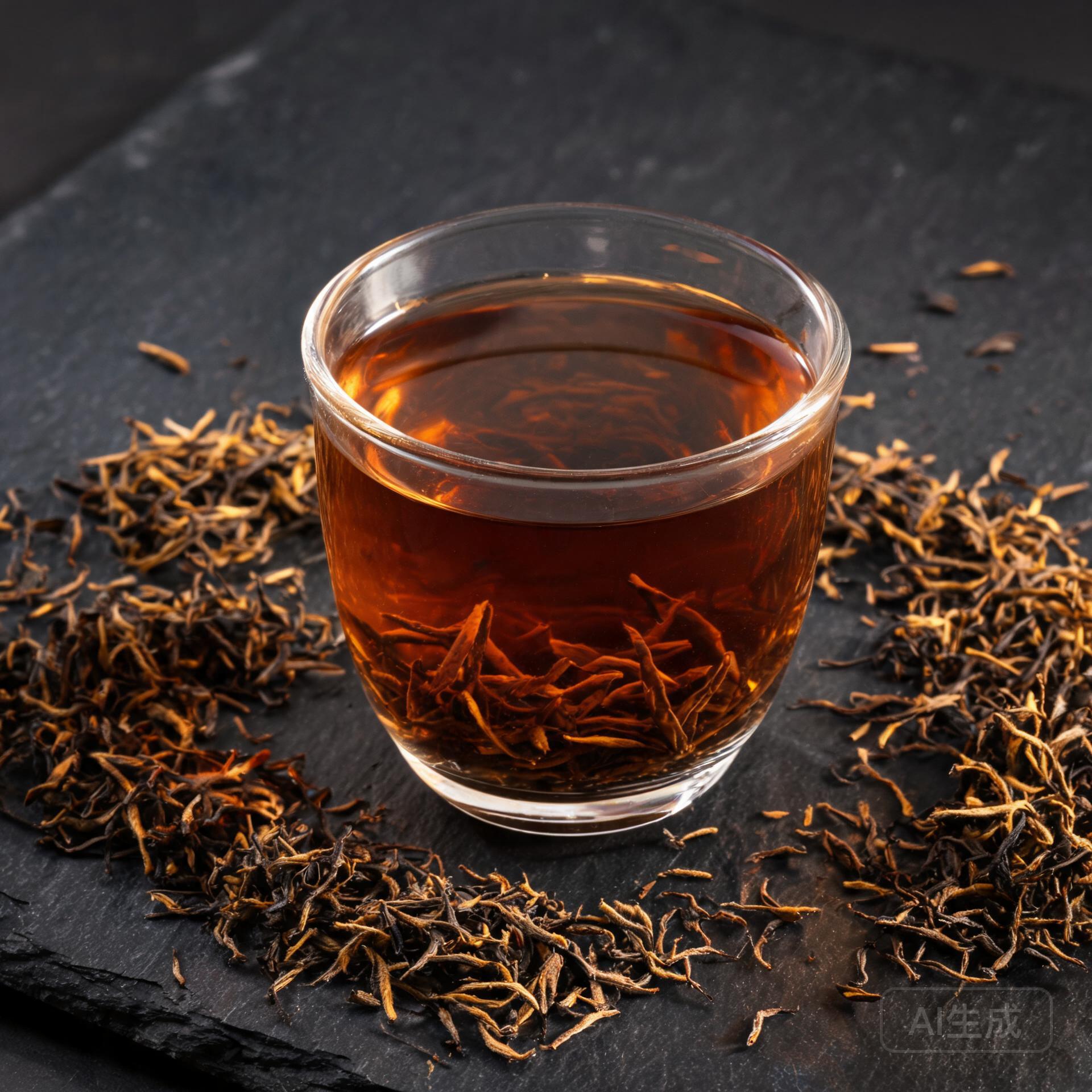
Before you buy Red tea
Red tea, called black tea in the West, is the easiest category to buy well and the easiest to be quietly overcharged in.
Decide first whether you want it plain or with milk, because that changes what you should be looking for.
For drinking plain, look for a named single origin: a Darjeeling estate, a Chinese cultivar, a specific garden. Origin is the whole point.
For milk, a blend is better value and more consistent. Blends exist to taste the same every time, and that is worth having in a daily cup.
Then decide how much you drink. At two cups a day you get through about 500 grams in six months, and that quantity should change what you pay.
Most people overbuy red tea. It keeps well enough to make that feel safe, and it fades slowly enough that you do not notice.
Step 1: judge the leaf
Leaf grade in red tea describes particle size rather than quality, and the naming confuses almost everyone.
Whole leaf grades such as OP are large and slow to brew. Broken grades such as BOP are smaller, stronger and faster, and better with milk.
A dusty, even powder is CTC, which is what goes into most teabags. It is not inferior, it is a different product.
Look for even particle size within the grade. Mixed sizes brew unevenly, and you get bitter and weak in the same pot.
The smell should be sweet and malty, or fruity for a Darjeeling, with no sharpness. A flat smell means a flat cup.
Chinese red teas are usually whole leaf, thin and slightly twisted, and they smell of dried fruit rather than malt.
Check the tips. Golden tips are a real grade marker in a Chinese red tea, and a tea sold on them should have visible ones.
Step 2: buy small first
Buy 100 grams on a first purchase. Red tea is brewed at 3 to 5 grams a cup, so that is about 25 cups, and you will know by the tenth.
Red tea keeps better than green or white, but it is not immortal. Whole leaf holds most of its character for about two years.
Try the same garden across two harvests if you can. The season changes the tea more than most people expect.
Compare a house blend and a single origin at the same price. If you cannot tell the difference, buy the blend and keep the money.
Online, the smallest size is usually 50 or 100 grams. Take it. Red tea is cheap enough that the small-bag premium barely matters.
Keep one everyday tea and one good one, and do not let them blur into a single mid-priced habit.
Step 3: check storage and source
Ask for the harvest or packing date. Red tea is less date sensitive than green, but two years is where it starts to flatten.
Look for a seal rather than a tin that looks sealed. Most decorative tins are not airtight, and the tea inside is older than the packaging suggests.
For Indian tea, ask for the estate and the flush. Second flush Darjeeling is the one worth paying for, and it is picked around June.
For Chinese red tea, ask which cultivar it is. Jin Jun Mei, Zheng Shan Xiao Zhong and Dian Hong are three different teas at three different prices.
Smoky Lapsang is either smoked over pine or sprayed with smoke flavouring. The first costs more, and the difference is obvious once you smell both.
A seller who can tell you the elevation of an estate is usually a seller who knows where the tea came from.
Step 4: pay for the leaf, not the story
Red tea has the widest price range of any category for the smallest difference in the cup, and that is worth knowing before you spend.
A good everyday blend costs a few pounds for 250 grams. A top second flush Darjeeling costs roughly ten times that per gram, and it is a different experience.
Whether that experience is worth ten times the money is a real question, and for daily drinking the honest answer is usually no.
Pay for a named origin when you will drink it plain. Pay for consistency when you will add milk.
Ignore the word orthodox as a quality signal. It describes a rolling method, and it appears on ordinary tea as often as on good tea.
If you drink red tea every day, spend the savings on buying more often rather than buying better. Freshness shows in the cup more than grade does.