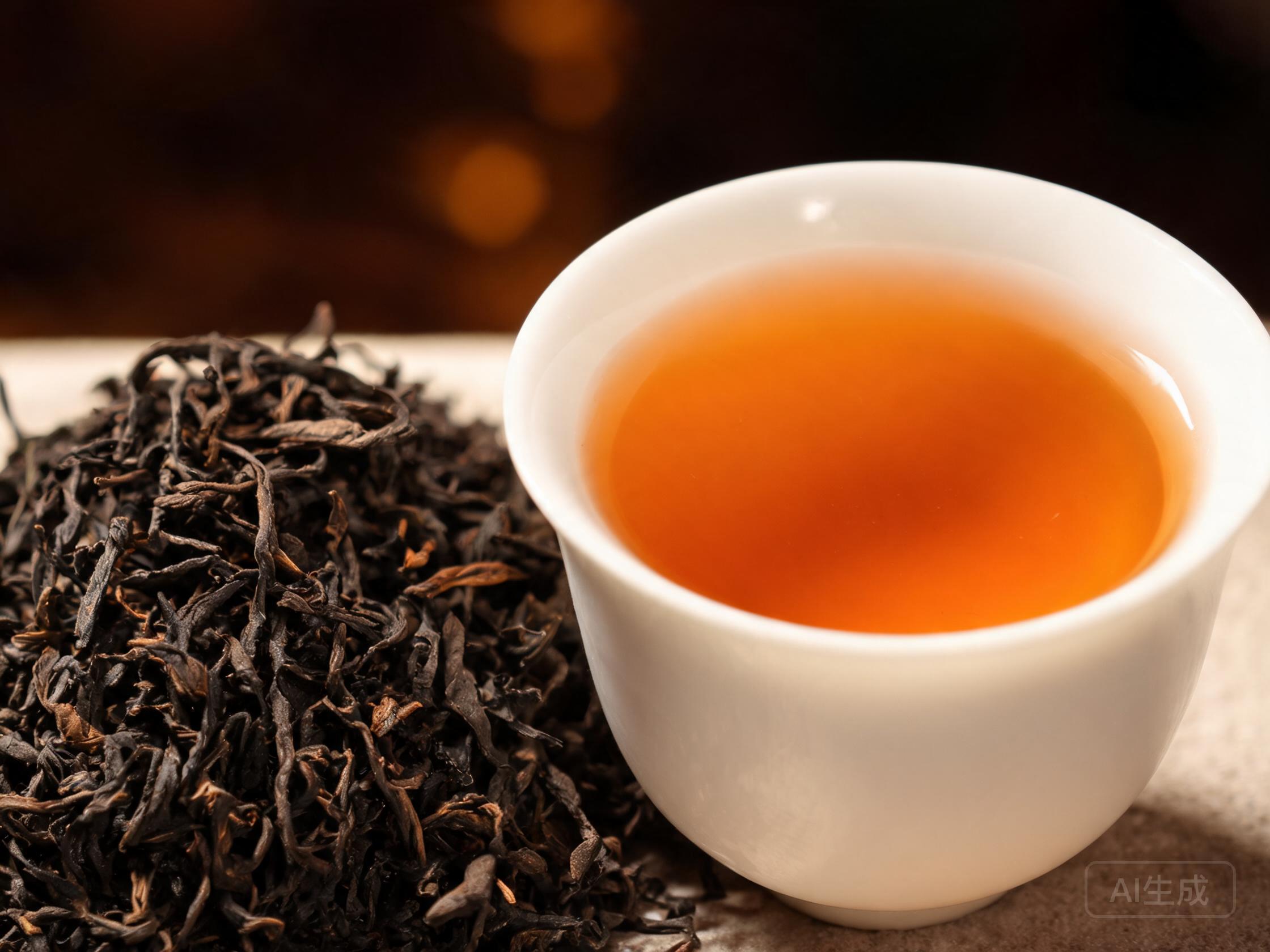
The control points
Red tea is made on four control points, and the process is unusually well understood at factory scale.
Withering comes first, taking the leaf from about 75 per cent moisture down to roughly 60 per cent.
Leaf is ready when it can be rolled without shattering, which a worker tests by hand rather than by meter.
Rolling is second, and the control is pressure and duration rather than speed.
Too little pressure and the cell structure stays intact, so the oxidation never reaches the inside of the leaf.
Too much and the leaf shreds, giving a strong and muddy cup that brews in 2 minutes.
Oxidation is third, held in a room at 24°C to 27°C with humidity near 95 per cent.
The end point is judged by the colour of the leaf and by the smell in the room, not by a timer.
Firing is last, usually in two passes, with the first around 95°C and the second a little lower.
It stops the oxidation and drops the moisture to 3 or 4 per cent, which is what makes the tea stable.
Sorting into grades follows, and it is mechanical, though it decides most of what the buyer pays.
Why they matter
These points matter because red tea is fully oxidised, and the target is narrower than it looks.
Under-oxidised leaf tastes green and thin, and it will not improve in storage the way people hope.
Over-oxidised leaf goes flat and slightly sour, and it loses the brightness the category is meant to have.
Temperature in the oxidation room is the variable most often neglected, since a few degrees change the timing.
At 30°C the same leaf finishes in perhaps 2 hours, and at 20°C it may need 5.
Humidity matters just as much, and dry air stops the reaction at the surface while the inside carries on.
That produces an uneven leaf, which turns up in the cup as a liquor that lacks clarity.
Rolling quality shows in the same way, since an unbruised leaf never oxidises at all.
Firing is where the result is frozen, and a single pass leaves too much moisture behind.
A tea fired to 6 per cent tastes fine for a few months and then goes dull and dead.
So the four points are sequential, and each one sets a limit on what the next can achieve.
Signs of trouble
Faults in red tea are easier to trace than in any other category, because each one has a clear cause.
A green, leafy taste means under-oxidation, and it is the commonest fault in small orthodox production.
A flat cup with no top note means the oxidation ran past the point where the aroma compounds survive.
Sourness means the leaf was oxidised too warm, or left in a heap for too long before firing.
A hard, metallic edge usually comes from rolling a leaf that was withered too dry and then shattered.
A baked or toasty smell that was not intended means the first firing ran too hot or too long.
A dull brown liquor rather than a bright red one points to old tea or poor firing instead of poor leaf.
Excessive dust and broken pieces are a sorting failure, and they make a tea taste stronger than it is.
Milk hides most of these faults, which is why a plain brew is the only honest test.
Brew 4 grams at 95°C for 3 minutes and taste it black before deciding what you are drinking.
If it tastes sweet and clean without help, the control points were held.
Holding the standard
Factories hold these points with instruments, which is why industrial red tea is remarkably consistent.
Withering troughs have timers and airflow controls, and the leaf is weighed before and after.
Oxidation rooms hold temperature and humidity automatically, and larger plants log both continuously.
The end point is still judged by a person, usually by smell, and that is the last human decision.
Firing is instrument controlled, and a chain dryer runs the same profile shift after shift.
Cupping is the check on all of it, and every batch is tasted against a standard before it is blended.
Blending is where consistency is actually achieved, since no single day’s leaf matches the target exactly.
A buyer comparing two years of the same blend should find very little difference between them.
Small orthodox producers cannot blend across that much material, so their batches vary more by design.
That variation is what buyers pay for at the top end, and it is not a defect in itself.
Decide which of the two you are buying, because the control philosophy behind them differs.