- Why the extra step exists
- Why you rarely see it
- The main varieties
- Yellow tea versus green tea: can you tell?
- How to brew yellow tea
- Frequently asked questions
- Yellow tea and health
- Cautions, and a warning about fakes
- Frequently asked questions
- Is yellow tea just green tea?
- Why is yellow tea so expensive?
- Is Korean hwangcha the same as Chinese yellow tea?
- Does yellow tea have caffeine?
- How should yellow tea be stored?
- Is yellow tea healthier than green tea?
- Does yellow tea have caffeine?
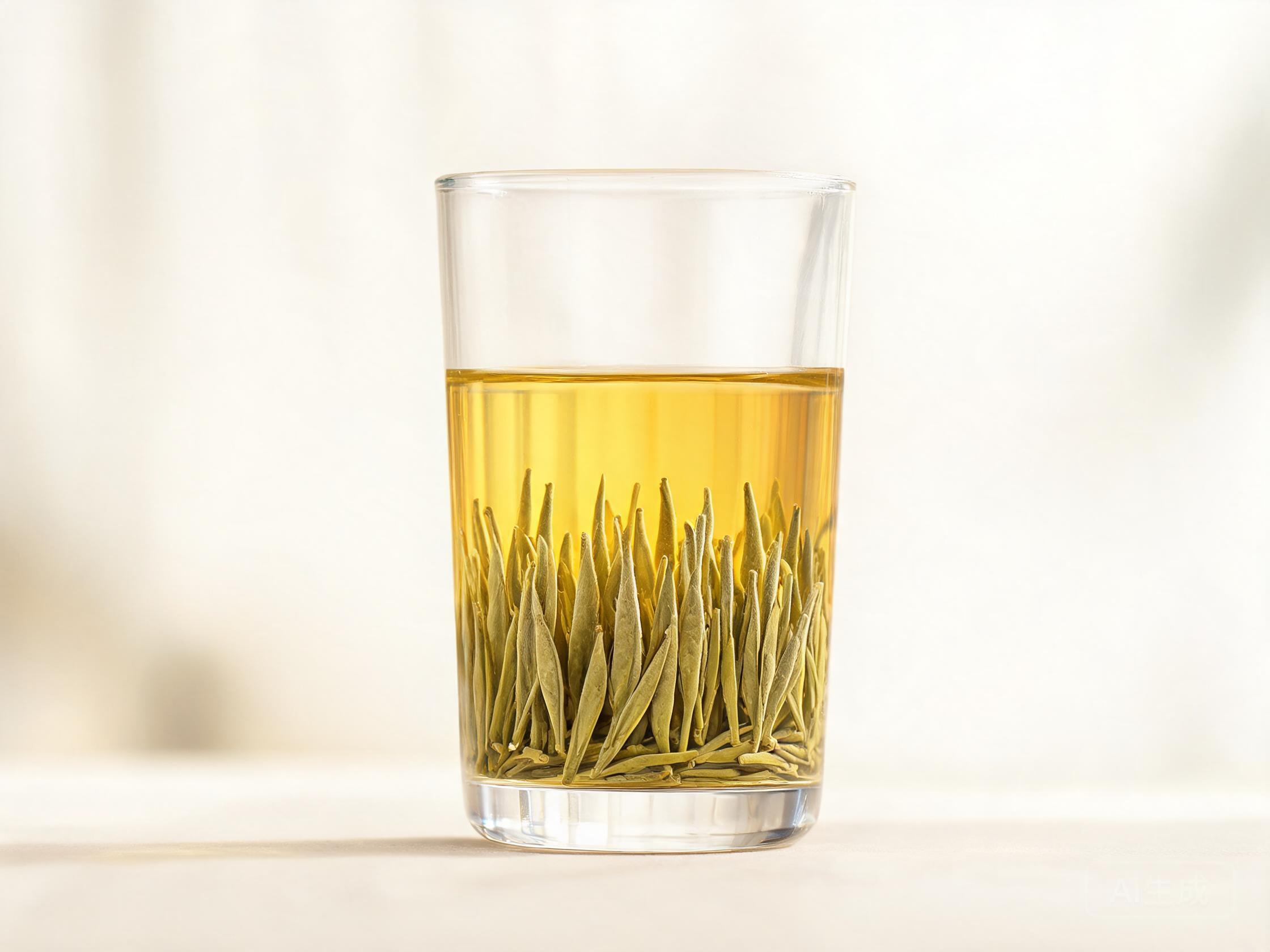
Yellow tea is a lightly oxidised Chinese tea made by taking the green tea process and adding one step: after the leaf is fired, it is wrapped or piled while still warm and allowed to rest, a stage called men huang — sealed yellowing. That rest lets the leaf undergo a gentle, partly microbial transformation that turns it slightly yellow, softens the sharp edge of green tea, and removes the raw, grassy smell that puts some drinkers off green tea. Everything else about yellow tea is close to green tea. It is increasingly rare and expensive, and there is genuine debate about whether it deserves to be a category of its own or should be counted as a green tea variant.
Why the extra step exists
The stated goal of sealed yellowing is to remove the characteristic grassy smell of green tea. This sounds like a small thing and is not. Fresh green tea can carry a sharp, green, sometimes spinach-like edge that divides drinkers: some find it fresh, others find it raw. The yellowing rest smooths that edge without the darker, roasted character that firing or roasting would add.
Mechanically, the warm, moist, wrapped leaf provides conditions for slight oxidation and some microbial activity, which is why yellow tea sits ambiguously between green and the post-fermented categories. It is light oxidation, but it is not none.
Why you rarely see it
Yellow tea is the smallest of the six Chinese tea categories by a wide margin. There are two reasons.
The first is that the process is difficult and low-yield. The yellowing step requires judgment: too short and the tea is just green tea, too long and it goes flat or spoils. It takes skill and time for a result that the market does not always reward.
The second is economics. Green tea from the same bushes commands a reliable price and can be made with a simpler process. Producers with good leaf and a short spring window have a strong incentive to make green tea. Yellow tea survives largely because a few regions and producers have kept it going as a signature product.
The main varieties
| Name | Province | Notes |
|---|---|---|
| Junshan Yinzhen | Hunan | Silver-needle style, long recognised as a famous Chinese tea |
| Huoshan Huangya | Anhui | Bud and leaf, one of the better-known styles |
| Mengding Huangya | Sichuan | From Mount Meng near Ya’an |
| Mogan Huangya | Zhejiang | From Mount Mogan |
| Pingyang Huangtang | Zhejiang | “Yellow soup” style, Wenzhou region |
| Weishan Maojian | Hunan | Also known by a Tang-dynasty era name |
Junshan Yinzhen from Hunan is the most celebrated and is frequently listed among China’s famous teas, which is part of why yellow tea retains a reputation out of proportion to its production volume.
Yellow tea versus green tea: can you tell?
In a blind tasting, the difference is real but subtle. Yellow tea usually shows a rounder, slightly sweeter and less grassy profile, with a softer aroma. The liquor is often described as yellow rather than green-yellow, though colour alone is a weak signal because it depends heavily on concentration.
A more reliable sign is the finish. Green tea often leaves a brisk, slightly astringent sensation, while yellow tea tends to finish smoother. If you are comparing two teas and cannot tell them apart, that is not a failure on your part — the categories are genuinely close and some commercially sold “yellow tea” is closer to green tea with a warm rest.
How to brew yellow tea
- Water: 80–85°C. Treat it as a delicate green tea, not a black tea.
- Leaf: about 2–3 g per 150 ml.
- Time: 1.5–2.5 minutes for the first infusion.
- Reinfuse two or three times, adding 30 seconds each round.
Do not over-leaf it. Yellow tea is subtle, and a heavy dose produces a thick, dull cup rather than a stronger version of the same flavour.
Frequently asked questions
Yellow tea and health
Yellow tea’s health profile is close to green tea’s, because the leaf is handled in almost the same way with one additional rest. It contains caffeine and a catechin-heavy polyphenol profile, and it is a low-calorie drink when taken plain.
Because yellow tea is rare, it attracts a particular kind of marketing claim: that the sealed-yellowing step produces unique beneficial compounds absent from other teas. This may eventually prove to be a fruitful research direction, but it has not produced clinical evidence, and the claim is currently used to justify prices rather than to inform drinkers. It is worth being explicit about that, because rare and expensive products are where unverifiable health stories do the most commercial work.
Cautions, and a warning about fakes
- Caffeine. Yellow tea is brewed like a green tea, so a typical cup is moderate in caffeine. There is nothing unusually low about it.
- Iron absorption. The same polyphenol mechanism applies as with all true teas.
- Medication interactions apply as they do to green tea.
- The bigger practical risk is mislabelling. Because yellow tea is scarce and commands a premium, tea sold as yellow tea is sometimes green tea with a warm rest or simply green tea in a yellow box. If you are paying a rarity premium, ask where it came from and what the process was.
- Storage. Treat it as a green tea: airtight, away from heat and light, refrigerated for long keeping. It is not a tea to age.
The pattern across all six categories holds here too: real compounds, modest evidence, and a marketing environment that rewards overstatement. If you want the full picture of how the categories compare, our green tea versus black tea comparison sets out what actually differs and what does not.
Frequently asked questions
Is yellow tea just green tea?
Not exactly. It follows the green tea process but adds a sealed-yellowing rest that produces measurable differences in colour, aroma and mouthfeel. However, some sources do group yellow tea with green tea because its oxidation level is low, and the boundary is genuinely blurred.
Why is yellow tea so expensive?
Because production is small, the process demands skill, and the yield is low. Scarcity rather than inherent superiority drives the price. Some very famous styles command high prices for reputation as much as for quality.
Is Korean hwangcha the same as Chinese yellow tea?
No. Korean hwangcha refers to a lightly oxidised tea that is made in a style closer to oolong or lightly oxidised black tea, depending on the producer. The name “yellow tea” does not imply the Chinese sealed-yellowing process.
Does yellow tea have caffeine?
Yes, it is made from the same plant and contains caffeine comparable to green tea prepared similarly. The brewing temperature and steeping time affect how much ends up in your cup.
How should yellow tea be stored?
Like green tea: airtight, away from light and smells, and refrigerated if you will keep it for more than a couple of months. It is not a tea to age.
Is yellow tea healthier than green tea?
There is no evidence for that. The two are processed almost identically, and the extra sealed-yellowing step has not been shown to produce specific health benefits. Claims to the contrary are usually attached to its rarity rather than to research.
Does yellow tea have caffeine?
Yes. It comes from the same plant and contains caffeine comparable to green tea prepared in the same way. Rare does not mean caffeine-free.