The minimum
A green tea set starts with four things: a vessel, a way to heat water, a strainer and a cup.
A 100 ml porcelain gaiwan(盖碗)covers the vessel, and it costs less than most mugs.
Porcelain is fired hard and takes up almost nothing from the leaf, so one gaiwan serves every green tea you own.
A glass cup of 250 ml works just as well, and it lets you watch the buds stand up.
Water temperature decides more of the cup than the vessel does, so the thermometer earns its place first.
Green tea sits between 80 and 85 °C, and boiling water scorches a bud grade within seconds.
A kettle with a temperature dial removes the guesswork, and a probe thermometer removes it more cheaply.
A strainer keeps broken leaf out of the cup, and a stainless mesh one lasts for years.
One cup is enough at the start, since tasting is easier when you are not pouring for a table.
Skip the tea tray, the tongs, the scoop and the cloth until you find yourself reaching for them.
Four pieces and water at the right temperature beat a full tray bought all at once.
Everything else in a starter kit is decoration, or a solution to a problem you do not have yet.
Add as you go
Add a fairness pitcher next, because it evens out the liquor between cups.
Pouring from a gaiwan straight into cups gives the first cup less than the last one.
A pitcher of 200 ml holds one gaiwan comfortably and stops you pouring in a hurry.
A second cup turns brewing into a comparison, and comparison is how you learn a leaf.
Two small cups let you brew one tea two ways in a single session.
A small scale reading to 0.1 g is the next genuinely useful thing.
Leaf measured by eye drifts by a gram or more, and a gram changes the cup.
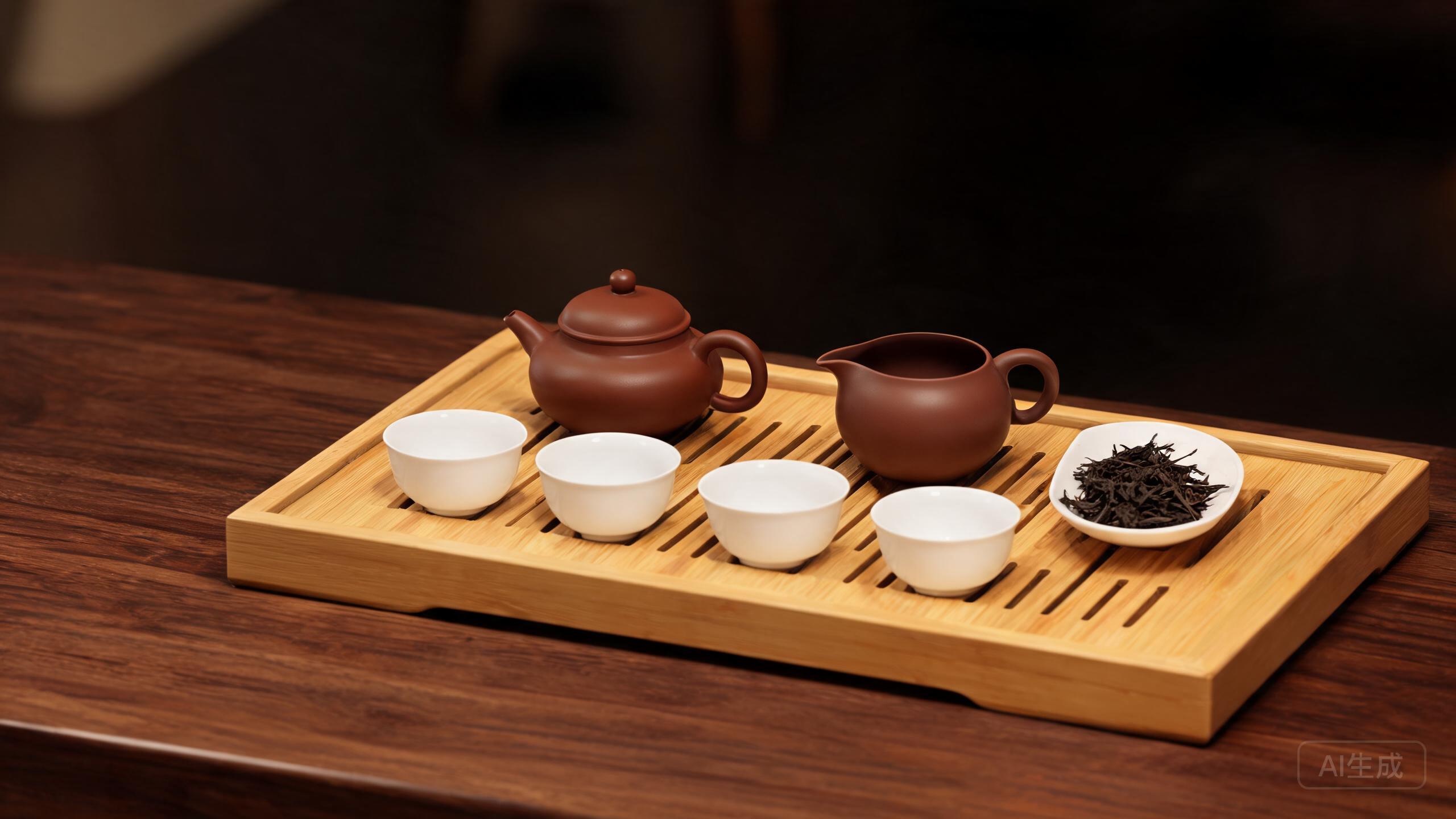
A tea tray(茶盘)matters only once you start pouring water over the ware to warm it.
A cloth and a pair of tongs follow naturally from that habit, and not before.
A dedicated zisha(紫砂)pot comes last, and green tea is the wrong place to start one.
Unglazed clay holds heat too well for a delicate leaf, and it holds flavour between sessions.
Buy each piece when a real session asks for it, and the set will build itself.
Where to spend
Spend on temperature control first, and on the vessel a distant second.
A kettle that holds 85 °C costs a fraction of a named pot and changes every cup you make.
A plain porcelain gaiwan at 100 ml does the same job as one costing ten times as much.
Thin walls matter more than the maker’s name, since thick porcelain steals heat from the water.
Lift the lid and check the rim, because a warped lid lets heat out and burns your fingers.
Put real money into the leaf, since good leaf outranks good ware every single time.
Avoid starter sets sold as a box of a dozen pieces, because most of them will sit unused.
A gift box bundles a tray, a cloth, tongs, a scoop and a brush you will never need.
Buy the three pieces you use and spend the rest of the budget on tea.
A pot sold as zisha(紫砂)for under 20 dollars is almost certainly slip cast and coloured rather than hand built.
Clay that smells of chemicals when warmed is a reason to put it back on the shelf.
Two honest pieces and good leaf beat a boxed set at any price.
One set, many teas
A single porcelain gaiwan will brew every tea in the category without complaint.
Green, white and yellow sit in the same temperature band, so one vessel covers all three.
Rinse it with hot water and wipe it dry, and no trace of the last session carries over.
Glass does the same job and shows you the leaf, which matters most with a bud grade.
Watch a green bud tea open in glass and you learn more than any tasting note can tell you.
Keep one vessel per family of teas rather than one per tea, and the shelf stays small.
A neutral pot serves green, white and yellow, and a clay one comes later for roasted oolong if you go there.
Dark tea and compressed pu-erh want boiling water, and they can share the gaiwan too.
What they cannot share is unglazed clay, which is why that purchase comes last.
The habit that matters is measurement: 5 grams in 100 ml, at the temperature the leaf wants.
Run 30 seconds on the first infusion and taste before you decide about the second.
One good vessel, a thermometer and a scale will take you further than a cupboard of ware.