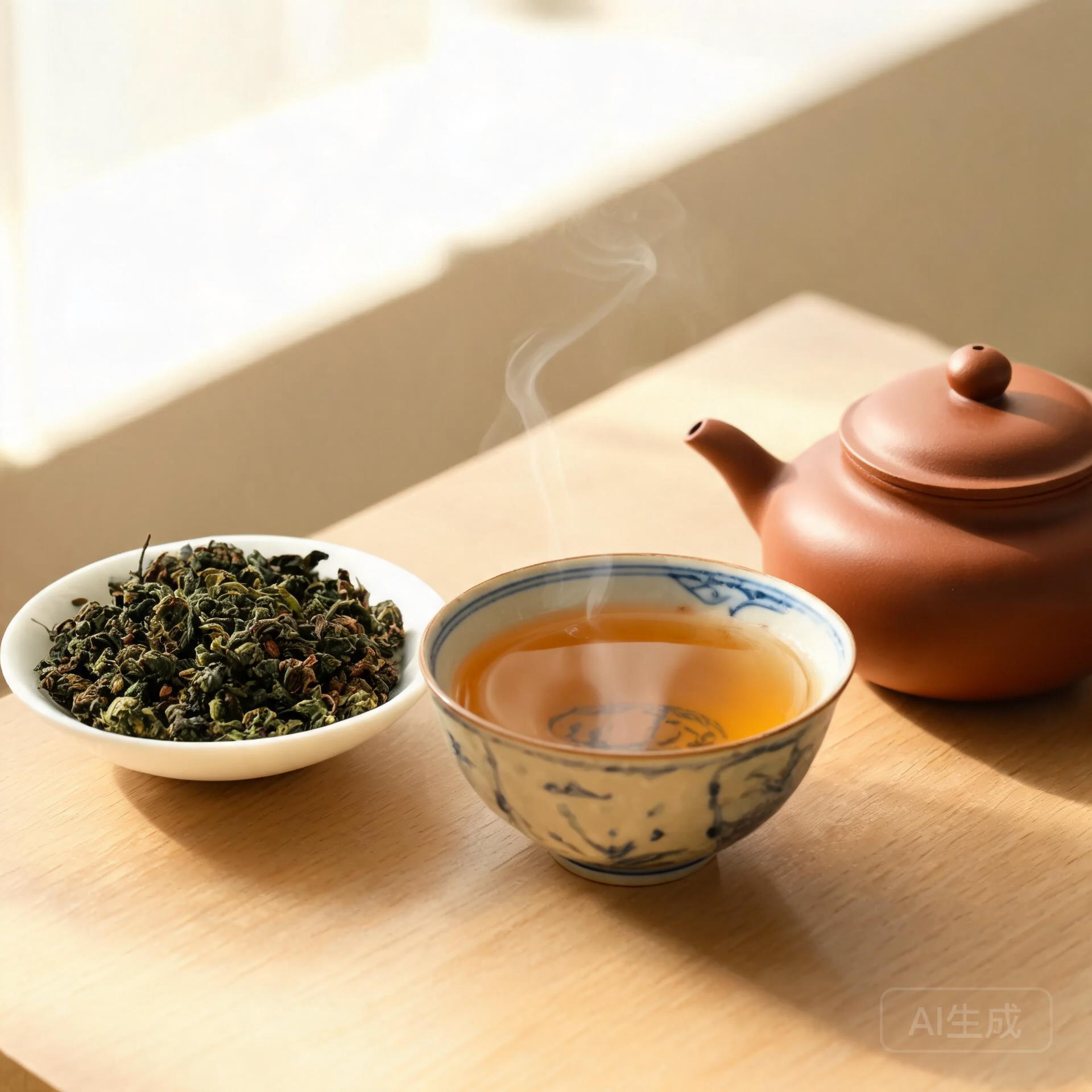
The most celebrated
The oolong list is the longest of the seven, because the category covers more ground than any other.
Tieguanyin(铁观音)from Anxi in Fujian is the ball rolled green style, with an orchid note.
Dahongpao(大红袍)from Wuyi is the rock roasted style, and the mineral taste is the signature.
Fenghuang Dancong(凤凰单丛)from Guangdong is the single bush style, and each old bush has its own aroma name.
Dongding(冻顶)from Taiwan is a medium roast with a creamy middle.
Oriental Beauty(东方美人)is the odd one out, made from leaf the leafhopper has bitten.
That insect damage produces the honey and ripe fruit smell, and it cannot be faked in a factory.
Each of those five defined an archetype that hundreds of producers now work inside.
Anxi makes Tieguanyin in a greener and a roast version, and they taste like different teas.
Wuyi sells dozens of rock teas under names that all point back to Dahongpao.
Dancong names run into the hundreds, since every old bush gets one.
The style goes back to the 1700s in Fujian, and it has never stopped changing since.
Why they top the lists
An oolong name becomes famous by setting a standard that other producers get measured against.
Tieguanyin was the tea that taught the world what a green oolong smells like.
Dahongpao did the same for roast, and the word yancha(岩茶)now covers a whole region’s output.
Fame is also a story of scarcity theatre, and Dahongpao has more of it than any tea in China.
The original bushes on Jiulongke are few, and almost everything sold under the name is a blend.
That is not fraud on its own, since the trade has used the name as a style for a very long time.
It does mean the famous label tells you the style and not the hill.
Prices follow the story far more than the cup at the top of this category.
A named cliff lot costs several times an unnamed one from the same village.
Sometimes the cliff is worth it, and often the roast is what you are actually tasting.
Learn the five archetypes first, and the premium names become much easier to judge.
Influence put the name on the list, and your own palate decides whether it stays there.
List fatigue
The ten famous tea lists disagree more about oolong than about anything else.
A Fujian list gives half its slots to Anxi and Wuyi and ignores Taiwan entirely.
A Taiwanese list does the reverse and puts Alishan and Lishan above the mainland names.
Both are defensible, because high mountain growing produces a different kind of aroma.
Alishan and Lishan are picked at altitude and taste of flowers and cold air.
Roast barely appears in that style, and a Wuyi drinker may well find it thin.
Names shift with fashion too, and Tieguanyin has fallen on lists since the 1990s.
Heavy roast and machine picking damaged its reputation, and lighter styles are rebuilding it.
Dancong has done the opposite and climbed, driven by buyers chasing single bush aromas.
That movement is healthy, and a list that never changed would be describing a dead trade.
Use lists to find families, then drink across them rather than down them.
Five families tasted once each teach more than one family tasted twenty times.
Trying them without overspending
Oolong rewards buying small quantities of several names rather than a lot of one.
A 25 g pouch of each of the five archetypes costs less than one gift tin of a famous name.
Brew them all the same way first, at about 95 °C with 5 g in 100 ml.
Same water, same dose, same time, and then the differences belong to the tea rather than to you.
A gaiwan(盖碗)is the right vessel for this, since it is neutral and easy to empty.
Run every sample to 5 infusions, because an oolong changes shape after the third.
Roast comes out early, and the fruit and flower notes often arrive later.
A tea that tastes flat on the first pour may be the best of the five by the fourth.
Their value is as reference points, and once you know the five, hundreds of others sort themselves.
Pay for the education first and the prestige second, and be wary of any cliff name sold cheap.
Store roasted oolong sealed at room temperature and keep the green styles cold.
Both keep for 12 months or more as long as you keep air away from the leaf.