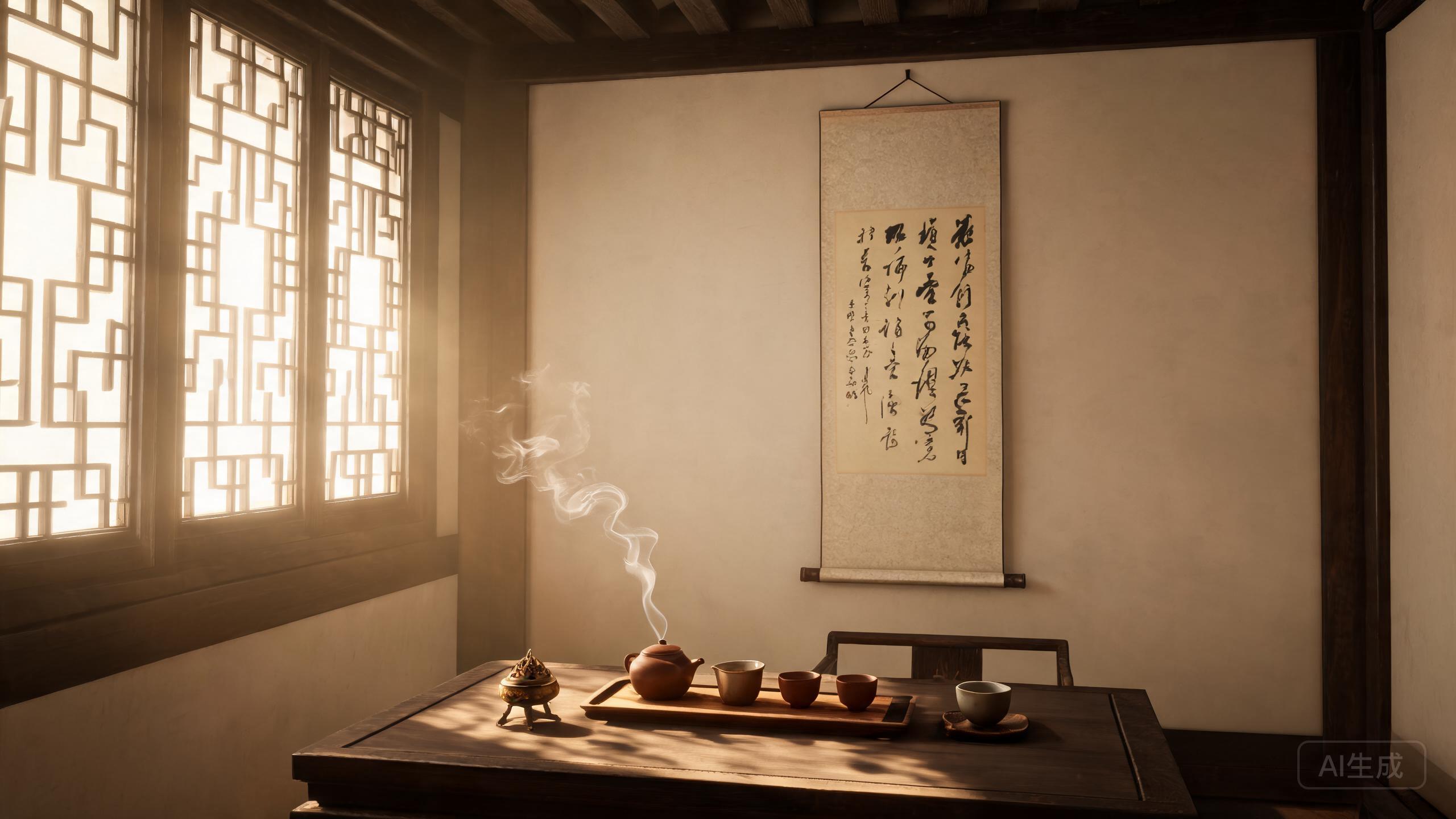
The vessel
A yellow tea setup starts with a tall glass, because the category is built on bud grades that move.
Junshan Yinzhen(君山银针)rises and falls in the water, and a short cup stops it doing that.
A glass of 250 ml with straight sides is the right shape and the right height.
A porcelain gaiwan of 100 ml is the second piece, for the days you want control rather than a view.
It brews the same leaf tighter and lets you end each infusion at a chosen moment.
Both are neutral materials, which matters because the tea is faint and anything added sits on top of it.
Unglazed clay is the wrong choice, and it is wrong for two reasons at once.
It holds heat too long for a leaf brewed at 85 °C, and it takes up the sweet note the category is known for.
Check the glass is tall rather than wide, since height is what lets the buds stand up.
Check the gaiwan lid sits flat, because a lid that rocks spills boiling water onto your hand.
Check the interior is white, since the colour of the liquor tells you how far the yellowing went.
Two pieces, one tall glass and one gaiwan, and the category is fully covered.
Water and dose
Temperature comes first, and every yellow tea in the category brews below boiling.
Water at 85 °C suits all three classic names, and boiling water flattens the sweetness in one pour.
A kettle with a dial makes this automatic, and a probe thermometer does it for very little money.
Dose is second, and 5 grams in 100 ml is the ratio for a gaiwan.
In a tall glass the same leaf wants more water, so 5 grams in 250 ml is the equivalent.
Bud grades are light and bulky, and 5 grams of them looks like three times as much.
Weigh it on a scale reading to 0.1 g rather than judging by eye.
Water quality is third, and yellow tea is faint enough to show it.
Filtered water with some mineral in it is right, and heavily chlorinated water ruins the sweet note.
Distilled water makes the cup hollow, and very hard water makes it dull.
Warm the vessel with hot water before the leaf goes in, and discard that water.
Temperature, dose and water, and the rest is timing.
Scale to taste
With the gear fixed, tasting sets the time, and the first infusion is only a starting point.
Hold the first one to 30 seconds and taste before you decide about the second.
Sweet corn in the aroma means the yellowing was done properly, and grassiness means it was cut short.
A dull, flat sweetness means the step ran too long, and there is no fixing that in the cup.
If the tea is thin, extend the next infusion rather than adding leaf.
If it is drying at the back of the mouth, shorten the next one instead.
Run the session to three or four infusions, because a bud grade gives out quickly.
Most of what a yellow tea has comes out in the first two, and the rest is a bonus.
Compare two samples side by side whenever you can, since differences within the category are small.
The palate tires quickly on this, so taste, spit and reset with water between samples.
Note the numbers for the first few sessions and then stop writing them down.
A fixed setup is what makes those small differences visible in the first place.
Common mistake
The most common mistake with yellow tea is treating it like green tea and using boiling water.
It looks like green tea and comes from the same plant, and that is where the resemblance ends.
The second is buying in quantity, because the category does not keep well.
Yellow tea loses its sweetness faster than green tea, and a large bag bought in spring is stale by autumn.
Buy 50 grams at a time and drink it inside a season instead.
The third is a short glass, which stops the buds moving and hides the best part of the show.
The fourth is judging the tea before it has opened, which takes two or three infusions.
The fifth is a clay pot, which adds heat and a background note to the faintest tea on the shelf.
The sixth is measuring by eye, because a bud grade is the least dense leaf you will handle.
A scale reading to 0.1 g costs less than 50 grams of the tea and removes the argument.
The seventh is chasing the vessel instead of the harvest, which is where the money should go.
Ask for the picking date first, and the setup will take care of itself after that.