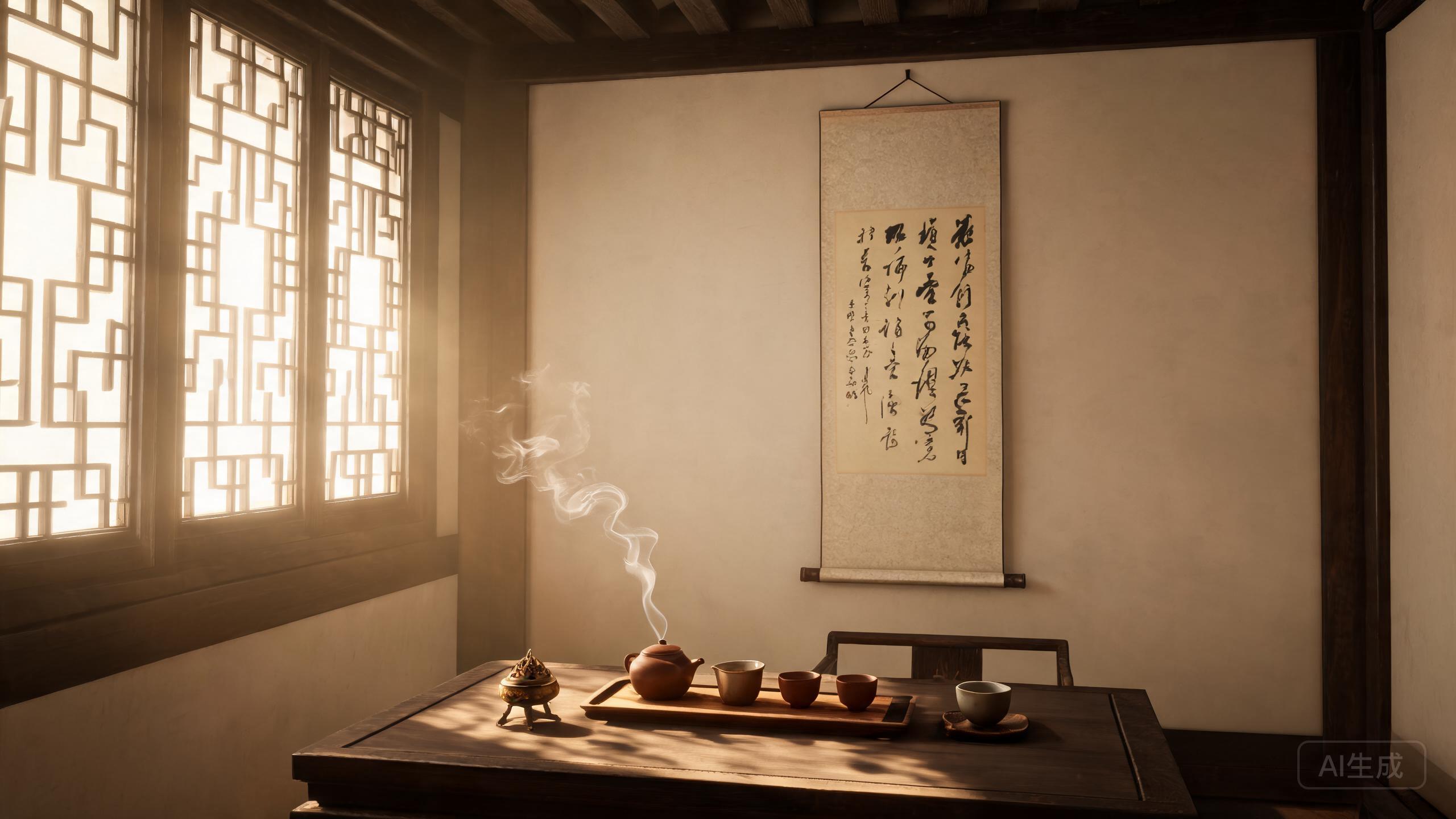
The vessel
A reprocessed tea setup has to cover three product types, and the one piece covering all of them is a gaiwan.
A lidded porcelain gaiwan(盖碗)of 100 ml is the starting point for the whole category.
The lid is what makes it right for scented tea, since it keeps the aroma in the cup while the leaf steeps.
Aroma is the entire product with jasmine, and an open vessel loses it into the room.
The gaiwan also pours out fast, which is what compressed tea needs for its rinse.
Gan pu(柑普)needs nothing special, though a larger vessel suits it better than a small one.
A 250 ml porcelain pot handles one segment of the fruit and several cups from it.
A thermos is a legitimate piece of kit for gan pu, which steeps for a long time through a thick peel.
A pick is needed for the compressed half and useless for the other two.
Glass works for watching a jasmine leaf open, and not much else in this category.
Unglazed clay serves the compressed half and ruins the scented half, so leave it until you know which you drink.
A gaiwan, a pick and a larger pot, and all three product types are covered.
Water and dose
Temperature splits the category, and the split is clean.
Scented jasmine sits at 90 °C, and water off the boil scalds the flower note out of it.
Gan pu and compressed pu-erh want a full boil, and anything cooler leaves them thin.
One porcelain vessel handles both temperatures, which is the practical argument for porcelain here.
Dose is second, and 5 grams in 100 ml is the ratio for a gaiwan.
A segment of gan pu is the awkward case, because it weighs somewhere between 5 and 10 grams.
Weigh it on a scale reading to 0.1 g rather than guessing at it.
The rinse applies to the compressed half only, and works exactly as it does in the dark tea category.
Pour boiling water over the leaf, swirl it, discard it, and then start the real session.
Water quality is third, and scented tea shows it more than the rest of the category does.
Chlorine in particular fights the flower aroma, and filtered water is worth the small trouble.
Temperature, dose and water, and then the timing follows from the product.
Scale to taste
Time is the last setting, and it differs across the three halves of the category.
Hold a scented tea to 30 seconds and a compressed one a little longer from the start.
Smell the lid at every infusion, and note the point at which the flower stops being detectable.
Real scenting is still there at the fourth infusion, and sprayed scenting is usually gone by the third.
That is the single most useful measurement in the category, and it needs nothing but attention.
Gan pu steeps for minutes rather than seconds, since the peel slows everything down.
A segment in a thermos will go most of a morning without turning harsh.
Extend the later infusions of a compressed cake by a few seconds each time, as the leaf opens.
Taste the base leaf underneath the flower at some point, since that tells you what you actually bought.
Note the numbers for the first few sessions and then stop writing them down.
Compare a sprayed tea against a properly scented one once, and you will never need to be told again.
A fixed setup is what makes that comparison honest rather than confusing.
Common mistake
The most common mistake in this category is brewing scented tea with boiling water.
It destroys the aroma that is the whole point of the product, and it cannot be undone.
The second is buying a scented tea without asking what the base leaf is.
The base is most of the tea by weight, and a seller who will not name it is telling you something.
The third is expecting a sprayed tea to last, which it will not.
The fourth is measuring a segment of gan pu by eye, since the pieces vary by a factor of two.
A scale reading to 0.1 g costs less than a sample bag and settles it immediately.
The fifth is using one clay pot for the whole category, which mixes a flower note into everything else.
The sixth is skipping the rinse on compressed tea, the same mistake as in the dark tea category.
The seventh is chasing ware instead of the maker, which is where the real difference lives.
Real scenting takes several nights of work, and no vessel can turn a sprayed tea into that.
Cool water for jasmine, boiling for the compressed side, a weighed dose, and the setup is done.