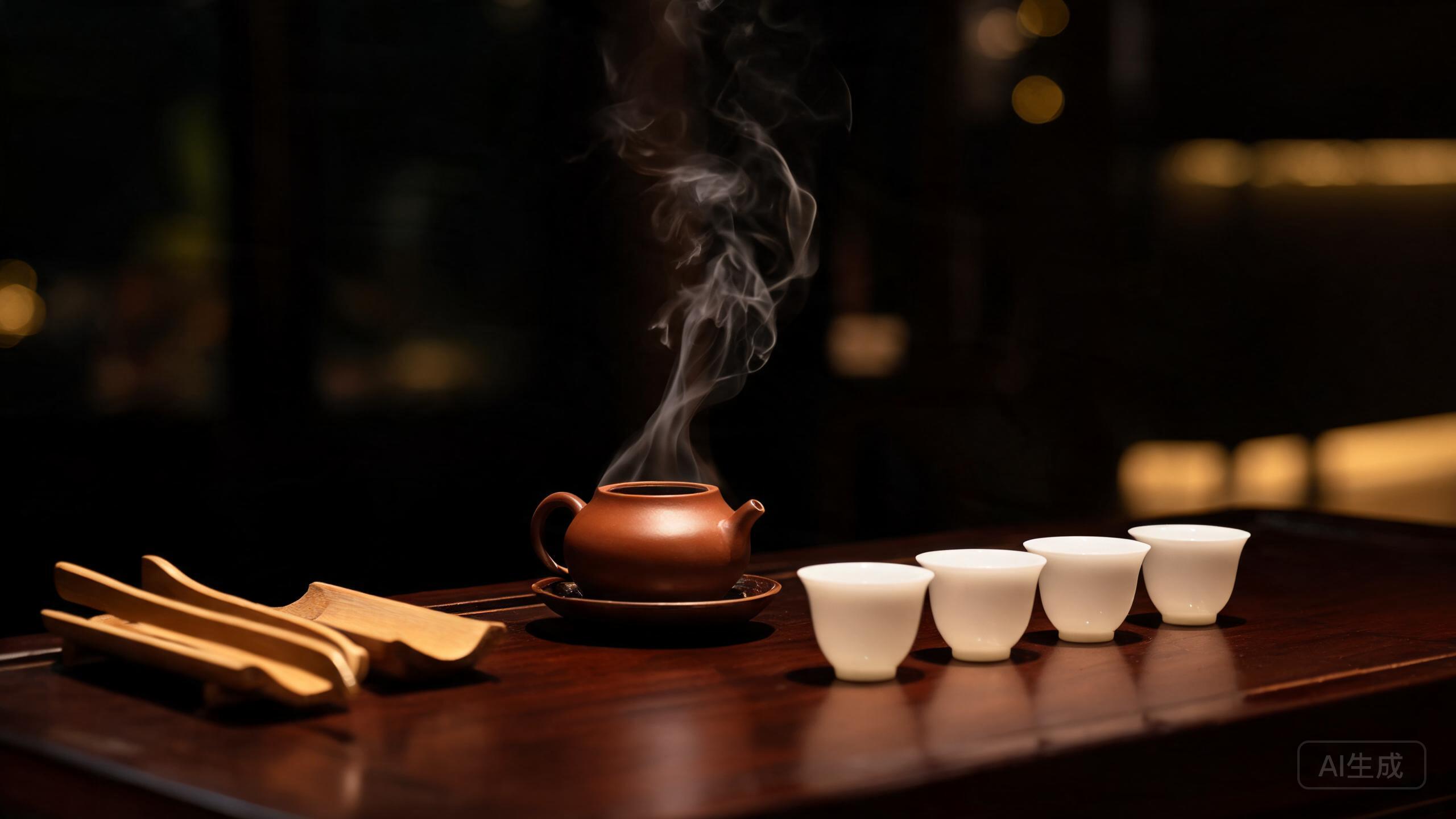
The vessel
A dark tea setup starts with one question, whether you buy cake or loose leaf, because the gear differs.
Compressed cake needs a pick before anything else, since no cake comes apart cleanly without one.
A cha zhen(茶针)lifts whole layers off a cake instead of shattering them the way a knife does.
It also needs a vessel you can rinse in and pour out of quickly.
A porcelain gaiwan of 100 ml does both, and it is the safest first purchase in the category.
A zisha(紫砂)pot of similar size is the traditional alternative, and it holds heat through a long session.
Loose dark tea needs none of that, and a 250 ml porcelain mug will handle a fu brick perfectly well.
Glass shows the colour of the liquor, which is how a dark tea is judged, and it works for loose leaf.
A white interior matters, since a dark liquor in a dark vessel tells you nothing at all.
Check the lid fits and the spout pours fast, because a cake session means many quick pours.
Add a tea tray with a drain once you start rinsing, since carrying water to the sink gets old quickly.
A pick, a gaiwan and a tray, and the setup is finished for either form of the tea.
Water and dose
Temperature comes first, and dark tea is the one category with no upper limit worth worrying about.
Water at 100 °C is standard, and anything cooler leaves the liquor thin and the leaf half opened.
A kettle that boils is enough, and a thermometer is close to unnecessary here.
Dose is second, and 5 grams in 100 ml is the ratio for a gaiwan or a small pot.
A chunk broken off a cake is never the dose you think it is, because density varies across the cake.
Weigh it on a scale reading to 0.1 g, and the session becomes repeatable from one week to the next.
The rinse is the step unique to this category, and it comes before the dose matters.
Pour boiling water over the leaf, swirl it, and throw it away within about 5 seconds.
That wakes the leaf and washes off whatever the last decade of storage left on it.
Water quality is third, and a dark tea is strong enough to carry most of what comes out of a tap.
Filtered water still gives a cleaner finish, and very hard water dulls the liquor.
Boiling water, a weighed dose and one rinse, and the rest is timing.
Scale to taste
Time is what you adjust, and the first real infusion starts short.
Hold it to 30 seconds after the rinse, taste, and extend from there.
Add a few seconds to each later infusion, because a compressed leaf opens slowly.
A cake often improves through the middle of a session, and a loose tea peaks earlier.
Run a session to six or more infusions, since dark tea reveals itself late.
Judge a young raw cake on whether its bitterness turns sweet, which is the sign of material in the leaf.
A tea that stays flat and astringent came from thin leaf, whatever is printed on the wrapper.
Judge a ripe cake on whether it smells clean, and reject anything damp or musty after the rinse.
That rejection is the most useful thing a setup can teach you, and no vessel can argue with it.
Note the numbers for the first few sessions, and then stop.
Compare two cakes side by side, which is how the category is actually learned.
A fixed setup makes that comparison honest, because nothing but the tea has changed.
Common mistake
The most common mistake in a dark tea setup is skipping the rinse.
Compressed leaf has been pressed and stored, and the first pour is there to clean it rather than to drink.
The second is prising the cake apart with a knife, which tears the leaf and produces fines.
Fines make the liquor cloudy and bitter, and a pick avoids the whole problem for very little money.
The third is using water below boiling, which is the fastest way to a thin, disappointing cup.
The fourth is measuring a chunk by eye, since cake density varies more than any other form of leaf.
A scale reading to 0.1 g costs less than a sample bag and removes the guess completely.
The fifth is buying clay before you know which technology you drink, which commits the pot too early.
Raw pu-erh, ripe pu-erh and a fu brick are nearly three different drinks, and clay blurs them together.
The sixth is ignoring storage and hoping the vessel will make up for it, which it never does.
A badly kept cake tastes of the room it was kept in, in any vessel ever made.
Rinse, weigh, use boiling water, and the setup stops being the interesting part.