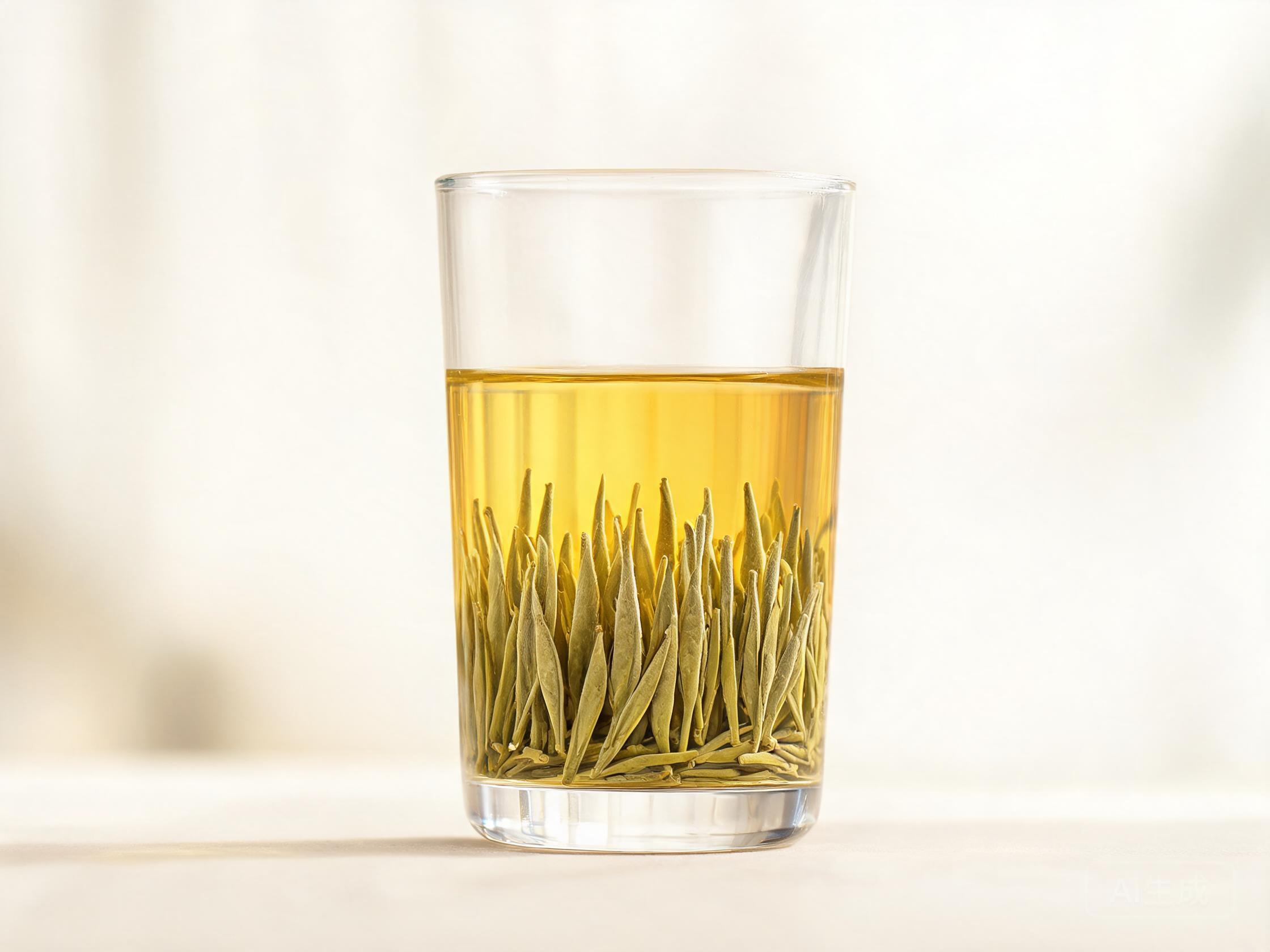
Two questions people actually ask
Two questions come up about yellow tea more than any others.
Is it just green tea that turned yellow in storage?
No, and the difference is a deliberate step called men huang(闷黄).
The maker wraps the hot damp leaf and holds it until the colour and the taste shift.
Green tea that spoiled in a warehouse tastes sour and hollow, and nobody sells it as a style.
Is it still made anywhere?
Yes, in Junshan, Mengding and Huoshan, in small quantities and at real cost.
Much of what is sold under the name is green tea, so buy on the cup rather than on the label.
A genuine yellow tea tastes sweet and round, with the grassy edge taken out entirely.
If it tastes like a green tea, it very likely is one.
Those two questions account for most of the confusion surrounding this category.
The rest of the FAQ is about price, and that has a short answer too.
Buying and storing
Yellow tea varies less by origin than most categories, and far more by maker.
There are three working centres, and each produces a recognisably different cup.
So the useful question is which house made it rather than which county it came from.
Smell the dry leaf, and expect something sweet and warm rather than grassy.
A yellowed leaf should smell faintly of cooked corn or toasted rice, with no sour note at all.
Sourness means the pile ran too long or too wet, and there is no rescuing it afterwards.
Look for intact buds, since this is mostly a bud tea and broken leaf suggests carelessness.
Ask how long the leaf was held, and listen for a number of hours rather than a shrug.
Storage follows the rules for green tea, since the leaf is still essentially unoxidised.
Keep it sealed, cool and dark, and drink it within about 18 months.
This is not a category to lay down, and ageing does not improve it the way it improves white tea.
Buy a small quantity, since a good one is expensive and a bad one is merely green.
Drinking it right
The biggest question about yellow tea is how strongly to brew it, and the instinct is usually wrong.
People treat it like green tea and use water that is too cool, which hides what the category does.
Start at 3 g in 150 ml at 85 °C and give it 2 minutes.
That is warmer than most green tea and cooler than most red tea, which is exactly where it belongs.
If the cup is thin, extend the time before you add leaf.
If it is bitter, the yellowing was probably rushed, and no setting will fix that.
A well made yellow tea is forgiving across a range of temperatures, which is a good sign.
One that only works at a single narrow setting was made carelessly.
Run two infusions and compare them, since the second tells you about the leaf and the first about the craft.
The category should hold up for 3 pours without falling apart.
Water softness matters, as it does for green tea, and hard water dulls the sweetness.
Measure both the leaf and the time, and the category becomes easy to brew.
Myths versus facts
Several popular claims about yellow tea do not hold up, and both directions do damage.
It is not spoiled green tea, since the yellowing step is deliberate and controlled.
Nor is it extinct, and the producing centres are still working.
It is also not a milder version of white tea, since the two methods have nothing in common.
What is true is that it is small, labour heavy and easy to fake with green leaf.
That combination is why the category has such a poor reputation among burned buyers.
The common misconceptions page for this category goes through the tests in detail.
It is worth reading before paying a premium price for a name printed on a tin.
Ask the seller to describe the yellowing step, and judge the shop by how that answer lands.
A maker can describe it in one sentence, and a reseller of green tea cannot.
Then brew it at 85 °C and check for the grassy edge, which a real yellow tea simply does not have.
Those two checks take a few minutes and settle the question better than any certificate.