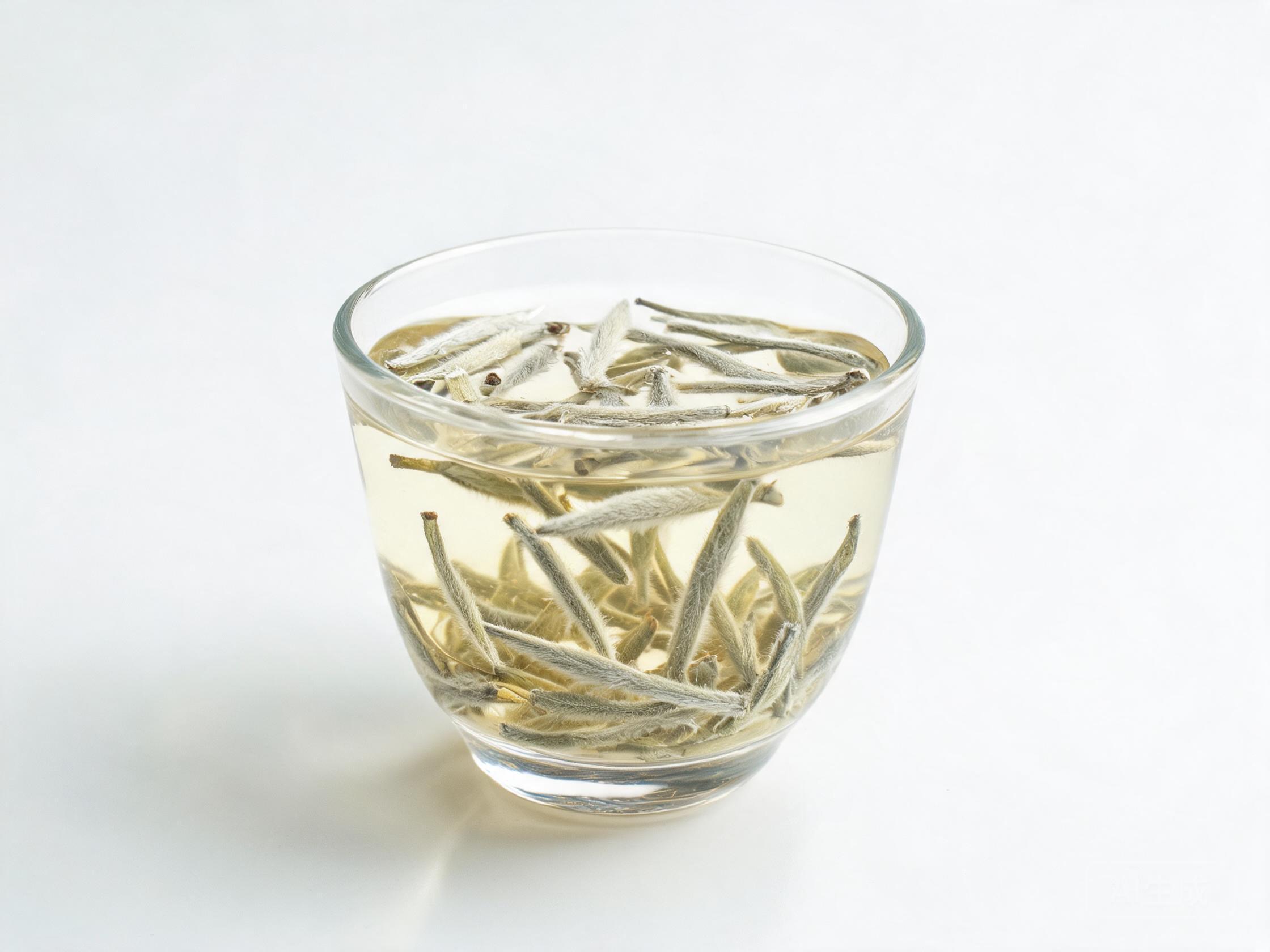
What to eat with it
White tea is picked young and dried slowly, and that leaves it low in bite and high in aroma.
It pairs best with food that has texture but very little flavour of its own.
Mooncake at mid autumn is the traditional answer, and it is a heavy one; a quarter of one is enough for a whole pot.
Fresh fruit is easier: pear, apple and melon all sit at the same weight as the tea.
Cucumber and cold tofu work because they are mostly water and therefore mostly neutral.
Light poultry, poached rather than roasted, matches without competing.
Floral desserts are the classic Cantonese pairing, and osmanthus jelly is the standard example.
Sponge cake, almond cookie and plain shortbread all behave the same way.
Bai Hao Yinzhen(白毫银针)in particular wants almost nothing beside it, since its own flavour is faint.
Shou Mei(寿眉)and other lower grade whites have more body and can take rather more.
Aged white moves again, towards dried fruit and dates rather than fresh ones.
Nuts are acceptable if untoasted, since toasting adds an oil note the tea cannot match.
A 5 g pot at 85 °C will run to 4 or 5 refills, which is long enough for one small plate.
Keep the plate to 3 things at most.
What to avoid
The mistake with white tea is assuming that delicate means it will go with anything delicate.
It will not. A strongly acidic dish will strip it completely.
Tomato based food does this reliably, which is why a salad with vinaigrette is a bad idea.
Smoked fish is the other common failure, because smoke arrives before the tea does.
Dark chocolate is too heavy here, and milk chocolate is too sweet, so neither lands.
Strong cheese behaves the same way it does with green tea.
Anything fried adds fat, and fat is what suppresses the aroma white tea is bought for.
Chilli is worse here than with any other category, since the tea has nothing to push back with.
Strong coffee in the same sitting will flatten the palate for an hour.
Mint, in gum or in food, overrides everything for longer still.
Very cold food hides the sweetness in an aged white.
If you are serving several things, put the plainest one next to the tea.
Wait at least 10 minutes after anything minty before pouring again.
A dressing at 5 per cent acidity is already enough to flatten it.
Sweet or savoury
White tea leans sweet, and most people pair it savoury by habit.
The habit comes from Chinese dim sum service, where the tea is there to cut richness.
That is a defensible use, and it is not the same thing as pairing for flavour.
For flavour, go with the sweetness: dried longan, rock sugar, a plain sweet bun.
A young Bai Hao Yinzhen(白毫银针)has a honey note that a plain biscuit will underline.
An aged Shou Mei(寿眉)has date and medicinal notes that want something equally dark.
Red date snacks and dark dried fruit are the usual answer in Fujian.
Savoury pairing works when the food is very mild: steamed tofu, plain congee, a soft boiled egg.
Salt is the risk. A little lifts the sweetness, and more than a little kills it.
Sweetness has a ceiling too. Anything with icing on it is past it.
Texture is the safe variable, since crunch costs the tea nothing.
Decide by brewing the tea first and tasting it once it has cooled a little, not straight off the boil.
A cake at 20 per cent sugar is fine, and one at 40 is not.
One biscuit is a pairing, and 6 biscuits is a snack with tea beside it.
A simple rule
Match the weight, then leave the tea alone.
White tea rewards restraint more than any other category, and it punishes enthusiasm.
A single plain biscuit is a better partner than a plate of carefully chosen things.
Contrast has a narrow window here, because the tea has so little to push with.
One useful contrast is temperature: a warm cake beside a cup at 85 degrees.
Another is texture: something crisp beside something that is almost all aroma.
Serve the food first and the tea second if you want the tea to taste sweeter.
Serve the tea first if you want to taste the food properly.
Between bites, plain water is the only cleanser that does not interfere.
Biscuits with any fat in them will coat the tongue by the third cup.
If the tea tastes like nothing after two bites, the food won.
If it tastes sweeter than it did alone, write the pairing down.
Refill at 2 minute intervals rather than topping up from a thermos.