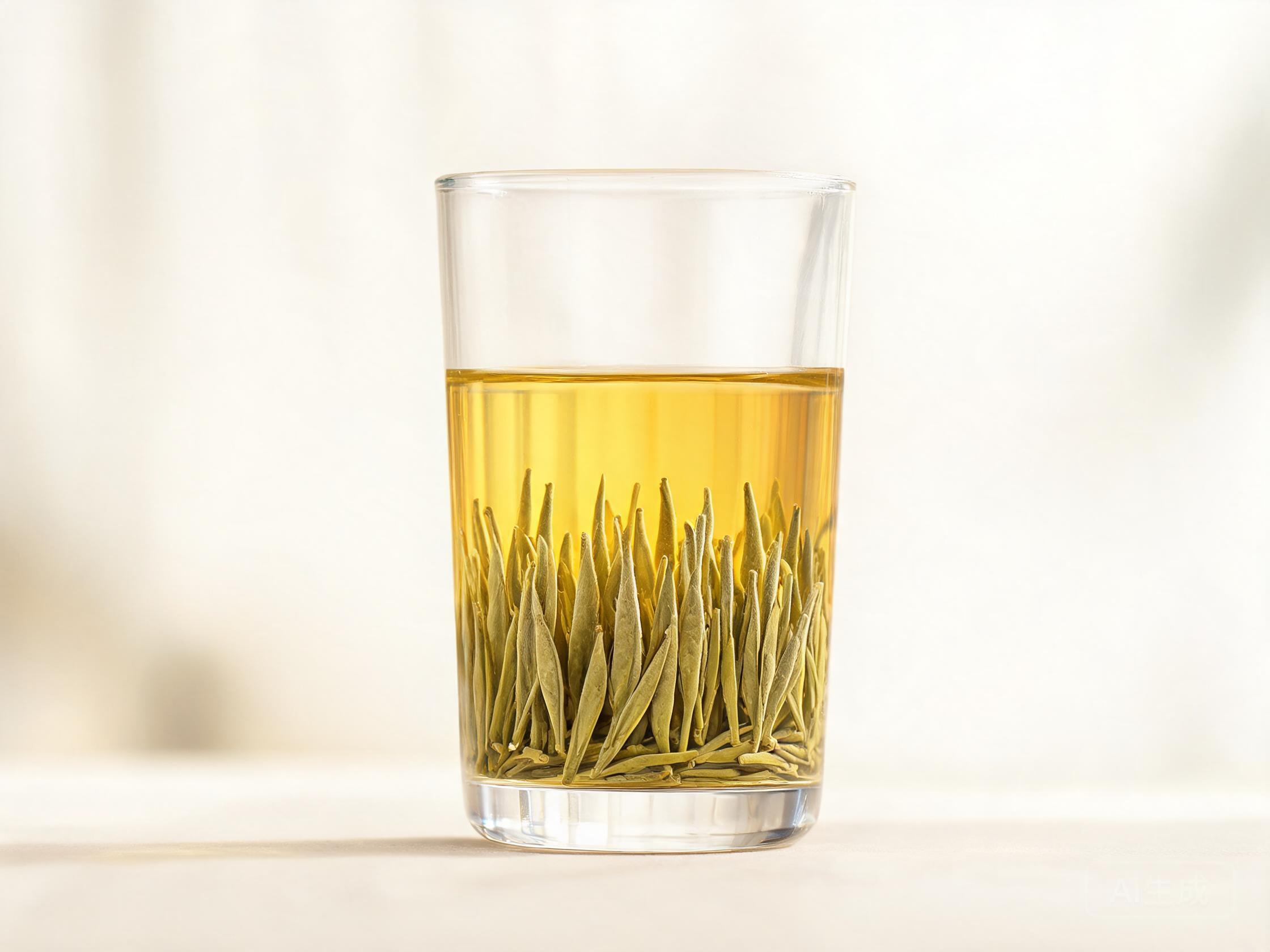
What to eat with it
Yellow tea is the rarest of the six, and most pairing advice simply ignores it.
That is a pity, because its sweet, low astringency profile makes it unusually easy to place.
The men huang(闷黄)step removes the grassy edge, so it sits between green and white.
Plain steamed buns, lightly sweetened, are the safest possible partner.
Fresh pear and Asian pear both match the sweetness already in the cup.
Lightly salted pumpkin seeds give crunch without contributing much flavour.
Steamed egg custard is the textbook savoury answer, and it is almost neutral.
Mild white fish, steamed with a little ginger, has enough weight without any aggression.
Junshan Yinzhen(君山银针)is sweet enough to stand beside a plain cake.
Huoshan Huangya(霍山黄芽)has a roast note that wants something plainer still.
Aged yellow tea drifts towards dried fruit, the same way aged white does.
Because supply is small and prices are high, keep the plate simple and cheap.
Brew 4 g at 85 °C and you have 3 cups of working time.
Two small plates beat one large one, because the tea does not wait.
What to avoid
Two things ruin yellow tea, and both are common on a Chinese table.
The first is vinegar. A splash of black vinegar will strip the sweetness entirely.
The second is strong spice, which is what most Hunan and Sichuan snacks are built on.
Because the tea is sweet and soft, it has nothing to answer either one with.
Fried food is a quieter problem: it does not fight, it simply takes over.
Anything battered falls into the same category.
Strong cheese and cured meat are too salty by a wide margin.
Very dark chocolate is too bitter, and the sweetness of the tea turns thin beside it.
Smoked food arrives before the tea and stays after it.
Chilli oil is the single worst thing you can put next to this category.
Strong mint, in any form, will make the next three cups taste of nothing.
When in doubt, remove things from the table rather than adding them.
A single teaspoon of chilli oil is enough to end the session.
Leave 5 minutes between anything pickled and the next pour.
Sweet or savoury
Yellow tea is genuinely sweet, and it is one of the few categories where sweet pairing is the default.
A lightly sweetened steamed bun is the most reliable partner, and it costs almost nothing.
Rock sugar in the cup is a regional habit, and it tells you which way the tea leans.
Dried longan and red date are the usual Fujian and Hunan answers.
Savoury is possible, but only at the mild end: steamed egg, plain tofu, soft rice.
Anything with soy sauce in it is already too salty.
Salt does the same trick here as elsewhere: a trace lifts, and more than a trace flattens.
Because astringency is low, the tea has less to offer against rich food than a green does.
That is why the savoury pairing should be soft rather than crisp.
Texture contrast is safer than flavour contrast with this category.
A custard beside a clear yellow tea is contrast done entirely through texture.
Taste the tea alone first, because its sweetness is easy to miss while the cup is hot.
Sugar at 10 per cent of the plate is plenty, and beyond that the tea disappears.
Serve the custard at room temperature rather than straight from the fridge.
A simple rule
Weight matching is easier here than anywhere else, because the tea sits in the middle.
Almost any mild food will land in the same band.
The risk is not mismatch, it is boredom, since nothing very dramatic happens.
Accept that. Yellow tea is not a category that rewards a dramatic plate.
Contrast works best through sweetness level rather than through flavour family.
A plain, dry biscuit beside a sweet cup is the whole trick.
Temperature is worth managing, because this tea cools quickly and loses aroma as it does.
Serve small cups and refill often rather than pouring one large one.
Eat between cups rather than during, so the palate has a moment to reset.
If the tea tastes flat after the first bite, the food was too salty.
A cup that tastes thin means the food was too fatty.
When it tastes exactly as it did alone, that is the result you were aiming for.
Plan on 4 refills per session, and put the food out at the 2nd.
That is 2 decisions, not 10, and both are made before the kettle boils.