What to eat with it
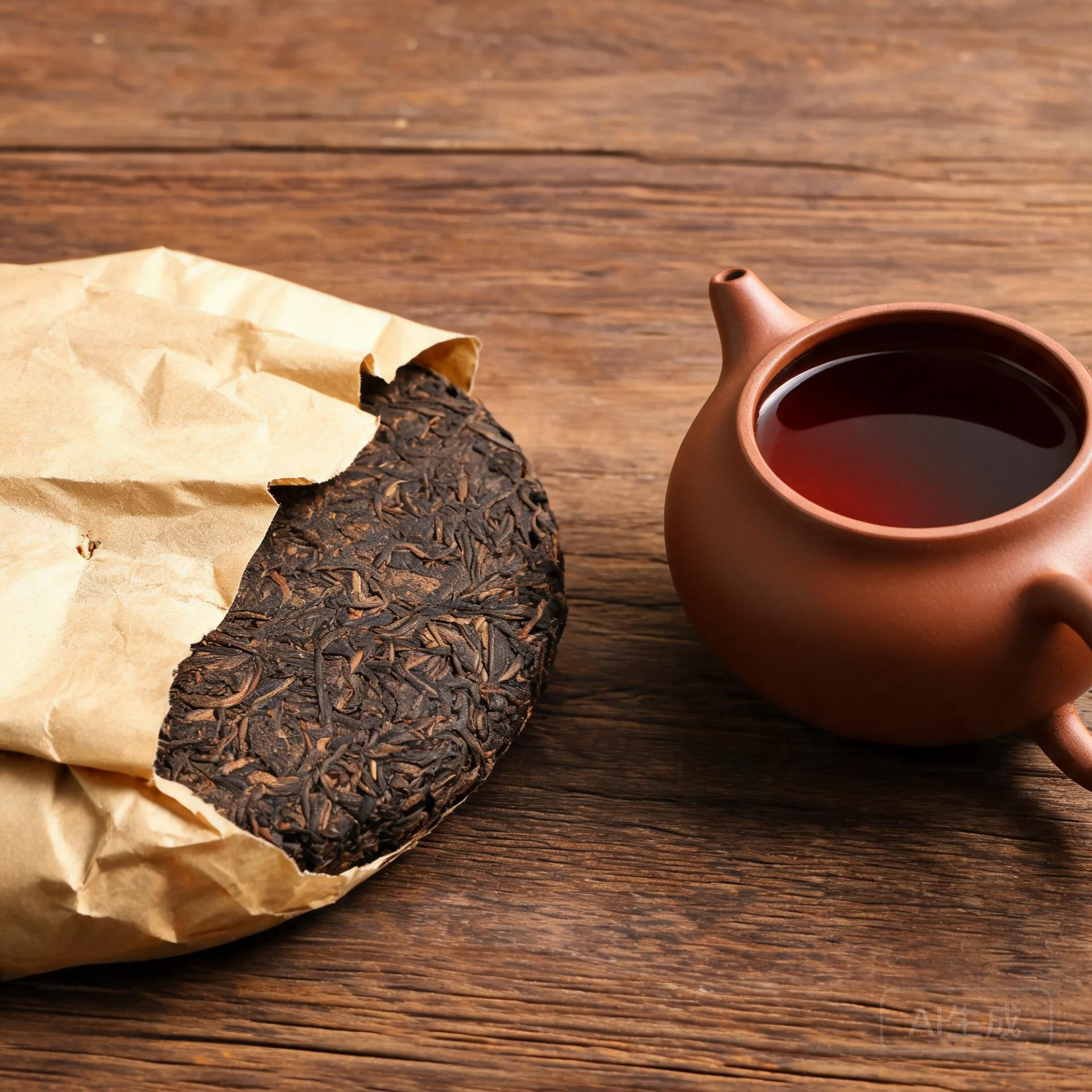
Dark tea, which covers Pu-erh(普洱)and Fu Zhuan(茯砖), is the heaviest category and the most forgiving with rich food.
It exists in part because it was traded to regions with fatty diets, and it shows.
Roasted meat, particularly lamb, is the traditional partner.
Anything fried is acceptable here in a way it is nowhere else.
Nuts, seeds and dried meat all sit comfortably beside it.
Aged sheng(生)has more bite and wants plainer food than shou(熟)does.
Shou(熟), which is fermented, has an earthy note that goes with mushrooms and root vegetables.
Fu Zhuan(茯砖)is the brick tea of the northwest, and it is served with heavy salty food by design.
Butter tea, made with yak butter and salt, is the extreme version of the same idea.
Dark chocolate at 80 per cent works, which it does with almost nothing else.
Dried dates and walnuts are the standard Chinese answer.
Nothing delicate survives next to this tea, and nothing delicate should be tried.
An 8 g dose in a 120 ml pot is normal for shou(熟), and it will run for 10 steeps.
Fu Zhuan(茯砖)is often broken off a 1 kg brick, which tells you how it is meant to be used.
What to avoid
Dark tea is hard to overpower, and that is exactly what makes people careless.
It is not indestructible. Chilli still wins, and it wins absolutely.
Vinegar is nearly as bad, and it is common in the cuisines that drink this tea.
Very sweet food is the other failure: the earthiness of the tea turns muddy beside sugar.
Icing, syrup and condensed milk all do this.
Fresh fruit mostly fails for the same reason, since it adds acid and sugar together.
Anything floral is wasted here, because the tea simply covers it.
Light delicate snacks are not so much clashing as absent.
Strong coffee in the same hour will flatten even this.
Mint remains the single most effective way to ruin the next cup.
Cold food suppresses the earthy aroma, which is the whole point of an aged dark tea.
Serve it hot and serve it plain, because the food is the variable, not the tea.
Ten minutes after a chilli dish, the tea still tastes of almost nothing.
Sweetness above 20 per cent turns the earthy note muddy immediately.
Sweet or savoury
Dark tea sits firmly at the savoury end, and sweet pairing is a niche rather than a rule.
The exception is aged sheng(生), which develops a camphor and date sweetness.
That one can take a plain sweet biscuit, and not much more.
Shou(熟)and Fu Zhuan(茯砖)are savoury by construction.
Savoury pairing is about fat and salt, and both are tolerated at levels no other tea accepts.
That tolerance is the reason the category exists in the form it does.
Roasted meat, fried food, hard cheese and cured sausage all work.
Salt in the cup, as in butter tea, is a regional practice rather than a mistake.
Sweet pairing, where it is attempted, should use dried fruit rather than refined sugar.
Dates, walnuts and dried longan are the usual answers.
Anything with icing is past the limit of even this tea.
Decide by age: older tea, plainer and drier food.
Butter tea runs to about 3 per cent salt, which no other tea would survive.
One date and 2 walnuts is a complete pairing here.
A simple rule
The rule for dark tea is shorter than for any other category: bring fat.
Fat, salt and roast are what this tea was built to sit beside.
Weight matching is almost automatic, since few plates are heavier than the tea.
The real risk is going too light, which produces no pairing at all.
Contrast is available at the edges: something crisp beside something earthy.
Pickled vegetables are the traditional contrast, and they work because they are sharp rather than heavy.
Temperature should stay high throughout, and the cups should be small.
This tea is often served before and during a meal rather than after it.
That is the correct order, and reversing it makes the food taste blunt.
If the tea tastes thin, the food was too light for it.
If it tastes muddy, the food was too sweet.
When the earthy note clears after a bite, you have it right.
Serve at 95 °C or hotter, and keep the cups at 30 ml.
A session of 8 steeps is roughly an hour, and the food should last as long.
Decide how fatty and how salty, and stop there.
Everything else follows from that.