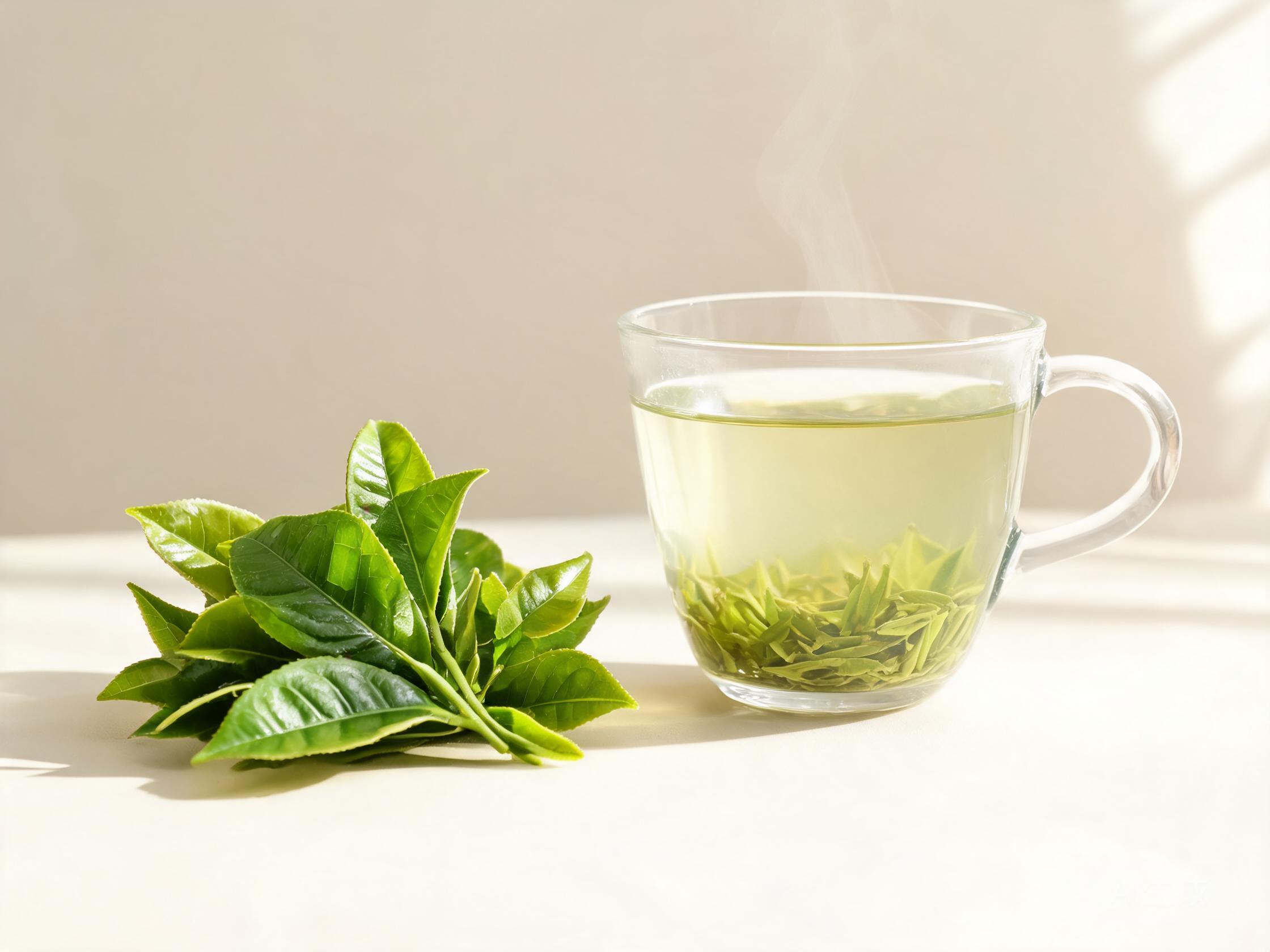
What to eat with it
Green tea is the easiest category to pair badly, because most of it is delicate and most snacks are not.
Start with weight. A pan fired Chinese green carries a nutty, slightly toasty note that sits well beside plain rice crackers.
Steamed greens go with steamed food: a plate of plain steamed fish, or edamame with nothing on it.
Umami is the bridge here. The savoury depth in a good sencha meets the same note in kombu, tofu and lightly salted edamame.
Fresh cucumber works, and pickled cucumber does not, because vinegar fights the sweetness in the leaf.
Mochi with a light red bean filling is the classic Japanese partner, and the reason is texture rather than flavour.
Citrus is safer than most fruit. A segment of orange lifts a grassy green without coating the palate.
Very sweet fruit does the opposite: mango and lychee leave a film that dulls the next sip.
Plain sponge cake, castella and other low fat sweets behave well because they add almost no fat.
Anything with butter in it does not. Fat coats the tongue and the tea arrives muted.
Nuts are a mixed case: untoasted almonds are fine, roasted and salted ones are too loud.
If you want one default, use a plain rice cracker and check whether you can still taste the tea afterwards.
Brew it at 80 °C with 3 g of leaf and the pairing will hold for about 3 cups.
A 4 minute steep makes it bitter enough to need food, and that is a reason to fix the brew rather than add a biscuit.
What to avoid
The rule is simple enough to state once: do not let the food out shout the drink.
Strong cheese is the most common mistake, and blue cheese is the worst version of it.
Dark chocolate above 70 per cent cocoa behaves the same way, and it is often recommended anyway.
Chilli is not about intensity alone. Capsaicin numbs the palate for several minutes and the next cup tastes of nothing.
That is why Sichuan snacks and green tea are a poor match, however good each one is alone.
Vinegar based dressings flatten the sweetness in a young green leaf.
Very sweet desserts do the same thing from the other direction, since sugar raises the perception of astringency.
Anything smoked competes rather than complements, because smoke reads as a flavour of its own.
Garlic in quantity has the same problem, and it also lingers into the following day.
Carbonated drinks between sips will scrub the palate and reset it, which sounds useful and is not.
Iced food dulls aroma, and aroma is most of what a delicate green has to offer.
If a pairing needs a sauce to work, the pairing is not working.
Anything served above 60 °C numbs the palate before the tea gets there.
Give the mouth 2 minutes after a spiced dish, and even then the first cup is muted.
Sweet or savoury
Green tea is usually filed under savoury, and the filing is only half right.
A delicate pre Qingming(清明)leaf has real sweetness in it, and a plain sweet biscuit draws that out.
A sturdy, later picked tea has more bite and less sugar, and it wants something salted.
Roasted greens sit on the savoury side by construction, since the roast removes the sweetness.
Matcha is the exception in both directions: it is thick enough to stand up to sugar and bitter enough to need it.
Sweet paired with sweet usually fails, because the second sweetness cancels the first.
What works is a sweet tea with something neutral, or a neutral tea with something lightly sweet.
Savoury pairing has an easier rule: match the salt level, and keep it low.
Salt at the right level makes a green tea taste sweeter than it is.
A pinch too much and the same tea turns flat and slightly metallic.
Savoury also means texture: a crisp thing beside a soft drink keeps the mouth interested.
Let the cup decide. Brew it, taste it plain, and only then choose a direction.
A 5 g dose brewed strong will take salted food that a 3 g dose cannot.
The sweetness in the leaf drops sharply after the 2nd infusion, so bring the food in early.
A simple rule
Pair by weight first and by flavour second, and most mistakes disappear before they happen.
Weight means fat, sugar, salt and aroma intensity taken together.
A light tea beside a light snack is safe, and safe is a perfectly respectable result.
Contrast is the second move, and it only works once weight is already matched.
A slightly bitter green beside something faintly sweet is contrast done at equal weight.
A delicate green beside salted nuts is contrast done at unequal weight, and it fails.
Temperature matters too, and it is usually overlooked.
Food straight from the fridge suppresses aroma, while the same food at room temperature does not.
Sequence matters as well: eat, then drink, and note what the tea does afterwards.
A tea that vanishes means the food was too strong.
A cup that turns bitter means the food was too sweet.
If neither happens, write the pairing down, because you will not remember it next week.
Two variables decide almost everything: brew strength and plate weight.