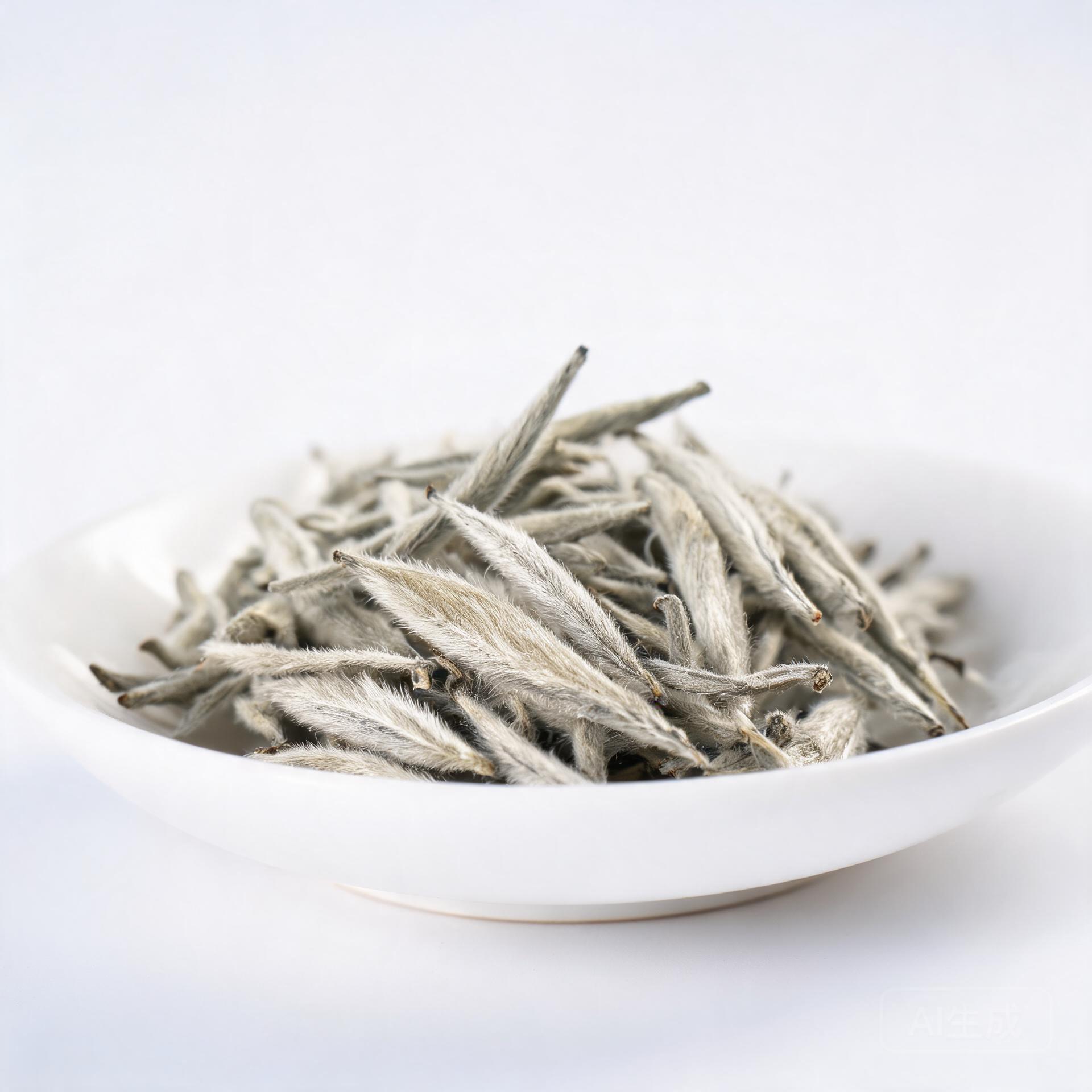
Its season
White tea’s season runs from late spring into summer, which is not when it is picked.
Picking happens in March and April, and the leaf then rests before it is sold.
A new Bai Hao Yinzhen(白毫银针)is drinkable within weeks, though most people meet it in summer.
Summer is where it earns its place, because the category is built for cooling down.
Brewed at 80 °C and drunk warm rather than hot, it is the least demanding tea in the cupboard.
Cold brewed overnight in the fridge, it stays sweet where green tea turns bitter.
That is the practical case for it: 8 hours in cold water and it comes out drinkable.
Autumn is a quieter fit, since the tea has neither the weight nor the roast for cold mornings.
Winter belongs to aged white, which is a different material altogether.
After 3 years of storage a Shou Mei(寿眉)turns dark, sweet and faintly medicinal.
Stored at room temperature in a sealed wrap, it will keep moving for a decade or more.
So white tea has two seasons, and they are served by two different teas.
What arrives in summer is therefore a spring leaf that has had time to settle.
Why the season fits
The link between tea and season is body and temperature, and white tea is at the light end.
In hot weather that is exactly what is wanted, and in cold weather it is exactly what is not.
Aroma is the second link, and the aroma of a white tea is mostly floral and hay like.
Those read as summer smells, which is partly cultural and partly the chemistry of the drying.
A young white is dried with minimal heat, so it keeps the volatile compounds of the leaf.
That is also why it needs no sugar when it is served cold.
An aged white is a separate case, and it behaves like a winter tea for different reasons.
Storage produces darker, heavier compounds that suit cold weather.
The same bush, 3 years apart, gives you two different seasonal drinks.
Summer white is about refreshment, and winter white is about warmth and weight.
Neither is wrong, and confusing them is the usual reason people call the category inconsistent.
Decide which one you are buying before judging it against the calendar.
Freshness is the wrong word for the aged version, and age is the right one.
Off-season
Drinking a young white in January is allowed, and it needs two adjustments.
Use more leaf, around 5 g for a 300 ml pot, because the flavour is faint to begin with.
And use hotter water, closer to 90 °C, since 80 will not pull enough out of it.
A smaller pot helps again, because the heat stays where the leaf is.
Serve it in small cups so it does not cool in the cup itself.
Roast is not an option here, since white tea is defined by the absence of it.
Age is the option instead, and it is the better one.
An aged Shou Mei(寿眉), simmered rather than steeped, is a genuine winter drink.
Keep it at a low boil for 5 minutes and it will stand up to cold weather.
That preparation is common in Fuding and rare outside it.
If a young white tastes of nothing in winter, the problem is the method, not the month.
Fix the dose and the temperature before you blame the season.
A small pot also means the tea is finished before it goes cold.
Year-round note
White tea covers the year better than most categories, but only if you hold two versions.
A young Bai Hao Yinzhen(白毫银针)or Bai Mu Dan(白牡丹)covers May to September.
An aged Shou Mei(寿眉)covers November to March.
The gap in October and April is real, and either one will do.
Compressed white, pressed into cakes after 2010, ages faster than loose leaf.
That makes it the practical choice if you want a winter white and cannot wait 7 years.
Storage conditions decide the outcome more than the pressing does.
Keep it dry, sealed and away from light, and it will age slowly and cleanly.
Keep it damp and it will go sour, which is not ageing.
Buy the young one each spring and set aside a cake each year.
After 4 or 5 years you will have a winter supply without having planned much.
The calendar then stops being a rule and becomes a rotation.
Loose leaf ages more slowly, which suits anyone who is not in a hurry.