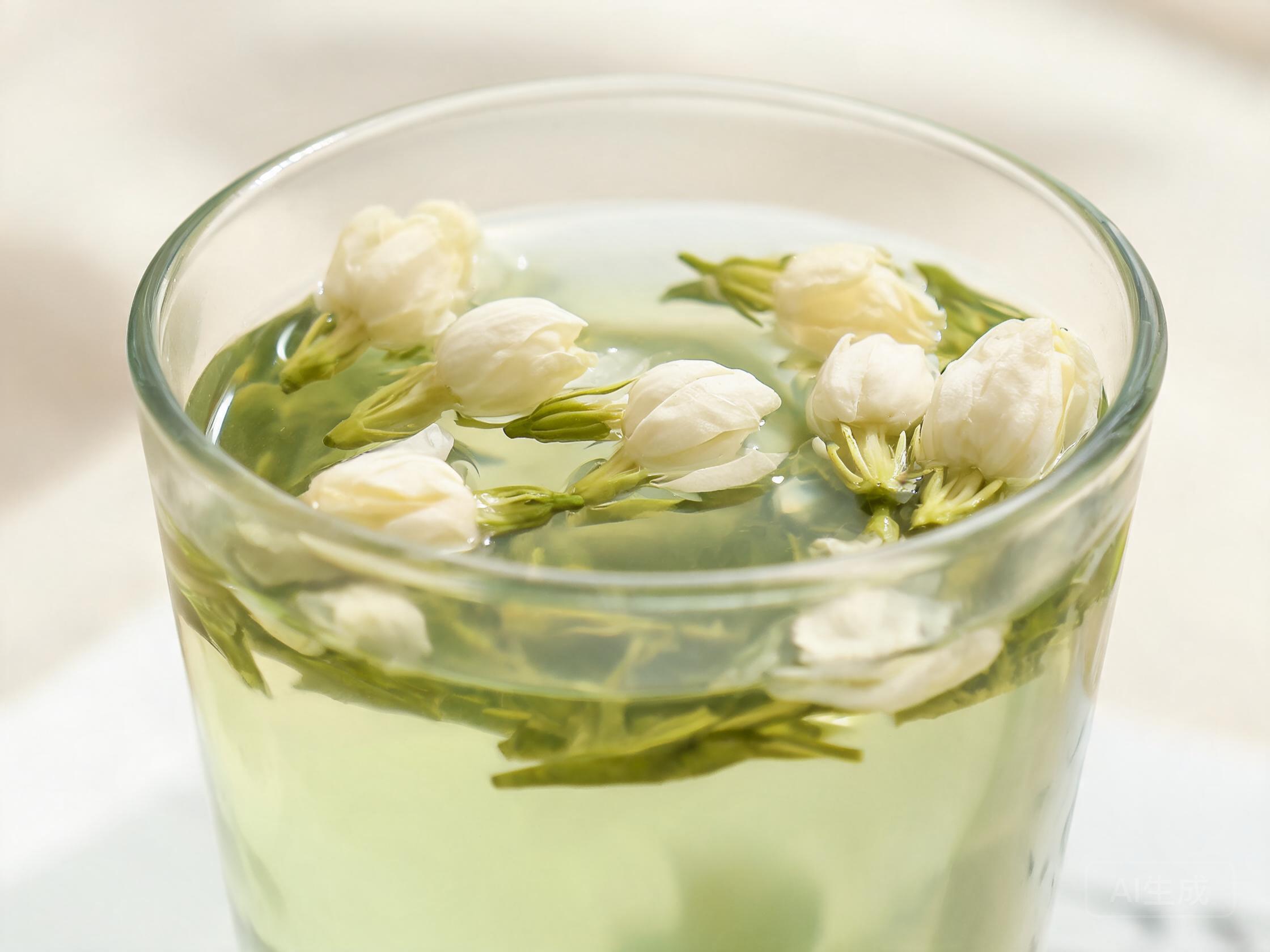
The cultivars that define the cup
Reprocessed tea depends on 2 cultivars at once, the base leaf and the flower.
Hengxian green and Fuding Dabai supply most of the jasmine base in the trade.
Fuding Dabai(福鼎大白)is better known as a white tea bush, and it takes scent well.
Its fat bud holds fragrance, and its neutral profile leaves room for the flower.
Hengxian’s local green is cheaper and plainer, and it carries most of the volume.
The jasmine itself is a double petal cultivar bred for fragrance and for yield.
It opens in the evening, and that timing is why scenting happens at night.
A single petal flower opens too fast and gives up its scent before the leaf can take it.
For compressed aged styles the base is whatever the parent region grows.
A compressed white cake carries a Fuding cultivar, and a pu-erh cake carries dayezhong.
The flower is the part that gets bred, and the base is the part that gets chosen.
The new variety in this category is a flower and base match rather than a new tea plant.
That is why the label usually names the flower and stops there.
Why breeders select
Selection here is unusual, since the flower and the leaf are bred for different things.
Fragrance strength is measurable, and it is the one trait the flower trade pays for.
The flower is bred for fragrance strength, petal count and opening time.
The base is bred for a neutral profile and for a leaf that absorbs scent and holds it.
A base with a strong aroma of its own fights the flower, and the result is muddy.
A base that is too thin loses the scent within a year of packing.
Yield matters to the flower grower, since blossoms are picked by weight every evening.
Disease resistance matters to both, because a wet flower field rots quickly.
How the leaf responds to repeated wetting is the decisive base trait.
Each scenting round adds moisture, and a leaf that cannot take it turns sour.
The same county can supply bases that behave nothing alike.
Knowing the base cultivar says more than knowing the flower does, which surprises people.
The flower gets the attention, and the base decides whether the tea lasts.
Clones versus landraces
The base for scented tea is mostly clonal, and the flower is mostly clonal too.
A clone gives uniformity, and every plant behaves the same in the field and the factory.
That suits a scenting operation, which runs to a fixed schedule every night for weeks.
A landrace base would ripen unevenly, and the factory cannot wait for it.
Old seed grown populations do appear at the premium end, and they vary more.
Some drinkers find those cups more interesting, and the variation is genuine.
Neither is automatically better, and the trade is consistency against diversity.
Clones trade genetic diversity for uniformity, and the cost shows up late.
A field of one genotype is efficient and vulnerable at the same time.
A mixed population loses part of itself and carries on.
Uniformity wins in the flower field, and the base follows whatever factories can get.
For a crop picked every evening through a season, uniformity wins on economics.
For the cup, the argument is genuinely open.
Reading the label
A cultivar name on a scented tea is useful, and the flower name matters more.
‘Double petal jasmine’ tells you the scent will be strong and the picking nightly.
‘Fuding Dabai’ as a base tells you a fat bud and a light, sweet cup.
Neither tells you how many rounds were run or whether oil was used instead.
That is the fact that matters most, and almost no label volunteers it.
No base name at all usually means plain Hengxian green, which is perfectly fine.
The absence of any flower description usually means a blended or a sprayed scent.
A base name is a bonus here, and a flower description is a requirement.
Buy 25 g of 2 bases of the same flower and brew them at 85 °C with 3 g in 150 ml.
The difference between a bud base and a leaf base shows up within 1 infusion.
Once you can taste the base, the flower stops dominating your judgement.
Smell the dry leaf before brewing, since sprayed scent gives itself away immediately.
Two bases, one session, and the category becomes easy to buy.