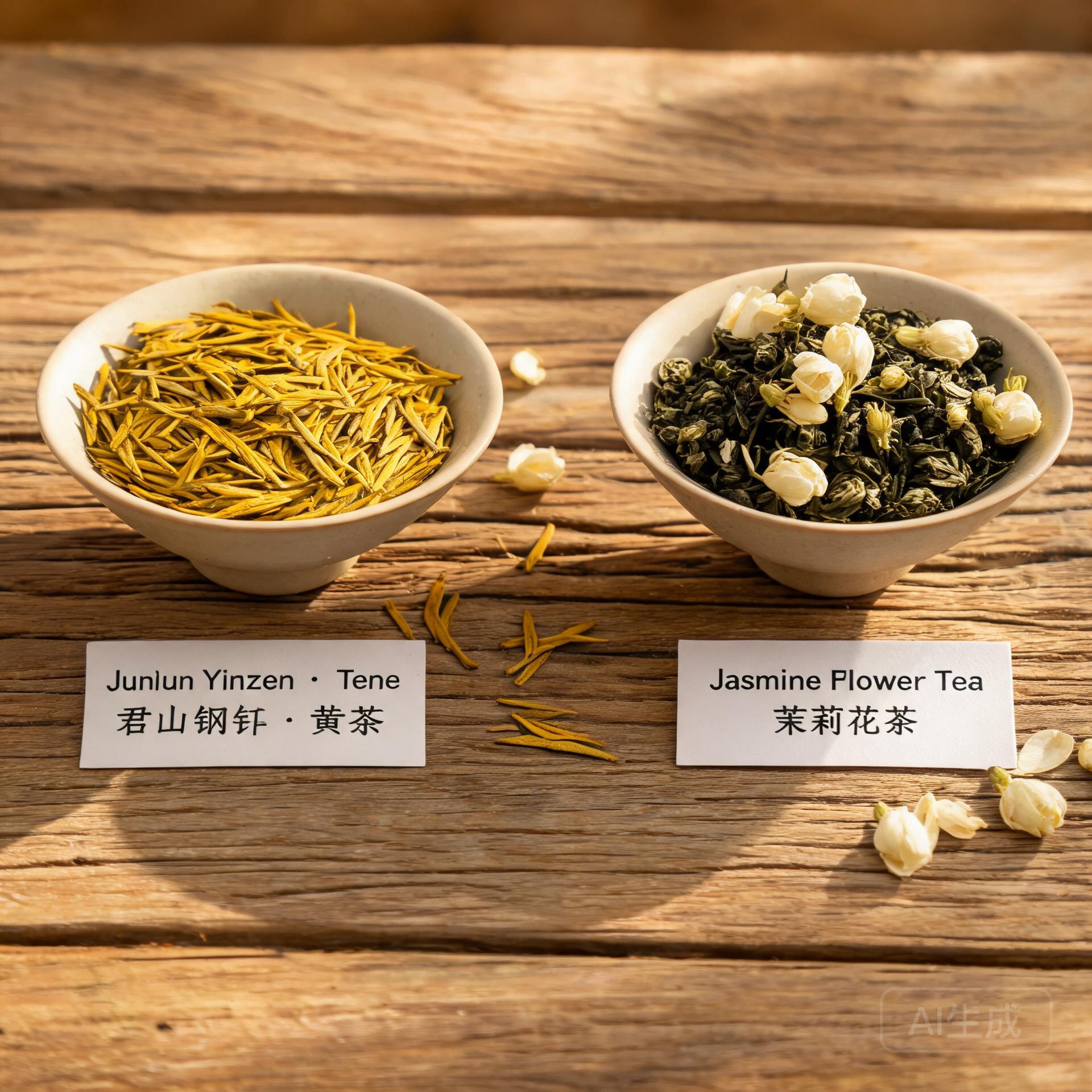
The pattern
Reprocessed tea has no regional pattern in the usual sense, and that is the first thing to accept.
The places that matter are where the work is done rather than where the leaf grew.
Hengxian scents jasmine, Fuzhou scents it differently, and Yunnan presses cakes.
Xinhui supplies the peel, and the peel is half of what you taste in a gan pu(柑普).
Base leaf travels into all of them, and the packet usually refuses to name it.
So one jasmine tea can be Hengxian by process and Fujian by leaf, while another is the reverse.
What looks like a regional difference is often a difference in how much flower was used.
A tea scented 3 times and one scented 6 are different products turned out in the same county.
That is the pattern, and it is a pattern of intensity rather than of place.
Two categories live inside this label, scented tea and compressed tea, and they barely overlap.
Treat them separately and the map makes sense, and treat them together and it never will.
What drives it
Labour cost is the first driver, since scenting by hand is slow and gets slower as wages rise.
Hengxian grew because it raises the flowers and the tea in one county, which removes a transport step.
Fuzhou’s older workshops lost that race, and much of what they knew is no longer practised.
Flower quality is the second driver, and it depends on the hour the buds are picked.
Buds taken in the afternoon open in the evening, and that is when they give up their scent.
Leaf and flower are heaped together for one night and separated again before dawn.
Compression is driven by logistics instead, since a cake travels and ages better than loose leaf.
That decision was made centuries ago on the caravan routes, and it has never been reversed.
Storage is the third driver for anything compressed, and it beats origin after a few years.
With peel, the driver is the citrus variety and the drying, both of them local to Xinhui.
Cost, material and logistics, in that order, account for the whole category.
Learning the map
Learn this category by process rather than by place, because the process is what you are buying.
Start with the gap between scented and applied aroma, which is the largest gap of all.
A traditionally scented tea still smells of flower after several infusions, and a sprayed one does not.
Next, learn how many scenting rounds a tea had, which sellers will tell you if they know.
More rounds means heavier cost and a longer lasting aroma, and the price should show it.
After that, learn the base leaf, which is the question nobody answers on the packet.
Ask directly, and treat a seller who cannot say as a seller who does not know.
With compressed tea, learn the maker before the region, since factories are more consistent than mountains.
With gan pu, learn the peel before the tea, because the peel is the expensive half.
Look for visible oil glands in the rind, which is the one field test that actually works.
Place is the last thing to worry about here, and in most purchases it never comes up.
Tasting across regions
Taste reprocessed tea for how long the added character lasts rather than for where it came from.
Use 5 grams in a 100 ml vessel at about 95 °C and steep for 30 seconds.
Smell the lid at every infusion, since the aroma is the entire point of the category.
Traditional scenting fades slowly and stays recognisable through to the 4th infusion.
Applied scenting arrives hard in the first infusion and is mostly gone by the third.
Compressed tea wants boiling water and a longer steep, since the leaf is dense and often aged.
Rinse the leaf once and discard that water, which wakes a cake up and clears storage dust.
With gan pu, break a little peel off and taste it on its own before mixing the two.
Xinhui peel tastes bright and slightly bitter, while a substitute tastes flat and sugary.
Run two teas side by side rather than four, because the aromas interfere with each other.
Anything you cannot smell by the 4th infusion was never really in the leaf.