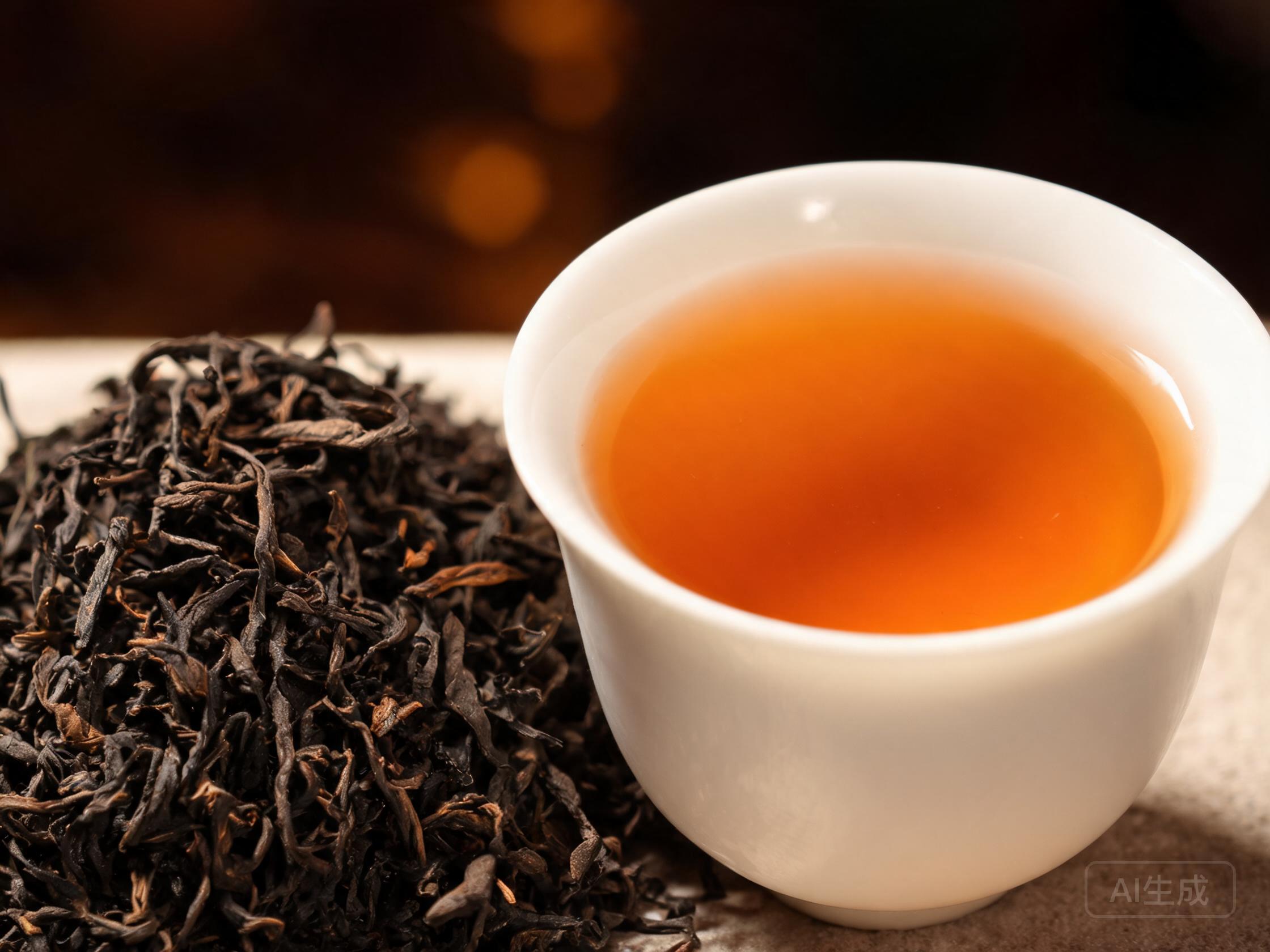
Teas named by place
Red tea is China’s most exported category, and its regions were shaped by that trade.
Zhengshan Xiaozhong(正山小种)comes from Tongmu in the Wuyi mountains, and it is pine smoked.
The smoke came from drying over fires, and the unsmoked version now outsells it.
Keemun(祁门红茶)from Anhui is refined and orchid sweet, and it was made for export.
Dianhong(滇红)from Yunnan is golden and malty, built on a large leaf varietal.
Yingde(英德红茶)from Guangdong is brisk and fruity, and it was planted for volume.
Sichuan and Fujian add more, and each region tuned the process to its own leaf.
Assam in India and Ceylon in Sri Lanka sit outside China and dominate the world market.
Both are brisk and malty, planted for a different climate and a different buyer.
The export trade is the reason these regions were planted the way they were at all.
So the category is less a single style than a set of regional answers to one question.
Full oxidation, and then whatever the local leaf and the local market asked for.
That leaves 6 regions, one method, and very little family resemblance between them.
Why region matters
Region matters in red tea because oxidation takes the leaf somewhere and cannot bring it back.
Once a leaf is fully oxidised its character is fixed, and that leaf came from somewhere.
Soil and altitude decide the thickness, and the cultivar decides the aroma.
Yunnan’s large leaf bush gives Dianhong its malt and its golden bud.
Anhui’s smaller leaf gives Keemun its cocoa and dried rose.
Neither can be produced from the other’s bush, whatever the factory does.
A region earns its name by setting a standard that other producers then copy.
Keemun did that for the Chinese export style, and Assam did it for the breakfast blend.
Regional fame outlasts marketing, and it outlasts the trade that created it.
The port that moved this tea closed long ago, and the regional names stayed behind.
That is also why blending is normal here and treated as scandalous almost nowhere else.
What a name buys you is a description of the leaf, and that is the useful part.
It does not buy you the year’s quality, which rests on weather and on the maker.
When regions cross borders
Red tea has travelled more successfully than most categories, because oxidation forgives a great deal.
The bush is portable, the process is simple, and the result is recognisable anywhere.
Assam bushes were carried to Georgia and to Kenya, and the tea still sells as black tea.
That is honest, since nobody calls Kenyan tea Assam.
The borrowing happens with Chinese regional names, which carry more price.
A Keemun style made outside Anhui is a different tea and should be sold as one.
For honest buying, the region should name where the leaf grew and where it was made.
A process described as an origin is the standard confusion in this category.
Ask which county for Chinese tea, and which estate for Indian and Sri Lankan tea.
Both answers exist, and a seller who knows the tea will have one ready.
Blended breakfast teas are the exception, and they are sold as blends, which is fair.
Everything else should name a place you could actually visit.
How to choose among them
Choosing among red tea regions is mostly choosing between sweet and brisk.
Keemun for cocoa and rose, Dianhong for malt and body, Yingde for brightness.
Zhengshan Xiaozhong for smoke, and Assam or Ceylon for a tea that takes milk.
That is a short list of preferences, and each one maps cleanly onto a region.
Buy 25 g of each and brew them at 95 °C with 4 g in 150 ml.
Give each one 3 minutes, and taste them in order from the lightest to the strongest.
Then try them with milk, since that reorders the ranking and surprises most people.
Milk is the great leveller, and it hides the regional differences you just paid to taste.
Once a region suits you, estates and grades are the next level of detail.
Grade names in this trade describe leaf size, and they say little about flavour.
Treat them as a sorting term rather than as a quality ladder.
Go one level down at a time, and stop when the price outruns the difference.
Six regions, one afternoon, and a clear answer by the end of it.