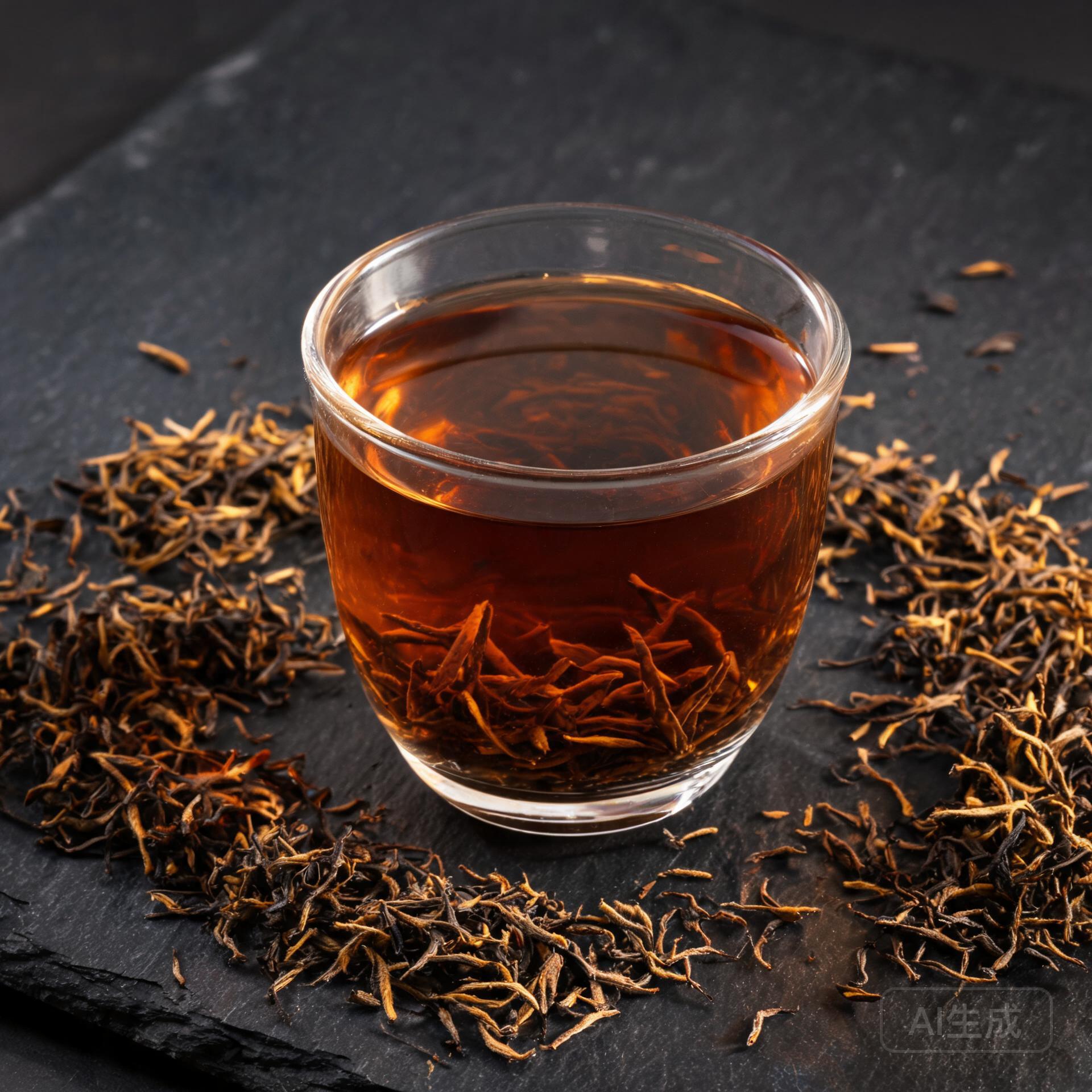
Teas with a documented past
Red tea history is a story of export, and it is better documented than any domestic category.
Zhengshan Xiaozhong(正山小种)is dated by tradition to the late Ming, around the 1560s.
It comes from Tongmu in the Wuyi mountains, and the smoke came from drying over pine fires.
Whether it was the first red tea or simply the first one exported is still argued.
Keemun(祁门红茶)was created in 1875, and it was made to meet foreign demand.
That is a documented founding, with a person and a year attached to it.
Dianhong(滇红)is younger still, developed in Yunnan during the 1930s.
Jinjunmei(金骏眉)arrived in 2005, and it is the newest famous name in Chinese tea.
The great trade ran through Guangzhou and the Fujian ports to Europe, and the paperwork is thick.
That trade shaped the category, since it was built for a foreign cup from the beginning.
Chinese drinkers took it up later, and the home market still prefers it mild.
Four dates, three provinces and one export route, and that is the whole history.
Why history matters
For red tea, history is useful because the trade left records that can actually be checked.
Export invoices, port records and company archives survive in a way tribute lists do not.
You can trace a grade and a price by year, which is rare in tea.
It also tells you what the tea was made to do, which was survive a long sea voyage.
Full oxidation was a shipping decision before it became a taste decision.
A tea that keeps for months at sea has a different chemistry from one meant to be drunk fresh.
That is why red tea tolerates boiling water and milk in a way green tea never will.
The record explains the naming too, since foreign buyers named teas by port.
Bohea, Congou and Souchong are trade words, and they describe grades rather than gardens.
Knowing that stops you reading them as place names and being misled.
Read the record as evidence about commerce, and drink to judge the leaf.
One tells you why the tea exists, and the other whether it is any good.
Both halves are needed, and buying on only one of them is how people end up disappointed.
Tribute and the record
Red tea has almost no tribute history, and that is what makes it unusual.
It was a commercial tea made for export, and the court had very little to do with it.
The records that matter here are ledgers rather than imperial lists.
Zhengshan Xiaozhong is the partial exception, since Tongmu sent tea north as well as abroad.
Most of the rest was made for foreign buyers from the start.
That changes what the history can tell you, since it records demand and price rather than ceremony.
A tea that sold well for two centuries proved something about consistency, not about flavour.
Consistency is worth knowing about, and it is not the same as quality.
Keemun’s founding in 1875 is the cleanest example, since it was created to fill an order.
Read the record as proof of demand, then judge the current cup on its own merits.
A blend base chosen in 1875 has no obligation to please you now.
The useful part is that it explains why the tea tastes the way it does.
That is a shorter claim than most teas can make, and it happens to be honest.
A caveat
Export history gets borrowed in a particular way, since old trade names sound like heritage.
A modern tea sold as an old port grade may be neither old nor from that port.
The reliable claim names a document, and the vague one names a century.
‘Traded since the Ming’ is a mood, and ‘shipped through Guangzhou after 1875’ is checkable.
Be careful with founding dates, since several famous names were created to fill a market gap.
That is not deception on its own, and it does mean the lineage is shorter than the label implies.
Vintage claims on red tea should be ignored outright.
The category does not improve with age, and an old red tea is usually just stale.
Buy 25 g before believing any of it, and brew it against a fresh lot of the same grade.
Check the citation rather than the mood, and treat an unverifiable date as decoration.
A seller with a real source names it without being asked twice.
That test takes 10 seconds, and it costs nothing to run.