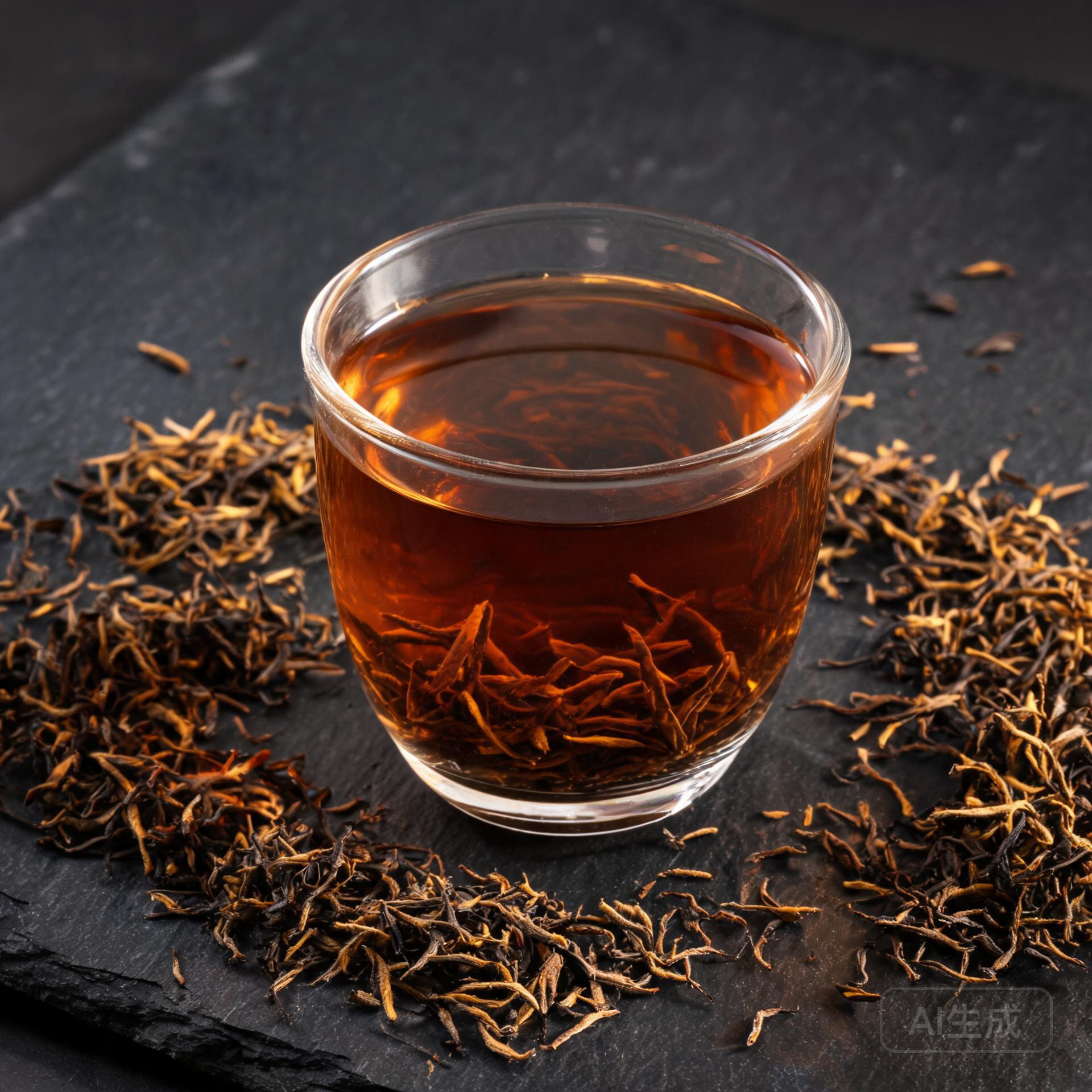
How regions differ
Red tea is made on every continent, and the regional differences are unusually large for one process.
Zhengshan Xiaozhong from Tongmu in the Wuyi mountains is the oldest style, and it is smoked over pine.
That smoke is not incidental, since the drying fires in those stone houses were the only heat source available.
Keemun from Anhui is the opposite: unsmoked, finely made, with the aroma Chinese drinkers call orchid.
Dianhong from Yunnan is made from broad leaf assamica, and it carries golden tips and a malty sweetness.
Yingde in Guangdong grows the same assamica further south, and the tea there is brighter and fruitier.
Jin Jun Mei, made from buds alone in Tongmu since 2005, is a new style built on an old district.
Outside China, Darjeeling keeps a light oxidation and a muscatel character that no Chinese region matches.
Assam and Kenya run full oxidation and heavy rolling, and both are designed to take milk.
Ceylon sits between them, and its high grown teas are brighter than anything from the Indian plains.
The process is the same in all of these cases, and the results share almost nothing.
Why the same tea diverges
The first divergence is leaf, because broad leaf assamica and small leaf sinensis make different tea.
Assamica gives body, malt and a darker liquor, and it is why Dianhong looks golden tipped.
Sinensis gives a lighter cup and a more delicate aroma, which is what Keemun is built on.
Elevation is the second variable, and Darjeeling at 2,000 m oxidizes far more slowly than Assam at 100 m.
Slow oxidation preserves aroma and fast oxidation builds body, and no district gets both.
Rolling comes next, and orthodox rolling keeps the leaf whole while crush, tear and curl shreds it.
A shredded leaf brews in 2 or 3 minutes and gives everything at once, which suits a bag and milk.
A whole leaf needs 4 or 5 minutes and gives its character in stages, which suits drinking it plain.
Smoking is the clearest regional choice, and it survives in Tongmu mainly because buyers still pay for it.
Grading cuts across all of this, since a broken grade from one district can out brew a whole leaf from another.
So compare regions only after you have matched the leaf grade, or the comparison means nothing.
Learning the signatures
Dry leaf is the fastest test, since tip content separates the assamica districts at a glance.
Golden tips mean Yunnan or Yingde material, and a black uniform leaf means small leaf sinensis.
Smoke is unmistakable in the bag, and it should smell of pine wood rather than of tar.
Keemun smells faintly of orchid and cocoa, and it is subtle enough to miss in a strong brew.
Brew 4 grams at 95°C for 3 minutes, and taste the liquor before adding anything to it.
Dianhong is thick and malty, and it holds up to milk better than most Chinese red teas.
Darjeeling is thin by comparison, and it turns astringent if the water is too hot.
Assam and Kenyan teas are built for strength, and brewing them plain is a fair but brutal test.
The clearest regional marker in the cup is the finish, since aroma travels and body stays local.
A Yunnan tea finishes sweet and heavy, and a Keemun finishes clean and slightly dry.
Learn two or three of these well rather than sampling everything, because the range is too wide for one sitting.
Tradition versus trend
Tradition in red tea is mostly about the whole leaf method, and it is under pressure everywhere.
Crush, tear and curl now accounts for the great majority of world production, and it is a 20th century invention.
It was designed to make a strong cup fast from lower grade leaf, and it does that very well.
What it loses is the staged release that makes an orthodox tea worth brewing more than once.
Smoking is the second traditional practice in retreat, since most buyers now want the tea unsmoked.
Producers in Tongmu respond by making both, and the smoked version costs less than it used to.
Jin Jun Mei is the clearest case of trend outrunning tradition, having been invented within living memory.
It is now copied across Fujian from material that never grew in Tongmu, which is the honest test of any origin.
Single estate claims are more useful than district claims, because they name a garden rather than a province.
Ask whether the tea is orthodox or not, since that single answer shapes how you should brew it.
Then taste it plain, and decide whether the region you are paying for is actually in the cup.