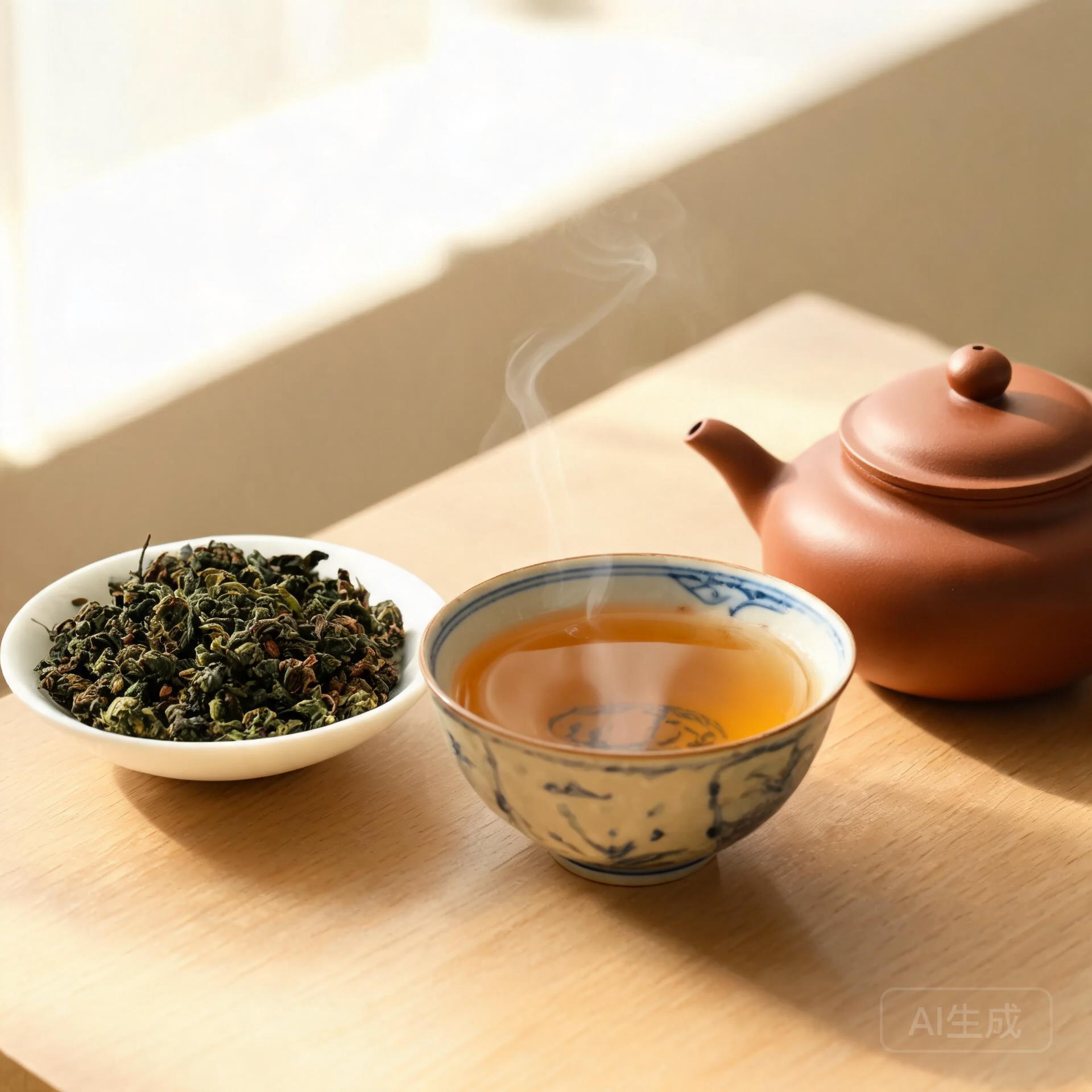
Where hands still matter
Hand work in oolong survives at two points: the decisions during making green, and the roasting at the end.
Charcoal roasting, called tan bei(炭焙), is the clearest case, and it is still done by hand.
Leaf sits in bamboo baskets over charcoal at perhaps 60 to 80°C, and it is turned by hand.
A single roast runs 8 to 12 hours, and a serious tea is roasted two or three times across months.
Nobody has mechanised this convincingly, because the judgement is about smell rather than time.
Electric roasting cabinets do the job faster and more evenly, and much of the trade uses them.
The other hand step is making green, where someone decides when the leaf has rested long enough.
Machines now tumble the leaf, and they do it more evenly than a person shaking a tray.
What a machine cannot do is notice that today’s leaf is wetter than yesterday’s and adjust.
Rolling and drying are fully mechanised in almost every workshop producing more than a few kilos.
So hand work is not a description of the whole process, and sellers rarely say which steps they mean.
The honest split
The honest split is by job rather than by romance, and it looks the same in most oolong districts.
Machines win wherever the task is repetition at scale: tumbling, rolling, drying, sorting.
A roller applies even pressure every time, and no worker maintains that across an eight hour shift.
Hands win wherever the task is a judgement made once, on this batch, under today’s conditions.
Deciding when to fix the leaf is such a judgement, and a machine can only follow a timer.
Roasting is another, since the end point is a smell rather than a number.
Picking sits between the two, because a machine is faster and a person is far more selective.
Machine picking takes the whole shoot, and oolong wants a specific open face instead.
That is one reason machine picked oolong is usually sold at the bottom of the range.
Everything else comes down to cost, and hand work costs several times more per kilo.
The question to ask is which steps were done by hand, not whether the tea is hand made.
What you can taste
In the cup the difference shows up as depth rather than as right or wrong.
Machine made oolong tends to be even, clean and slightly flat, which is a fair trade at the price.
Hand made oolong varies more, and at its best it has a longer finish and a more layered aroma.
Charcoal roasting gives a depth that an electric cabinet rarely matches, though it can go wrong.
A badly managed charcoal roast tastes of smoke, and a machine would have been safer.
The clearest test is across infusions, since hand work tends to hold up later into the session.
Brew 6 grams at 100°C and compare the fourth infusion, where the difference usually appears.
Aroma in the empty cup is the other place, and it is where charcoal roasting shows itself most.
Most people can tell the two apart side by side, and far fewer can do it blind across a week.
That gap is the honest measure of how much the distinction is worth to you.
A flat tea is a flat tea, and no amount of hand work in the process rescues poor leaf.
Buying implication
Hand made is one of the most abused phrases in the tea trade, and oolong is no exception.
Almost every oolong has hand work somewhere in it, so the phrase on its own means nothing.
What matters is which steps, and a seller who cannot say is probably describing the picking.
At the bottom of the price range, buy the machine made tea, because it is consistent and honest.
At the top, hand work is worth paying for, but only from someone with a reputation to keep.
Charcoal roasted is a more useful claim than hand made, since it is specific and checkable.
You can smell it, and you can ask how many times the tea was roasted and when.
Be suspicious of a very cheap tea described as hand made, because the labour does not add up.
A picker gathers perhaps 30 to 40 kilos of leaf a day, which sets a floor under the price.
Ask for the roast date too, since a charcoal roasted tea needs months to settle after firing.
Buy the leaf and the roast, and treat the word handmade as decoration.