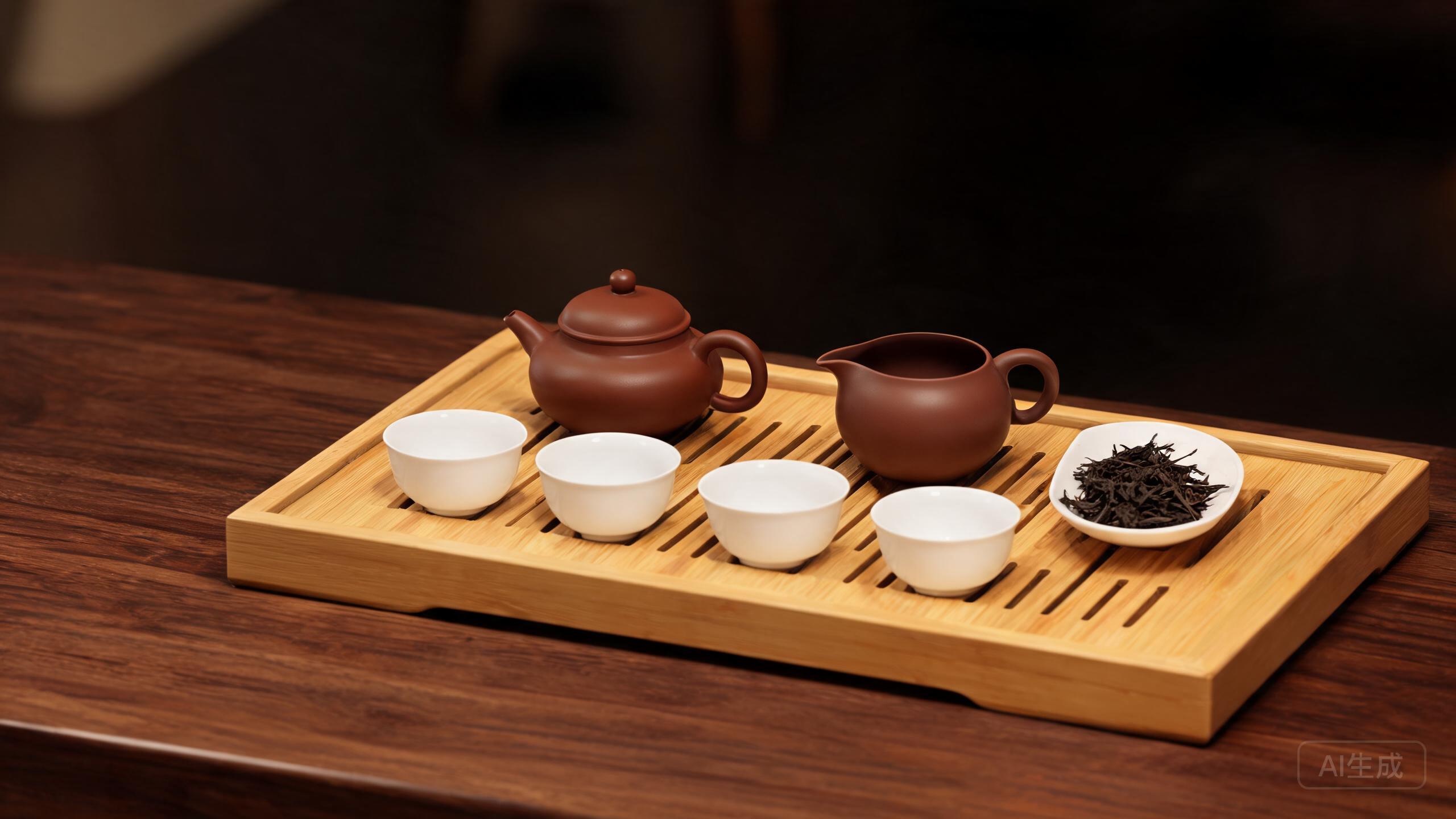
Tieguanyin is the most technically demanding of the Fujian oolongs to brew well. A rolled, semi-oxidized leaf from Anxi County, it unfurls over six to eight infusions and changes character as it opens, so a single fixed recipe will always leave something behind. The goal is not one perfect cup but a controlled sequence: a light, floral opening, a thicker middle, and a sweet, mineral finish. Everything below is built around that sequence.
Know Which Tieguanyin You Have
Three styles behave very differently in the pot, and most brewing failures start with treating them alike.
- Light or “qingxiang” style: green pellets, vegetal-floral aroma, liquor the color of pale straw. Oxidized roughly 20–30 %. Needs cooler water and shorter steeps.
- Traditional roasted style: darker, tighter pellets, notes of toasted grain, dried fruit and orchid. Oxidized around 40–50 % and charcoal-finished. Tolerates and rewards boiling water.
- Aged Tieguanyin: stored five years or more, sometimes re-roasted every few years. Darker liquor, sour-sweet depth, thick mouthfeel. Wants near-boiling water and long steeps.
If you are unsure which you own, look at the dry leaf: the greener and shinier the pellet, the cooler and shorter you should brew. A fuller comparison of styles sits in our oolong quality checklist.
Water Temperature: The Single Biggest Variable
Use water at 90–95 °C (194–203 °F) for light styles and 95–100 °C (203–212 °F) for roasted and aged styles. In practice, water brought to a full boil and then poured into a cold gaiwan loses roughly 8–10 °C, which lands you in the right band for light Tieguanyin without a thermometer.
Mineral content matters more than most brewers expect. Very soft water (under 50 mg/L total dissolved solids) produces a flat, thin cup; water above 250 mg/L mutes the aroma and leaves scale. A middle range of 80–150 mg/L gives the clearest top notes. Whatever you choose, use freshly drawn cold water brought to temperature once, because reboiled water is degassed and consistently dulls the aroma.
Leaf-to-Water Ratio
The reliable starting point is 1 g of leaf per 15 ml of water: about 7 g in a 110 ml gaiwan, or 5 g in a 80 ml cup. Tieguanyin pellets expand to four or five times their dry volume, so fill the vessel no more than a fifth full before the pour.
- 110 ml gaiwan: 7 g, five to eight infusions.
- 150 ml pot: 8–9 g, four to six infusions.
- 250 ml mug, Western style: 4 g, two infusions of 2 and 3 minutes.
Under-dosing is the more common error. Too little leaf gives a thin first cup that never recovers, because the later infusions have nothing left to draw on.
The Gaiwan Method, Step by Step
- Rinse and preheat. Pour boiling water through the empty gaiwan and the cups, then discard. A cold vessel drops the brew temperature by 10 °C or more.
- Add the leaf and smell it dry. This first aroma is your reference for judging later infusions.
- Rinse the leaf for 5 seconds and discard the liquid. With rolled oolong this awakens the leaf and lets the pellets begin to open.
- First infusion: 20–25 seconds. Pour down the inner wall rather than directly onto the leaf to avoid scorching.
- Decant completely. Any liquid left in the gaiwan keeps extracting and will make the next infusion bitter.
- Extend by 5–10 seconds per infusion from the third onward.
A practical timing ladder for a light style: 20 s, 25 s, 30 s, 40 s, 55 s, 70 s, 90 s, 2 min. Roasted styles can run 10 seconds longer at each step. More detail on timing across infusions is in our oolong ratio and steeping guide.
Tasting: What to Look For
Judge each infusion on four axes rather than a single impression.
- Aroma: light styles move from fresh orchid and green apple toward butter and milk; roasted styles from caramel and dried longan toward wood and mineral.
- Liquor color: pale gold to amber. Cloudiness in a fresh, light Tieguanyin usually means the leaf was over-handled or is stale.
- Mouthfeel: good Tieguanyin has measurable viscosity; the liquor should coat the tongue rather than wash across it.
- Huigan (returning sweetness): the sweet sensation that rises at the back of the throat 20–60 seconds after swallowing. This is the single clearest marker of quality leaf.
Astringency that appears in the first two infusions and then fades is normal for rolled oolong. Astringency that builds is a sign your water is too hot or your steeps too long.
Common Brewing Mistakes
- Pouring boiling water on a light style. It scalds the leaf and flattens the floral top notes permanently.
- Judging by steep count alone. Seven infusions from poor leaf is not better than four from good leaf.
- Leaving the lid off between steeps. Aroma loss between infusions is real and noticeable by the third pour.
- Using a large vessel “to be generous.” A 300 ml pot with 7 g of leaf is a 1:43 ratio, which is far too dilute for oolong.
Reading the Wet Leaf
After the last infusion, spread the spent leaf. Good Tieguanyin leaves should be intact, pliable and uniformly reddish-green along the edges with a green center, the classic “green leaf with red border” of properly made oolong. Leaves that are uniformly dark indicate over-oxidation; leaves that shred when pressed were harvested too coarsely or machine-handled. This inspection ties directly to how the leaf was made, described in our oolong processing guide.
Practical Takeaway
- Match temperature to style: 90–95 °C for light, 95–100 °C for roasted and aged.
- Start at 1 g per 15 ml and adjust on the second infusion, not the first.
- Decant fully every time; extend steeps by 5–10 seconds from the third infusion.
- Score the tea on huigan and viscosity, not on how many infusions it survives.
- If the cup is thin, add leaf before you add time.