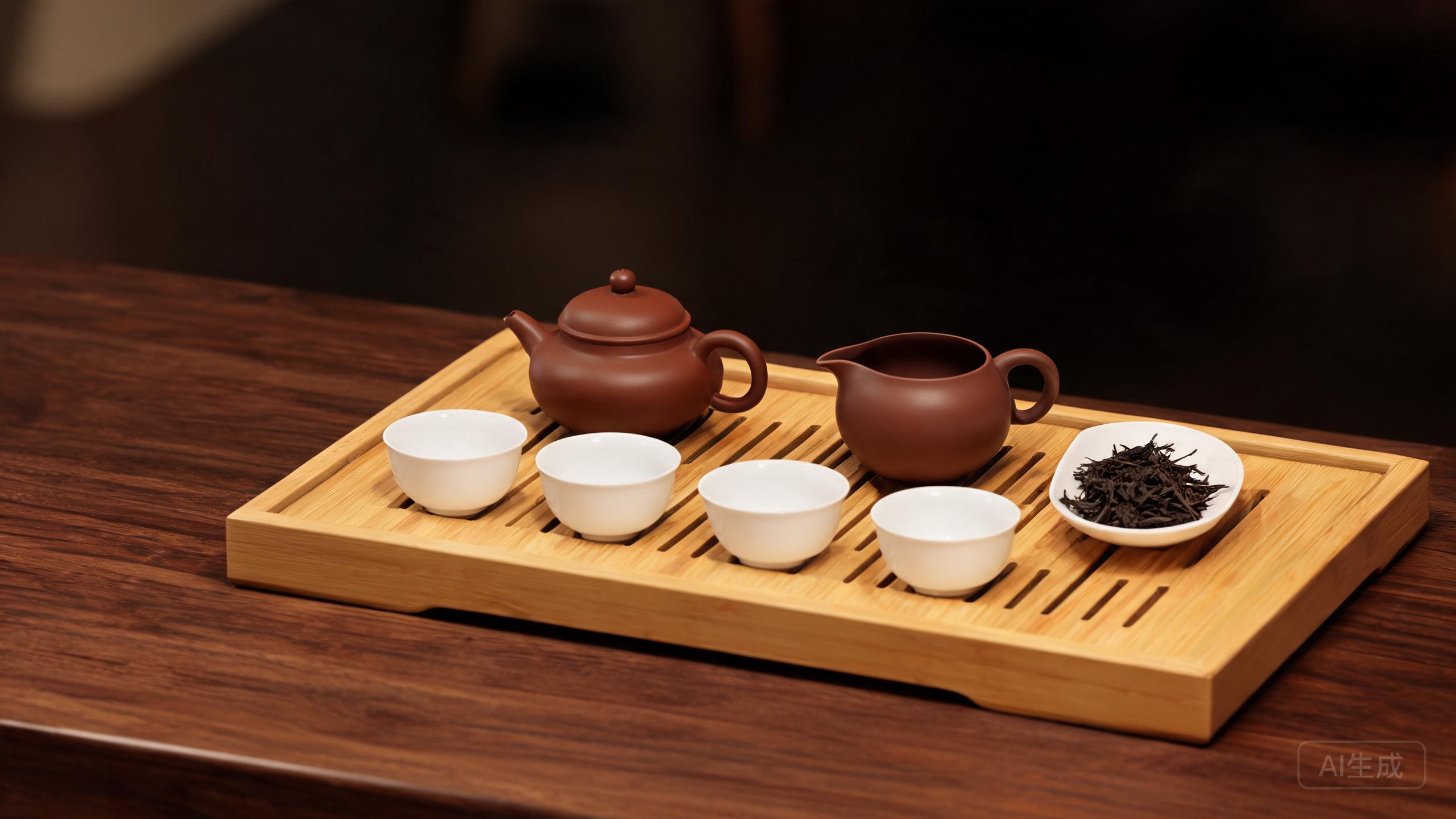
The ratio that matters
The ratio that matters for dark tea is heavy: one gram to 20 or 25 millilitres. That is 5 to 8 grams in a 100 to 150 millilitre gaiwan or pot.
Dark tea is compressed, aged, and often broken, which makes it dense and slow to give up its character. A green tea ratio produces a cup of faintly coloured water, which is the most common reason people conclude they do not like it.
Because the leaf comes from a cake, you will have fragments and dust along with whole leaf. The small pieces extract much faster, so a cake that has been roughly broken will need less time than one prised apart carefully.
Ripe pu-erh is more forgiving of a lighter ratio than raw pu-erh, because it has already been fermented and gives up its character readily. Raw pu-erh, especially a young one, needs the full heavy dose to show anything pleasant.
Too little leaf gives you a thin, watery cup with no sweetness and none of the thickness that makes the category worth drinking. This is the single most common brewing fault with dark tea.
Too much leaf is possible but rarely disastrous. Because dark tea is usually brewed in short steeps, an over-dosed gaiwan simply means shorter steeps, and the vessel itself limits how much you can fit.
Time by the clock
Time by the clock for dark tea means very short steeps: 15 to 30 seconds for the first infusion after a rinse, adding 10 to 15 seconds each time.
Dark tea wants boiling water, 100 degrees, without exception. It is the most processed and most aged category, and anything cooler produces a flat cup with no aroma.
Always rinse first. Pour boiling water over the leaf, wait five to ten seconds, and discard it. This wakes up compressed leaf, washes out the dust from breaking the cake, and for ripe pu-erh it carries off some of the storage smell.
A good dark tea gives eight to fifteen infusions, and some give more across a long afternoon. The flavour moves rather than fades, and the middle steeps are usually where the sweetness shows up.
Over-steeping raw pu-erh produces immediate, aggressive astringency that coats the mouth. Over-steeping ripe pu-erh produces a thick, slightly sour cup. Both are fixed by dropping back to 15 seconds on the next steep.
The liquor colour is the guide. Dark tea should be a clear reddish brown, not black and opaque. When the colour fades to pale amber and the sweetness goes, the leaf is finished.
A simple starting recipe
A simple starting recipe: 6 grams of leaf in a 120 millilitre gaiwan at a full boil. Rinse for ten seconds and discard, then steep 20 seconds, adding 15 seconds per infusion.
Rinse twice for a tightly compressed or long-stored cake. Once is usually enough for a ripe pu-erh that has already been broken up and aired for a few months.
For a Western brew, which is not ideal but works: 4 grams in 300 millilitres at a full boil for three minutes, strained completely. You will get one good cup and a weak second.
If the cup is thin, add leaf and check the water is actually boiling. Both are more likely than the time being wrong.
If it is harsh and drying, cut the steep to 10 seconds. Dark tea extracts very fast at boiling, and the difference between 15 and 30 seconds is larger than it sounds.
One thing to avoid: do not judge a raw pu-erh on its first steep. Young raw pu-erh is often harsh and bitter for the first two or three infusions, and it opens up afterwards. That is normal, not a defective cake.
A small scale and a timer are the only tools that matter here. Dark tea brewed by eye in a mug rarely works, and the heavy ratio is the main reason.
Boiling also matters more than people think. Water that has come off the boil and sat for a minute is already below 95 degrees, and dark tea notices the difference in the cup.
Boiling water, plenty of leaf, short steeps, and a rinse first. Those four things cover the whole category.