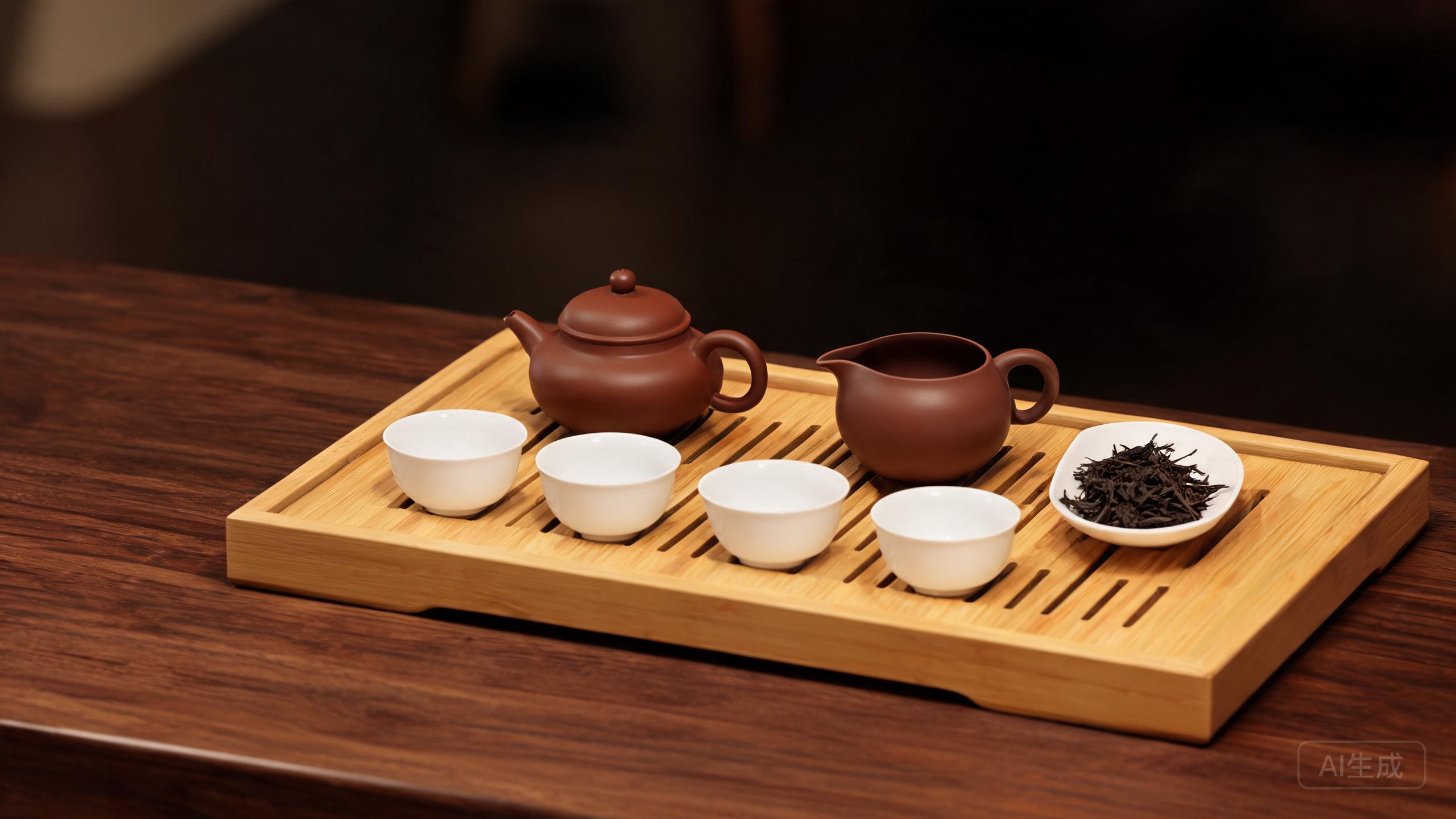
After each use
Dark tea brews at 100 °C and leaves more behind than any other category, so the routine matters more.
Empty the leaf within 5 minutes, because wet compressed leaf stains and sours quickly.
Rinse the vessel with boiling water and wipe the inside with a cloth kept for the purpose.
No detergent on anything porous, which in this category means no detergent on clay at all.
A clay pot washed with detergent will taste of it for weeks, and the only cure is time.
Turn the vessel upside down on a rack and let it dry completely.
Drying is not optional here, because compressed leaf and a damp vessel grow mould together.
Leave the lid off a gaiwan, and leave a clay pot open with its lid separate.
A gaiwan of 100 ml dries in an hour, and a thick clay pot can take most of a day.
Wipe the outside as well, since rinse water from a compressed tea stains everything it touches.
A tea tray with a drain makes this much easier than carrying water to the sink.
Two minutes after each session, and the ware will last for decades.
Dedication versus neutrality
Dedication is not optional with clay, and it is the first thing to understand about this category.
A zisha(紫砂)pot takes up the fermentation smell and never gives it back.
That is what drinkers of ripe pu-erh want, and it makes the pot useless for anything else.
Raw pu-erh in a ripe pu-erh pot tastes of ripe pu-erh, and no amount of rinsing changes that.
So a clay pot is a decision about the next decade rather than about this week.
Porcelain and glass stay neutral, and they are the right choice while you are still learning.
Raw pu-erh, ripe pu-erh and a fu brick are very different, and a neutral vessel shows all three.
Clay blurs them together, which is fine once you know them and unhelpful before that.
Start with one porcelain gaiwan and use it for a year across the whole category.
Then buy clay, if at all, and dedicate it to whichever technology you drink most.
Two vessels is the whole setup: one that remembers nothing, one that remembers one thing.
Anything beyond that is collecting rather than drinking.
What to avoid
Avoid detergent on clay, which is the single most damaging thing you can do to a seasoned pot.
The pores hold the detergent and release it into the tea for weeks afterwards.
Avoid the dishwasher for the same reason, and because the heat cracks thick clay.
Avoid abrasive pads on glazed ware, since a scratched glaze starts behaving like clay.
Avoid leaving leaf in the vessel overnight, which with compressed tea is the fastest route to mould.
Wet leaf left for 12 hours in a warm kitchen is enough to start a colony on a porous surface.
Avoid putting ware away damp, and check a clay pot is dry right through and not just on the surface.
Tap it and listen, since a dry pot rings and a damp one does not.
Avoid storing a damp pot with the lid on, which is the most common cause of mould in the category.
Avoid one shared cloth, because it carries the smell of whatever it dried last.
A rinse of 10 seconds with boiling water after each session prevents most of these.
Mould is the only real enemy here, and dry air is the only real defence.
Long-term
Over 2 or 3 years a clay pot darkens and develops a sheen, and that is the seasoning working.
Leave it entirely alone, and never scrub the inside of a pot you intend to keep using.
Porcelain stains brown inside and it does not matter, since the stain does nothing to the tea.
If you want it gone, a paste of bicarbonate of soda and water left for 30 minutes lifts it.
That works on glass and glazed surfaces and must never go near unglazed clay.
Check glazed ware for craze lines once or twice a year and retire anything cracked.
Check the lid and spout of a gaiwan, since a cake session means dozens of quick pours.
A chipped lid does not seal, and a dribbling spout slows every one of those pours.
Check a clay pot for mould before every session, and smell it while it is still empty.
A musty smell means it was put away damp, and the pot needs a long dry rest.
A vessel used daily for 3 years has taught you more than a new one will for a long time.
Clean it, dry it completely, and the category will reward you for both.