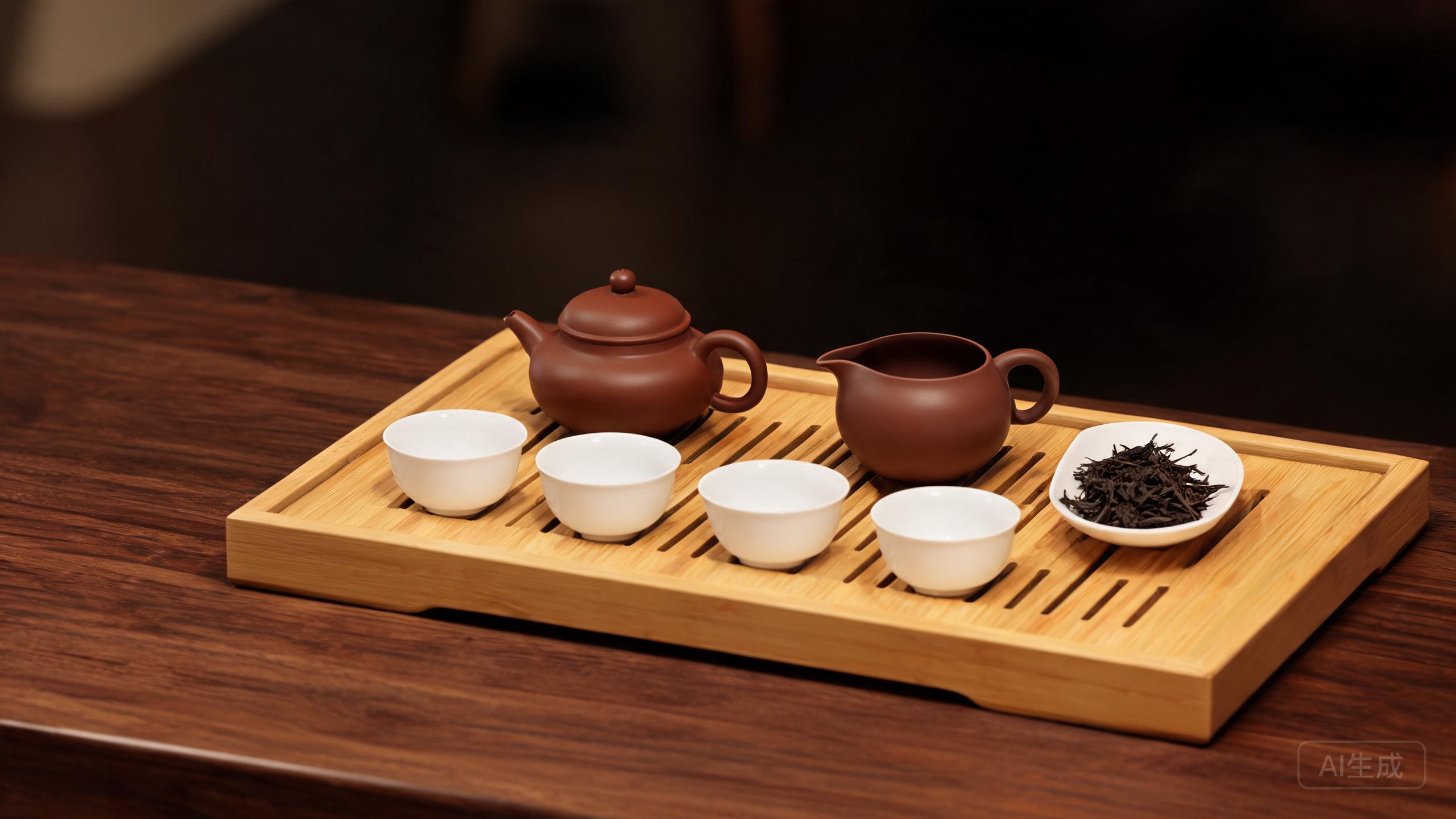
The short answer
Dark tea matches a porcelain gaiwan first and a small clay pot second, and both are good answers.
A gaiwan of 100 ml is the practical choice, because compressed leaf has to be rinsed before it is brewed.
Rinsing means pouring water over the leaf and throwing it away, and a gaiwan makes that easy.
A zisha(紫砂)pot of a similar size is the traditional choice, and it holds heat through a long session.
Dark tea brews at 100 °C and gives out slowly, so a vessel keeping the heat is a real advantage.
Clay also absorbs, and with ripe pu-erh that absorption is the point rather than a drawback.
A pot used on ripe pu-erh for a year develops a layer that drinkers prize, and it cannot be transferred.
Glass works for loose dark tea and shows the colour, which is how a fu brick is judged.
It is a poor match for compressed cake, since it holds heat badly and shows you nothing useful.
A pick is not a vessel but it belongs in the set, and no dark tea setup works without one.
The match therefore depends on whether you buy cake or loose leaf.
Cake points to a gaiwan or clay, and loose leaf points to glass or porcelain.
Why it matters
Heat is the first thing, and dark tea needs more of it than any other category.
Water at 100 °C is standard, and a vessel that cools the water will leave the liquor thin.
A thin walled gaiwan loses heat fast, which is why many drinkers prefer clay here.
Rinsing is the second thing, and it separates this category from every other one.
Compressed leaf has been pressed and stored, and the first pour is there to wake it and clean it.
Any vessel you cannot pour out of quickly makes that step awkward.
Absorption is the third, and here it cuts both ways.
Clay takes up the fermentation smell and never gives it back, so a ripe pu-erh pot stays one.
That is what you want if you drink one thing, and a nuisance if you drink several.
Surface area matters less than in the light categories, since there is no delicate aroma to protect.
Colour matters more, and a dark liquor in a dark vessel tells you nothing at all.
Use a white interior if you want to read the tea, and clay if you want to drink it.
Neutral is safe
Porcelain is the safe default, and for most drinkers it is also the right one.
It takes boiling water, rinses clean of any fermentation smell, and costs very little.
A plain gaiwan at 100 ml will brew a raw cake, a ripe cake and a fu brick equally honestly.
That honesty is what you want while you are still learning the three technologies apart.
Clay hides the differences between them, and those differences are large and worth learning.
Buy porcelain first, use it for a year, and see which dark tea you actually reach for.
Then buy clay, if at all, and dedicate it to that one thing for good.
Check that any glaze is intact, since a crazed surface will take up smell like clay does.
Avoid anything sold as zisha(紫砂)for under twenty dollars, which is slip cast and tinted.
Hand built clay costs real money, and a cheap pot claiming to be it is a risk rather than a saving.
Smell a warmed empty pot before buying, and walk away from any chemical note.
Neutral ware lets you change your mind, and clay does not.
Building a habit
Dark tea rewards a long session, so the vessel should suit sitting still for an hour.
A gaiwan of 100 ml with 5 grams gives six or more infusions, and that is the shape of a session.
Weigh the leaf, because a chunk broken off a cake is never the dose you think it is.
A scale reading to 0.1 g turns that guess into a number you can repeat.
Rinse once with boiling water for about 5 seconds and discard it, then hold the first infusion for 30 seconds.
Extend each later steep by a few seconds, since a cake opens slowly.
Reject any tea that smells damp after the rinse, whatever the seller says about age.
Clean the ware with hot water only, and never with detergent on anything porous.
Dry it thoroughly and leave the lid off, because a damp pot grows mould in a warm kitchen.
That is a real risk with dark tea, and it is the main reason clay pots go wrong.
Smell the empty vessel before each session, since it should smell of nothing, or of the tea it holds.
The habit is the long session, and the vessel is only what makes it comfortable.