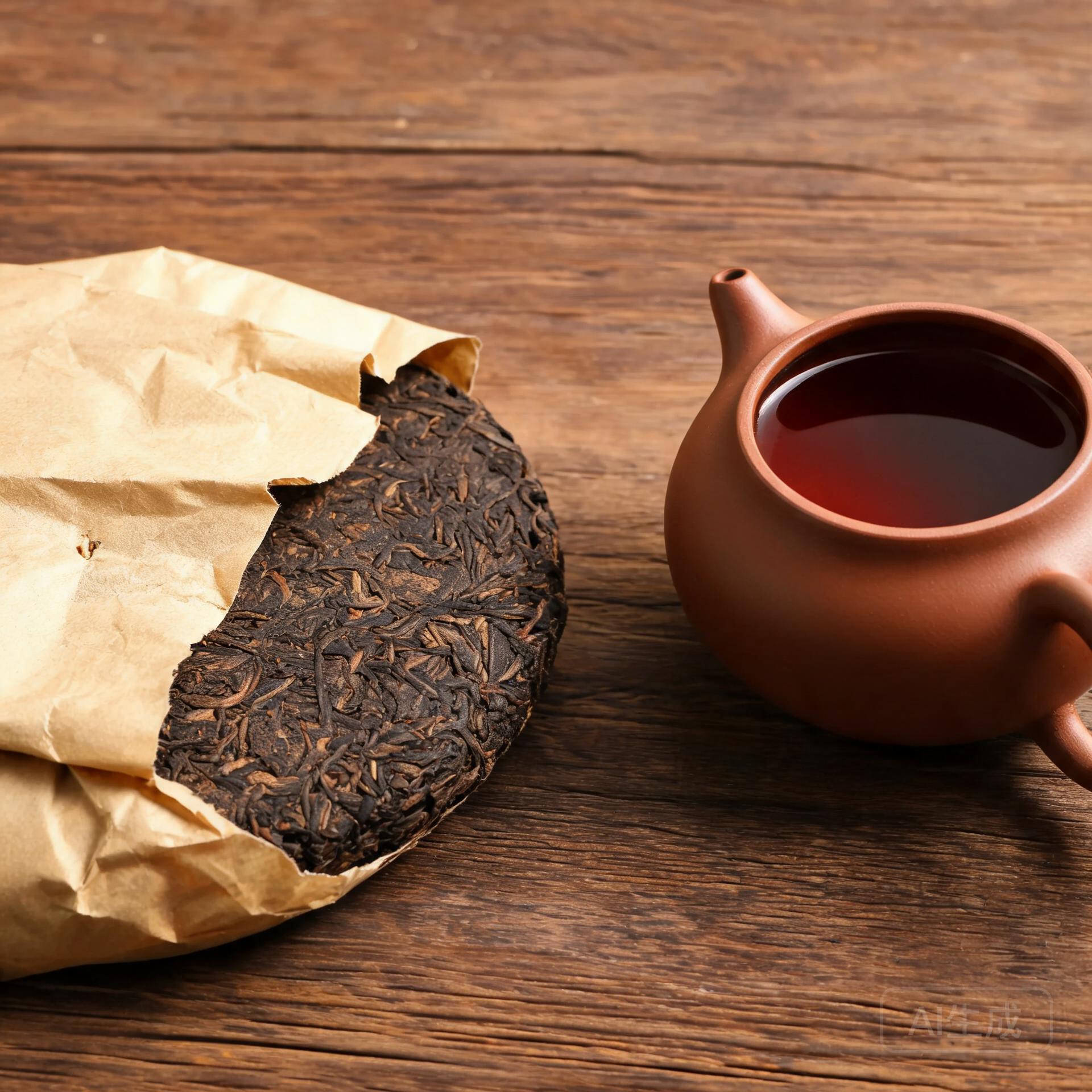
Before you buy Dark tea
Dark tea is the only category where the leaf is deliberately fermented after drying, and that changes what you are buying.
Decide first between ripe and raw, because they are not versions of the same thing. Ripe is fermented over weeks and drunk now, raw is aged over years.
Then decide whether you actually want to age tea at home. It needs space, stable humidity and patience, and most people enjoy buying it more than waiting.
If you just want to drink it, buy ripe. It is cheap, forgiving and consistent, and that is what most of the category exists for.
Fu brick and liubao are the other two worth knowing. Fu brick carries visible golden flecks, and liubao is darker and often stored in baskets.
Write down which of those you are shopping for. Sellers here are happy to sell you whichever one they have most of.
Step 1: judge the leaf
Ripe dark tea should be dark brown to black and evenly coloured, with no grey or white patches on the surface.
Smell the dry leaf first. It should be earthy and slightly sweet, like wet leaves or old wood, with nothing sharp about it.
A fishy or sour smell means the fermentation ran badly, and no amount of ageing fixes it.
For fu brick, the golden flecks are a fungus grown deliberately, and they should run through the brick rather than sit on the surface.
Break the brick if you are allowed to. The interior should smell the same as the outside, and a different smell means problems in the pile.
Look at the leaf after brewing. It should be soft and dark, and it should not collapse into sludge.
Raw dark tea is a different test: the dry leaf is lighter and greener, and it smells sharp and slightly bitter.
Step 2: buy small first
Buy a sample or a small brick, never a whole basket, on a first purchase from a new seller.
Ripe dark tea brews at 5 to 8 grams a session, so 100 grams is about 15 sessions, and that is enough to know.
Try two factories side by side. Ripe dark tea has a house character, and you will prefer one of them.
Sample raw and ripe from the same factory if you can. That single comparison explains the entire category.
Do not buy a cake to age until you have drunk the same tea young. Ageing a tea you have never tasted is guessing.
Keep 100 grams of anything you like, sealed and dated. In three years it will tell you whether your storage works.
Buy from one seller for the first year. Consistency of storage matters more than the tea, and one shop gives you a baseline.
Step 3: check storage and source
Ask for the factory, the year of pressing and the recipe number if there is one. Three answers means a serious seller.
Ripe dark tea was standardised in the 1970s, so anything sold as aged ripe from before that is a mistake or a lie.
Ask where it has been stored. Guangdong storage is humid and fast, Kunming storage is dry and slow, and they produce different tea.
Check for a musty note at the wrapper and at the break. Damp storage that went too far leaves a smell that never leaves.
For fu brick, ask whether the flowering was done the traditional way. Factory inoculated bricks look right and taste flatter.
Liubao is usually sold with a basket number and a year. If neither is on the listing, the age claim is decoration.
Step 4: pay for the leaf, not the story
Price in dark tea tracks factory, recipe and storage, and age is only worth paying for once the other three are known.
A 1990s cake with no storage history is worth what a young cake with good storage is worth, and not a penny more.
Pay for the factory first. Menghai and Xiaguan recipes are documented, and that documentation is what makes an old cake worth anything.
Ignore single tree and old arbor claims unless the seller can name the garden and the year it was surveyed.
Compare two cakes of the same recipe from different years. If you cannot taste the difference, the years are not worth paying for.
The best value here is a recent ripe cake from a known factory, bought young and drunk now. It costs a fraction of an aged one and comes close in the cup.