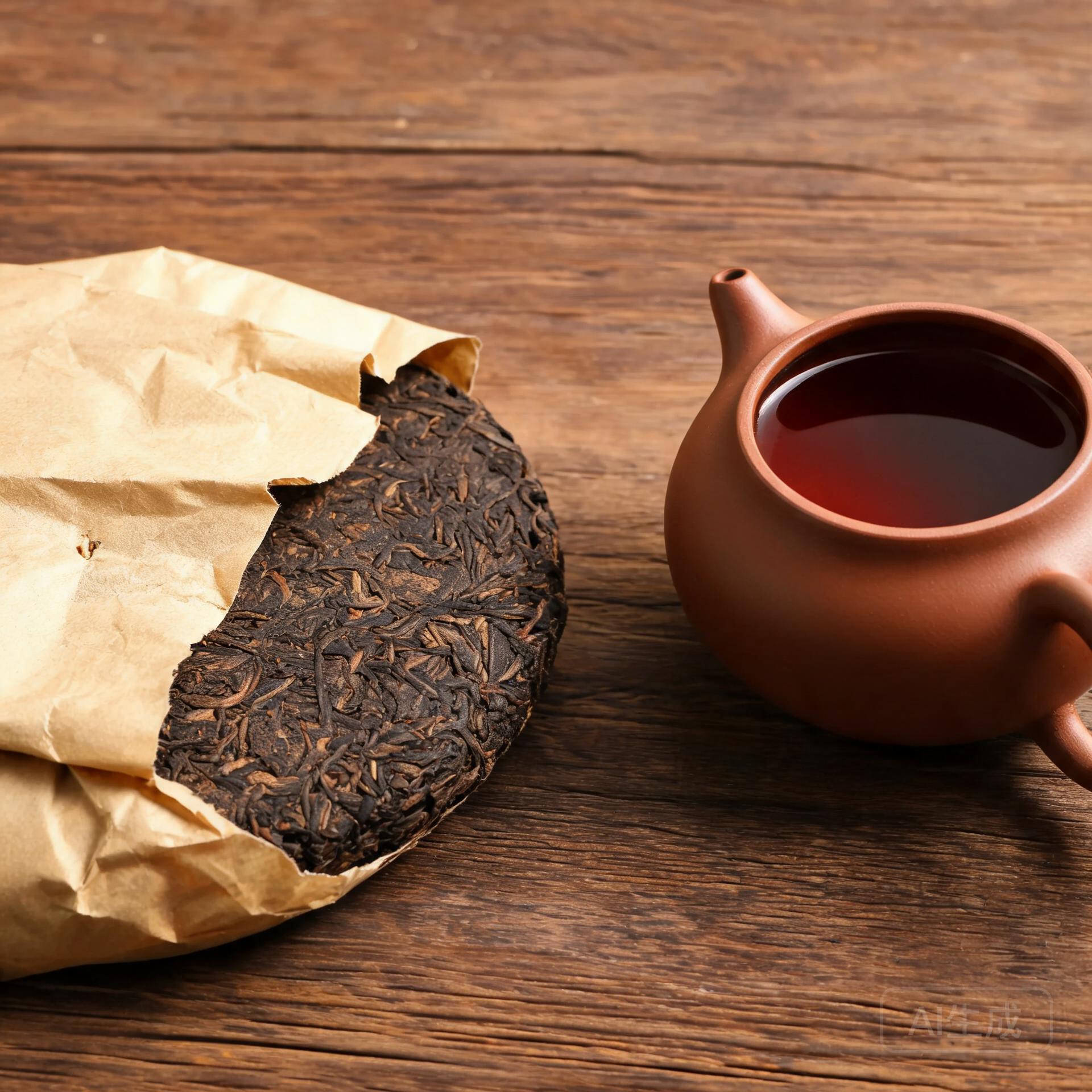
What impresses in Dark tea
Dark tea is the gift for someone who already likes tea, and a poor gift for someone who does not.
A ripe cake or brick is affordable, drinks well today and needs nothing from the recipient except a kettle.
A raw cake is the more impressive object and a longer-term commitment, and it is the one to give a collector.
For most people ripe is the right answer. It is cheap per gram, forgiving, and it does not care how it is stored.
What impresses in this category is the paper. A cake with a factory mark, a recipe number and a year looks like an artefact.
Buy one cake rather than a gift box of samples. A whole cake reads as a present in a way that a box of fragments does not.
A brick of fu brick is the cheapest impressive tea gift there is, and the golden flecks through it are genuinely striking.
Include the year in what you say when you give it. Dark tea without a year is a cake of unknown age, and nobody wants one.
What impresses most is that the tea can be kept. Say so, and say whether it is ready to drink now or not.
A 250 gram ripe brick costs little and gives roughly 35 sessions, which is the cheapest generous gift in the shop.
Packaging that works
Leave a cake in its original wrapper. It is designed for the tea, it carries the year, and removing it loses both.
If you want to make it look like a gift, put the wrapped cake in a box rather than unwrapping it.
Do not seal raw cakes in plastic. They need to breathe, and a sealed cake is not ageing, it is simply stored.
Ripe tea is more tolerant, and a sealed pouch of loose ripe tea travels without any trouble at all.
Include a note on rinsing. A first short infusion poured away changes the cup enough to be worth mentioning.
Give a note about dose as well. Around 7 grams for 150ml is more than most people guess, and under-dosed dark tea tastes like water.
Cakes are dense and heavy. Post them in a rigid box, because a cracked cake dries out from the break.
A presentation box costs little and stops the wrapper getting scuffed, which matters when the year is printed on it.
Loose ripe tea given in a sealed pouch is fine, as long as it is labelled with the factory and the year.
A standard cake is 357 grams, which is about 50 sessions at 7 grams. That figure is worth putting on the note.
Matching the occasion
For a newcomer, give ripe rather than raw. Raw tea is often bitter and astringent young, and it puts people off.
For an enthusiast, a raw cake from a documented recipe with a known year is the gift that lands.
For a host, give ripe tea. It brews in a pot, it survives sitting, and it does not need explaining.
For a colleague, a small ripe brick is cheap, unusual and easy to receive.
For a wedding or a birth year gift, a raw cake from that year is the obvious and correct choice.
For someone who drinks coffee, dark tea is the closest thing in tea, and the heaviest ripe teas convert people.
For a milestone birthday, give a cake and say when to open it. Five years is a reasonable figure for a raw cake.
For someone with no storage space, give ripe. Giving raw tea to a flat with no cupboard is giving a problem.
If you know nothing about their taste, a factory ripe brick is the safest thing in the category.
What to avoid
Avoid unmarked cakes. They cost little because nobody can say what they are, and that is exactly the problem.
Do not give raw tea to someone who will drink it this month. Young raw tea is harsh and it will not show well.
Avoid anything sold as decades old at a modest price, which is the standard shape of a fake in this category.
Do not give a cake with a story about a warehouse find. Those stories are printed by the thousand.
Avoid giving loose ripe tea from an open bin, because it will have picked up the shop’s smells.
Do not give a cake to someone who has nowhere to keep it. Raw tea needs air, space and a decade.
Avoid gift sets with a knife, a pick and a scale. They are equipment bundles, and the tea in them is usually ordinary.
Do not assume that expensive means old, or that old means good. Both assumptions are wrong often enough to avoid them.
The thing to avoid above all is giving raw tea without saying what it is. Half the people who receive it brew it wrong.