- The two histories
- How the modern category began
- The export century
- Why the gap is not widely known
- What the history explains about the tea today
- The domestic turn
- Frequently asked questions
- Is modern white tea descended from Song white tea?
- When did modern white tea begin?
- What was Song white tea?
- Why did the word disappear?
- Why does Fuding dominate?
- Was white tea always aged?
White tea has two histories and they do not connect. The white tea of the Tang and Song records was a rare tea whose buds or leaves were pale, made by methods that were essentially green tea; the modern white tea of Fuding and Zhenghe dates from the early nineteenth century and is defined by minimal processing. Between them lies a gap of centuries with almost no continuity.
The confusion is old and it is repeated in nearly every popular account, which usually begins with Song emperor Huizong and his love of white tea and then jumps to Fuding in 1800 as if the two were the same tradition.
The distinction matters for a buyer because it explains why claims about a thousand-year white tea tradition are marketing rather than history, and because it explains why the modern category is so young and so lightly documented.
The two histories
| Period | What was called white tea | How it was made | Relation to today |
|---|---|---|---|
| Tang, 600s to 900s | Rare pale-leaf tea | Green tea methods | None |
| Song, 960 to 1279 | Imperial white tea, compressed | Steamed, ground, pressed | None |
| Ming to Qing | The term falls out of use | Not applicable | None |
| 1800s onward | Fuding and Zhenghe white tea | Withered and dried | The modern category |
The Tang references describe a tea whose leaves were naturally pale, grown in a few places and offered as tribute. It was made by the ordinary methods of the time, which were green tea methods, and its whiteness was a property of the leaf rather than of the process.
The Song court took this further. Huizong’s writing on tea describes a white tea from Beiyuan in Fujian that was regarded as the finest available, and it was steamed, ground into powder and pressed into cakes for whisking. That is a compressed green tea, and it has nothing in common with a modern Silver Needle beyond the word.
The term then dropped out of use for several centuries. Ming tea culture turned to loose leaf and steeping, the compressed cake tradition faded, and the word white tea appears rarely and without a stable meaning until the nineteenth century.
How the modern category began
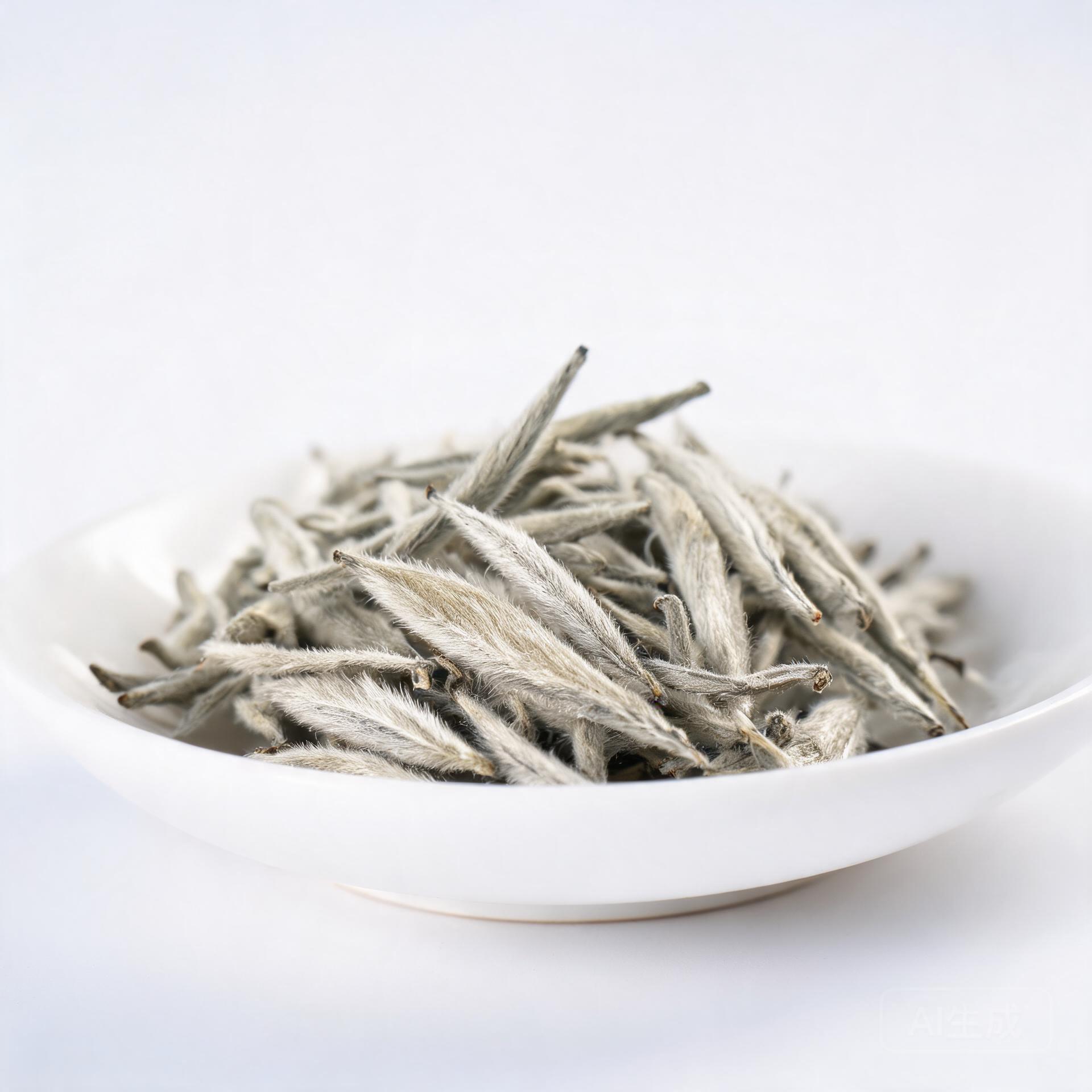
The modern white tea industry started in Fuding around 1800, with a local large-leaf bush later named Fuding Da Bai. The story in the local record is that a bush was found whose buds were unusually downy, and that tea made from it was named for the white appearance.
Zhenghe county began making white tea a few decades later using its own large-leaf bush. The two counties have competed ever since, and the difference between their styles is one of the reasons the category has two centres rather than one.
The early product was not sold as a luxury. It was a local tea made from leaf that was available, and it entered the export trade in the late nineteenth and early twentieth centuries as a cheap bulk item bound for Southeast Asia and Hong Kong.
The export trade is why the grades exist in their present form. Silver Needle and White Peony were sorted for buyers who wanted a consistent product, and the sorting vocabulary became the category’s naming system.
The export century
White tea entered international trade in the 1890s and found its market in Southeast Asia, Hong Kong and later Europe and North America. The buyers wanted a light, cheap, refreshing tea and the Chinese trade supplied one.
The export grades were sorted by appearance because a buyer at a distance could not taste. Silver Needle was the buds and sold at a premium; White Peony, Shoumei and Gongmei descended from there, and the names were stable enough to appear in shipping documents.
The trade was interrupted by war and by the reorganisation of the 1950s, then revived for export in the 1960s under state control. Most of the crop went abroad through the twentieth century, and the domestic market for white tea was small until the 2000s.
That export orientation is why white tea was, for most of its modern life, a foreign product in its own country. Chinese drinkers knew green tea, oolong and jasmine; white tea was what was sold to Hong Kong and Southeast Asia.
Why the gap is not widely known
The gap is not secret, it is simply inconvenient. A continuous thousand-year story is easier to sell than two unrelated traditions with a four-century hole in the middle, and the tea trade has never been shy about preferring the better story.
The conflation is also easy to make because the word is the same. A reader who encounters white tea in a Song text and white tea on a modern tin has no reason to suspect they are different things, and most popular writing does not tell them.
A third reason is that the modern industry genuinely has old roots in its own counties. Fuding and Zhenghe can both point to two centuries of continuous production, which is a long time by any standard, and the temptation to stretch it further is understandable.
- Tang and Song white tea was made by green tea methods.
- The Song imperial tea was steamed, ground and pressed.
- The word disappeared for several centuries.
- Modern white tea began around 1800 in Fuding.
- The export trade created the grade vocabulary.
What the history explains about the tea today
The youth of the category explains its loose regulation. Compared with green tea, which has been traded and graded for a millennium, white tea has had two hundred years and only a few decades of serious standardisation.
It explains the dominance of Fuding. A county that started first, developed the bush and built the export channel will hold the market, and Fuding did all three. Zhenghe’s reputation for a fuller, more savoury style is real and its volume is a fraction of Fuding’s.
It explains the naming system. The grades were invented for export sorting rather than for local connoisseurship, which is why they describe the pick rather than the place.
And it explains the ageing market, which is younger still. White tea was not historically aged as a practice; the current enthusiasm dates from the 2000s and is a marketing development as much as a traditional one, however good the results can be.
The domestic turn
The domestic market for white tea opened in the 2000s and the change was rapid. A tea that had been an export bulk item became a fashionable domestic product within about a decade, and the price of the top grades rose by multiples.
The ageing market followed around 2010. Sellers in Guangdong and Hong Kong had long kept white tea for their own use, and the practice was turned into a commercial proposition with vintages, storage claims and price curves.
The revival created a demand for history, and the gaps in the record were filled with the Song story. That is the mechanism by which a two-hundred-year-old industry acquired a thousand-year pedigree without anyone having to lie outright.
| Decade | Main market | Product |
|---|---|---|
| 1890s to 1940s | Southeast Asia, Hong Kong | Bulk export grades |
| 1950s to 1970s | State export channels | Standardised grades |
| 1980s to 1990s | Export with small domestic sales | Largely unchanged |
| 2000s | Domestic market opens | Premium grades |
| 2010s onward | Domestic plus ageing market | Vintages and storage |
The table is the shortest account of how a cheap export tea became a collectible, and it took less than twenty years. Most of the vocabulary now used to sell white tea was created in that period, including much of the ageing language.
One consequence is worth stating for a buyer. Because the category is young and its recent growth is fast, the reliability of its claims varies more than in an older trade. A nineteenth-century Keemun had generations of merchant practice behind its name; a white tea vintage has about fifteen years of market convention.
That is not a reason to avoid the category. It is a reason to rely on the cup and the leaf rather than on the story, and the story is where most of the money in white tea is currently made.
The version of the history worth carrying in mind is short. A Song court drank a pressed white tea that no longer exists, a Fujian county began making a withered white tea two centuries ago, and the two have been joined by marketing into a single story they do not share.
The practical value of knowing this is small and real: it makes a sceptical reader of labels, and scepticism is the correct posture toward a category whose recent growth has outpaced its documentation.
Frequently asked questions
Is modern white tea descended from Song white tea?
No. The two are unrelated traditions that share a name.
When did modern white tea begin?
Around 1800 in Fuding county, Fujian.
What was Song white tea?
A steamed, ground and pressed tea, essentially a compressed green tea.
Why did the word disappear?
Ming tea culture moved to loose leaf and the compressed tradition faded.
Why does Fuding dominate?
It started first, developed the bush and built the export channel.
Was white tea always aged?
No. The ageing market dates from the 2000s.