- Three uses of the word
- What congwei actually tastes like
- Why an old bush is not automatically better
- How a bush becomes an old bush
- How to judge a laocong claim
- Wild, old and abandoned
- Frequently asked questions
- Does laocong mean ancient tree?
- Which cultivar is laocong usually?
- What does congwei taste like?
- Is an old bush always better?
- Why is laocong expensive?
- How can I check the claim?
Laocong means old bush, and in oolong it is a claim about a bush’s age and its management rather than about a tree’s great antiquity. In Wuyi it usually describes a Shuixian bush of fifty years or more; in Phoenix it describes an older bush within the single-bush system. The flavour called congwei, or bush character, is real, and it comes from age, soil and slow growth together.
The word is the oolong counterpart of the Yunnan old-tree vocabulary, and unlike that vocabulary it has a long history and a technical meaning. It is not a marketing invention, though the market has stretched it.
The useful distinctions are three: what age the word implies, what the flavour actually is, and why an old bush is not automatically better than a young one.
Three uses of the word
| Context | What laocong implies | Typical age |
|---|---|---|
| Wuyi Shuixian | A bush of some decades, unpruned or lightly pruned | 50 years and up |
| Phoenix Dancong | An older bush within a named genotype | 60 years and up |
| Taiwan | Occasionally used, no fixed meaning | Unspecified |
| Retail generally | A flavour style rather than an age | No claim at all |
In Wuyi the word is almost always attached to Shuixian, and that pairing is the origin of the term. Shuixian is a vigorous cultivar that was historically planted widely, and the bushes that were not replanted grew into small trees with thick trunks and deep roots. Those bushes make a tea with a distinctive character, and the character became the name.
In Phoenix the word attaches to the single-bush system. A bush that has been picked for sixty years within a named genotype is an old bush by any standard, and the tea from it is sold as that bush with the age as part of the claim.
In retail the word has drifted. A tea labelled laocong with no cultivar and no age is using the word as a flavour descriptor, which is honest if the tea actually tastes of it and meaningless if it does not.
What congwei actually tastes like
The flavour is hard to describe and easy to recognise. Drinkers report a woody, mossy, slightly medicinal note that sits under the tea rather than on top of it, and a texture that is thicker and oilier than a young bush gives.
The note appears most clearly in the middle infusions and in the empty cup after the liquor is finished. A young Shuixian can be aromatic and clean; an old one has something underneath the aroma that the young one lacks, and the difference is more obvious in the empty cup than in the full one.
The flavour is not universally liked. Some drinkers find it earthy or musty, and a badly stored old bush tea can genuinely be musty rather than complex. The line between the two is storage, and it is a line worth learning.
It is also not the same as the Yunnan old-tree character, which is denser and sweeter rather than woody. The two vocabularies describe different phenomena and using one to explain the other misleads.
- Laocong is a claim about age and management, not about great antiquity.
- In Wuyi it usually means an old Shuixian.
- In Phoenix it means an old bush within a named genotype.
- Congwei is woody, mossy and thicker in texture.
- The empty cup shows it more clearly than the full one.
Why an old bush is not automatically better
Age is one variable and the others can dominate. An old bush on poor soil, picked carelessly and baked badly, makes a worse tea than a young bush handled well, and old-bush leaf is harder to handle because it is uneven and low in moisture.
Old bushes also yield less, which pushes the price up and creates an incentive to stretch the supply. A tea sold as laocong at a modest price per unit is probably a blend of old and young leaf, which is a legitimate product and is not what the word implies.
And the flavour is an acquired taste rather than a universal improvement. A drinker who wants bright floral oolong will find congwei a defect, and no amount of age will make it pleasant to them.
The honest position is that congwei is a distinct character worth paying something for and not worth paying a multiple for, and that the multiple is what the market currently asks.
How a bush becomes an old bush
A bush becomes old by not being replaced. In the twentieth century Wuyi’s Shuixian gardens were partially replanted with higher-yielding stock, and the bushes that survived the replanting are the ones now called laocong. Their survival was usually accidental rather than planned.
The survivors tend to be on awkward ground: steep slopes, terrace edges, small plots that were not worth the cost of clearing. That accidental geography is part of why the tea tastes as it does, because awkward ground is often thin soil and slow growth.
Age alone does not create the character. A bush left unpruned for fifty years develops a thick trunk and a deep root system, and those change how the leaf grows and what it accumulates. The trunk is the visible sign of the change and the reason old bushes are counted by trunk rather than by year.
That is also why the age figures in the market are soft. Nobody planted these bushes with a record, and an age is usually inferred from the size of the trunk and the memory of the oldest people in the village. Both are reasonable and neither is exact.
| Sign | What it indicates | Reliability |
|---|---|---|
| Thick trunk | A bush of some decades | Good |
| Height above picking reach | Unpruned for years | Moderate |
| Deep taproot | Old planting, not replanted | Good, if inspected |
| Village memory | Age estimate | Variable |
How to judge a laocong claim
Ask for the cultivar. Laocong without a cultivar in Wuyi is almost always Shuixian, and a seller who cannot say which cultivar is not tracking the bush.
Ask for an age range rather than an exact figure. A producer who says fifty to seventy years is being honest about the uncertainty; one who says exactly eighty-eight is inventing precision.
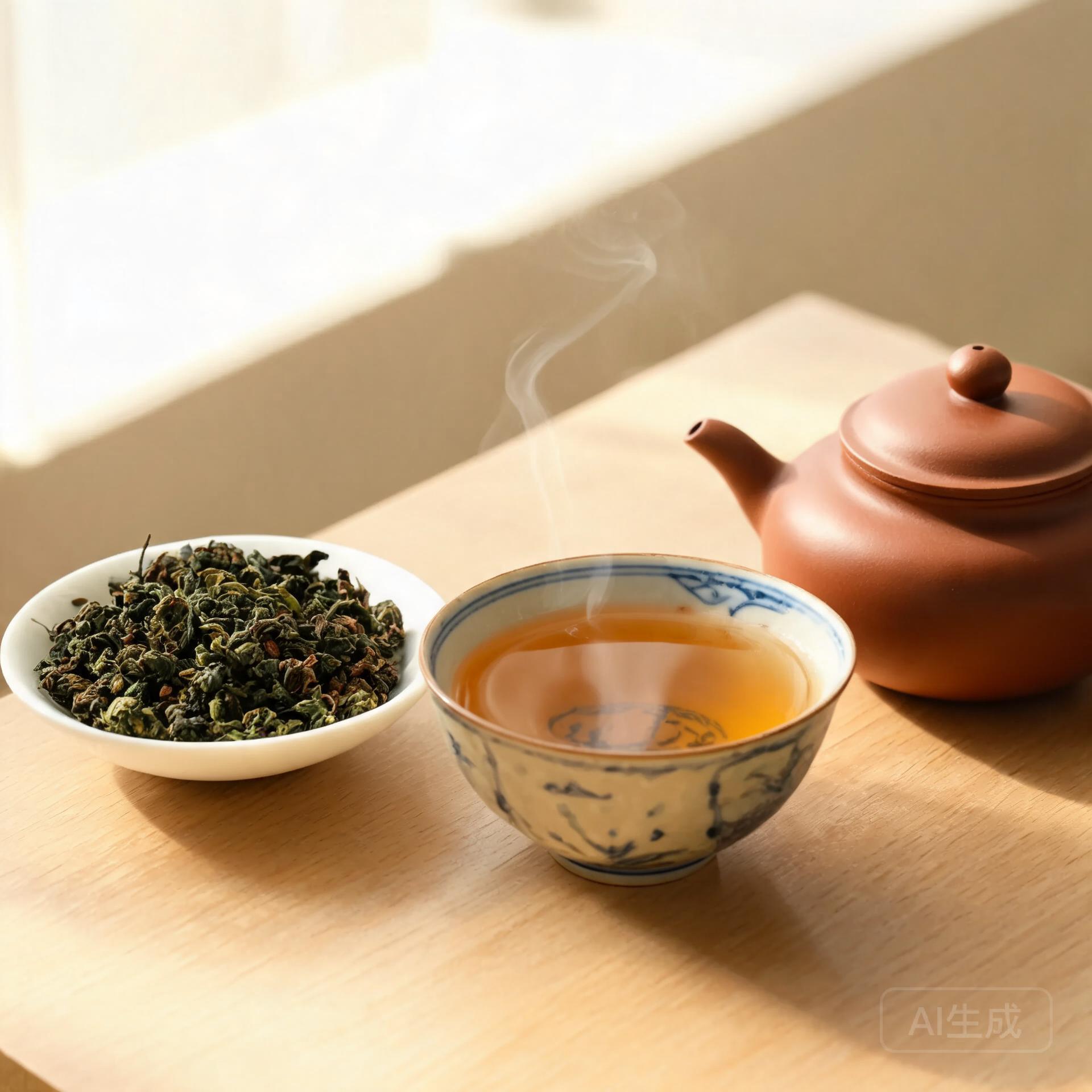
Taste the empty cup. The congwei note lingers there, and a tea that has it will still smell of it a minute after the liquor is gone. A tea without it will smell of nothing.
Compare against a young bush of the same cultivar and roast if possible. The difference is what the premium is buying, and it is easier to judge side by side than in the abstract.
Wild, old and abandoned
The three words are used loosely in oolong and they mean different things. Wild describes a bush that was never planted or never managed; old describes a planted bush that has been left to grow; abandoned describes a planted bush that was left when a garden went out of use.
Genuine wild tea in Fujian and Guangdong is rare and mostly appears in small quantities from remote plots. It is usually sold under a village name rather than a cultivar name, because the bush may not be a named cultivar at all.
Abandoned garden tea is the commonest of the three and the least discussed. Fujian and Guangdong both have hillsides of gardens that were worked until the 1980s and then left, and the bushes there are forty or fifty years old and completely unmanaged. That tea is often sold as laocong and often deserves the word.
The distinction matters because the flavour differs. A genuinely wild bush gives a leaner, more bitter tea with a strong character; an abandoned garden bush gives something closer to laocong, with the woody note and the thicker texture, at a much lower price.
A buyer who wants the congwei character without the multiple can look for abandoned garden tea, which is the best value in this corner of the market and is rarely labelled accurately enough to be found easily.
A last practical note is about roast. Old-bush leaf is usually baked harder than young leaf, because the thicker leaf takes fire without losing its structure. A laocong tea that has been only lightly baked is unusual and will show the woody note more rawly, which some drinkers prefer and most do not.
A drinker who wants to test all of this can do so with two teas and an afternoon. Buy a young Shuixian and an old one of the same roast level, brew them side by side, and smell both cups when they are empty. The difference is the whole argument in one comparison.
Frequently asked questions
Does laocong mean ancient tree?
No. It usually means a bush of fifty years or more, not a centuries-old tree.
Which cultivar is laocong usually?
Shuixian in Wuyi. In Phoenix it attaches to named genotypes.
What does congwei taste like?
Woody, mossy, slightly medicinal, with a thicker texture.
Is an old bush always better?
No. Soil, picking and processing can outweigh age.
Why is laocong expensive?
Old bushes yield less, and the flavour is sought after.
How can I check the claim?
Ask the cultivar and an age range, and smell the empty cup.