- The four grades and what they mean
- The pick calendar
- What a grade name promises and does not
- Cultivar and place sit underneath
- Why the grade system won
- The grades in the market
- Frequently asked questions
- How is white tea named?
- What is Silver Needle?
- Is Silver Needle always from Fuding?
- What is the difference between Gongmei and Shoumei?
- Does the grade name tell me the year?
- Which grade ages best?
White tea is named by the pick rather than by the place or the bush. Silver Needle is buds alone, White Peony is a bud with two leaves, Gongmei is tender shoots of the local population bush, and Shoumei is older leaf. Those four words are the category’s real vocabulary, and they work the same way in every producing county.
That is the opposite of how the other classes are named. A green tea is named for its shape or its mountain, a red tea for a county, an oolong for a cultivar. White tea is named for which part of the shoot went into the basket, and the name therefore describes the product rather than its origin.
The reason is the processing. White tea is withered and dried and almost nothing else, so there is no firing style, no rolling shape and no oxidation curve to distinguish one tea from another. What distinguishes them is what was picked, and the naming system says so.
The four grades and what they mean
| Grade | What is picked | Share of the crop | Character |
|---|---|---|---|
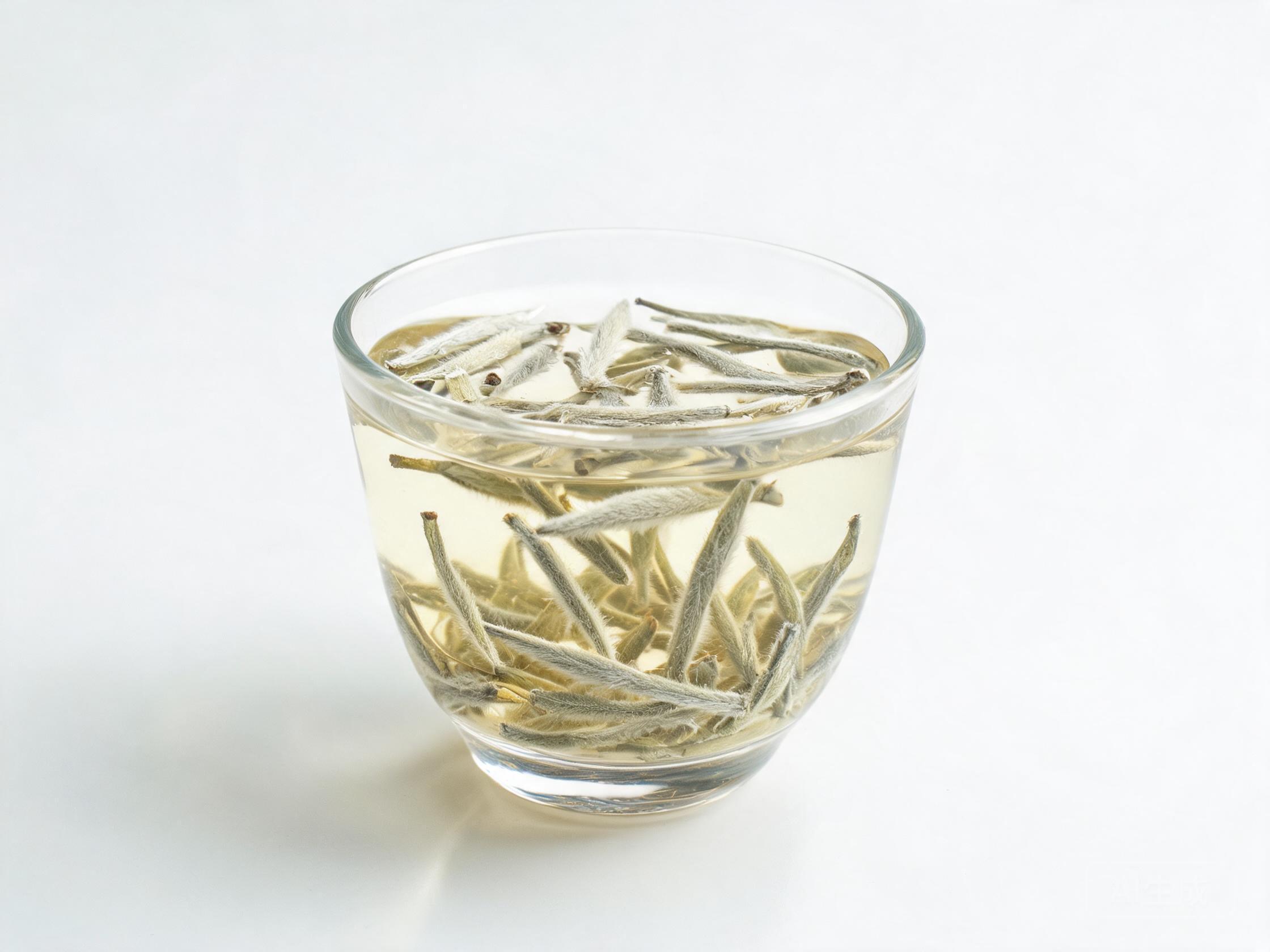
| Silver Needle | Buds only, no leaf | Very small | Delicate, honeyed, pale |
| White Peony | One bud, two leaves | Moderate | Fuller, floral, sweeter |
| Gongmei | Tender shoots, population bush | Small | Rustic, herbal, heavier |
| Shoumei | Older leaf, some stems | Largest | Coarse, sweet, good for ageing |
Silver Needle is the top grade and the smallest by volume. Only the unopened bud is taken, which means a picker working quickly gathers a few hundred grams in a day, and the price reflects that labour as much as the leaf.
White Peony takes a bud and the two leaves beneath it, which is a larger pick and a more forgiving one. The leaves add body and colour, and the cup is fuller than Silver Needle’s without being coarser.
Gongmei is made from the tender shoots of the local population bush, the genetically mixed group known as Cai Cha. It was historically the grade sold to the domestic market while the bud grades went for export, and its character is rougher and more herbal.
Shoumei is the largest grade by volume and the cheapest by weight. It is made from older leaf with some stem, it brews a dark, sweet, sturdy cup, and it is the grade that ages best for reasons the ageing article deals with.
The pick calendar
White tea is picked in a short window in spring, and the grade depends on the day as much as on the intention. The first flush after the buds swell gives Silver Needle, because the bud is present and the leaves have not yet opened.
A week or ten days later the leaves have opened and the same bushes give White Peony, because the bud-plus-two-leaves pick is now possible. Later still, the leaf is bigger and the pick becomes Shoumei.
That calendar is why the grades are not simply quality tiers. They are also dates, and a producer who picks on the wrong day gets a different grade rather than a worse one. A late Silver Needle pick is thin because the buds have opened; an early Shoumei pick is fine but sparse.
It also explains why a single garden sells four grades in the same season. The bushes produce all of them over six weeks, and the sorting is a matter of when the picker went out rather than of which field was chosen.
| Timing | What the bush offers | Grade produced |
|---|---|---|
| First flush | Swollen unopened buds | Silver Needle |
| One to two weeks later | Bud with two opened leaves | White Peony |
| Mid season | Tender shoots of Cai Cha | Gongmei |
| Late season | Older leaf and stem | Shoumei |
What a grade name promises and does not
A grade name promises a pick. It tells you that the tea was made from buds, or from buds and leaves, or from older leaf, and that is a real and checkable fact. You can see it in the dry leaf in seconds.
It does not promise a place. Silver Needle is made in Fuding, in Zhenghe, in Jianyang and now in Yunnan, and the four are all legally Silver Needle and taste quite different. The name says nothing about which.
It does not promise a year, and in white tea the year matters more than in any other class except pu-erh. A three-year-old Silver Needle and a fresh one share a name and share almost nothing in the cup.
It does not promise quality within the grade either. A Silver Needle picked in the rain, withered badly and dried too fast is still Silver Needle by grade and is a poor tea by any other measure.
- A grade name describes the pick and nothing else.
- The same grade from four counties makes four different teas.
- A year changes white tea more than it changes green or red tea.
- Grade and quality are separate questions.
- The dry leaf shows the grade in seconds.
Cultivar and place sit underneath
Beneath the grade there are cultivar names, and they matter to a buyer who wants to know what the bud came from. Fuding Da Bai and Zhenghe Da Bai are the two great white tea bushes, and Cai Cha is the old population group that Gongmei comes from.
Fuding Da Bai has larger, fatter buds with more down, which makes a plump Silver Needle with a sweet, light cup. Zhenghe Da Bai has smaller buds, a darker leaf and a fuller, more savoury cup, and the difference is obvious side by side.
Yunnan’s white tea is made from large-leaf assamica, which gives a bud several times the size of a Fuding bud and a cup with malt and honey where the eastern teas have hay and melon. It is white tea by process and a different drink by character.
A buyer who knows the cultivar can predict the cup far better than one who knows only the grade, because the grade fixes the pick and the cultivar fixes the flavour.
Why the grade system won
The grade vocabulary won because it is portable. A merchant in Guangzhou, a buyer in Hong Kong and an exporter in Fuzhou could all agree on what Silver Needle meant without agreeing on where it came from, and that made it useful for trade at a distance.
Place names could not do that job because white tea was made across a wide area by smallholders. A county name would have excluded most of the crop, and the trade needed a word that covered all of it.
The system also survived because it is verifiable at a glance. A buyer opening a chest could see whether the contents were buds or leaf, and no other naming system in tea offers a check that fast.
The cost of that portability is that the name carries no origin and no year, which are exactly the two facts that now command the largest premiums. The market has responded by adding them back as separate claims, which is why a modern tin carries a grade, a county and a date where a nineteenth-century chest carried only the first.
The grades in the market
Silver Needle is the grade most often faked upward, because a fat white bud is easy to recognise and easy to imitate with a bud from another county or another bush. A plump bud from Yunnan looks like a premium Silver Needle and is a different tea.
White Peony is the grade most often recommended to beginners, because it gives more flavour per gram than Silver Needle at a fraction of the price. It is also the grade where the gap between a good and a mediocre example is largest.
Shoumei is the grade most often underestimated. It is cheap, coarse and unfashionable, and it is the one that most repays keeping, which is why the ageing market has quietly moved toward it.
Gongmei is the grade most often confused with Shoumei. The 2017 standard separates them by bush: Gongmei is made from the population bush’s tender shoots and Shoumei from the improved cultivars’ older leaf, and many sellers still use the words interchangeably.
A buyer who wants to spend money well should learn the four grades and then stop relying on them. The grade tells you the pick; the county, the cultivar and the year tell you the tea. All four facts together make a purchase predictable, and any one of them alone leaves most of the variation unexplained.
Frequently asked questions
How is white tea named?
By the pick: buds, bud and leaves, tender shoots or older leaf.
What is Silver Needle?
Buds only, no leaf. The smallest and most expensive grade.
Is Silver Needle always from Fuding?
No. It is made in several counties and in Yunnan.
What is the difference between Gongmei and Shoumei?
Gongmei is tender shoots of the population bush; Shoumei is older leaf.
Does the grade name tell me the year?
No. Grade fixes the pick, not the harvest.
Which grade ages best?
Shoumei, because it is sturdy and has little delicate aroma to lose.