- The three claims
- Why age changes the leaf
- Why an old tree is not automatically better
- What to ask before paying for age
- How the vocabulary entered the market
- A practical way to judge the claim
- Frequently asked questions
- Is wild tea the same as ancient tree tea?
- Is old-tree red tea better?
- Why does old-tree leaf taste different?
- How can I verify an ancient tree claim?
- Is the premium justified?
- What is terrace tea?
Wild, old bush and ancient tree are three different claims and shoppers routinely treat them as one. A wild tea comes from an unmanaged bush, an old bush is a managed bush of some age, and an ancient tree is a claim about a specific age and size. Only the third is about years, and even it does not guarantee a better cup.
The distinction matters most in Yunnan, where the terms are used to justify large price differences on red tea that may come from the same mountain. It matters less in Fujian and Anhui, where the vocabulary is barely used because the local industries never developed it.
The honest position is that age is a real variable with real effects on the leaf, and that the market has learned to charge for it far beyond what the effects justify.
The three claims
| Term | What it claims | Verifiable | Typical premium |
|---|---|---|---|
| Wild tea | Unmanaged bush, no fertiliser or pruning | Hard | High, often unearned |
| Old bush | Managed bush, roughly 30 to 100 years | Partly, by inspection | Moderate |
| Ancient tree | A named tree of great age and size | Only by visit | Very high |
| Terrace tea | Dense planted rows, regular pruning | Easy | None, it is the baseline |
A genuine wild bush grows in mixed forest without pruning, fertiliser or pest control. It yields very little leaf, the leaf is small and often insect-damaged, and the resulting tea is distinctive in a way that is hard to describe and easy to recognise once tasted. It is also rare, and most of what is sold as wild is not.
An old bush in Yunnan usually means a managed tree of thirty to a hundred years, spaced widely enough to have a trunk. These are common enough to be real and old enough to matter, and they are the most likely of the three claims to be both true and worth paying for.
An ancient tree claim refers to a specific named tree, often several centuries old and several metres tall, with a documented history. There are a few thousand such trees in Yunnan and they are not available in the quantities the market implies.
Why age changes the leaf
An old tree has a deeper root system and a slower growth rate, and both affect what accumulates in the leaf. The deeper roots reach minerals that a shallow terrace bush does not, and slower growth concentrates the compounds that give aroma and body.
The canopy matters too. A tall tree’s leaf is shaded for part of the day by its own branches, which reduces bitterness and increases the amino acid content. The same effect is achieved on terraces by shade netting, which is cheaper and nearly as effective.
The third factor is the soil biology around an old tree, which is undisturbed and rich in fungal networks. Nobody has isolated the effect cleanly, and the claim that it transforms the cup rests more on plausibility than on measurement.
The fourth is simply that old trees are picked less. A terrace is cropped hard several times a year; an old tree may be picked once. Less picking means more leaf reserves and a denser cup, and this is probably the largest single reason old-tree tea tastes the way it does.
Why an old tree is not automatically better
Age is one variable among several and the others can dominate. A badly made tea from an ancient tree is worse than a well-made tea from a terrace, and badly made old-tree tea is common because the leaf is expensive and the maker is afraid to push it.
Old-tree leaf is also less forgiving. It is smaller, more uneven and lower in moisture, and it responds badly to a standard oxidation schedule. A maker who treats it like terrace leaf produces a thin, sour tea and then blames the leaf.
And the price distorts everything. When a tea costs ten times as much, buyers expect ten times the pleasure and report it whether or not they find it. Blind tastings of old-tree and terrace red tea from the same mountain have repeatedly failed to produce the unanimity the market assumes.
- Age is one variable and processing can override it.
- Old-tree leaf is harder to make well.
- Price expectation shapes what drinkers report.
- Shade and light picking explain much of the difference.
- Blind tasting rarely confirms the premium.
What to ask before paying for age
Ask which mountain and which village, because an ancient tree claim is meaningless without a location. Ask how much was made, because a few kilograms is plausible and a tonne is not. Ask whether the trees are named and documented, because the real ones usually are.
Then ask what the leaf looked like before it was made. Old-tree leaf is small, dark, uneven and often insect-bitten, and a seller who can describe it has probably seen it. A seller who describes only the price has probably not.
Finally, taste without the price in mind, which is difficult and worth practising. The question is not whether the tea is good but whether it is better than the tea at a tenth of the price, and that question is answerable in a cup and unanswerable in an argument.
How the vocabulary entered the market
The words came from pu-erh. Yunnan’s pu-erh trade had used old-tree and wild-tree language since the 1990s to distinguish leaf from ancient gardens on the Menghai and Yiwu mountains, and the vocabulary carried prestige within that market long before red tea adopted it.
When Yunnan red tea grew quickly in the 2000s, producers applied the same words to their product because the pu-erh market had already taught buyers to pay for them. The terms migrated without the verification systems that had grown up around pu-erh, which is why red tea’s old-tree claims are looser than pu-erh’s.
Fujian and Anhui never developed the vocabulary because their industries were organised differently. Keemun and Lapsang Souchong are named for places and methods, and a Qimen farmer with a fifty-year-old bush would not think to sell the age because the market never asked.
| Decade | Where the vocabulary was used | What it signalled |
|---|---|---|
| Before 1990 | Rare, mostly pu-erh collectors | Antiquarian interest |
| 1990s | Pu-erh trade, Yiwu and Menghai | Garden identity |
| 2000s | Yunnan red tea adopts it | Prestige and price |
| 2010s | Applied to oolong and white tea | Marketing shorthand |
Each migration loosened the meaning a little. A term that once described a specific garden became a term that describes a price tier, and a buyer reading it today is reading a marketing category rather than a botanical fact.
A practical way to judge the claim
Start with the price per hundred grams and the claimed age, and see whether the two are consistent with the volumes involved. A tree that is three hundred years old yields a few hundred grams of usable leaf a year, and a tea sold in kilogram bags at a modest price cannot be from such a tree.
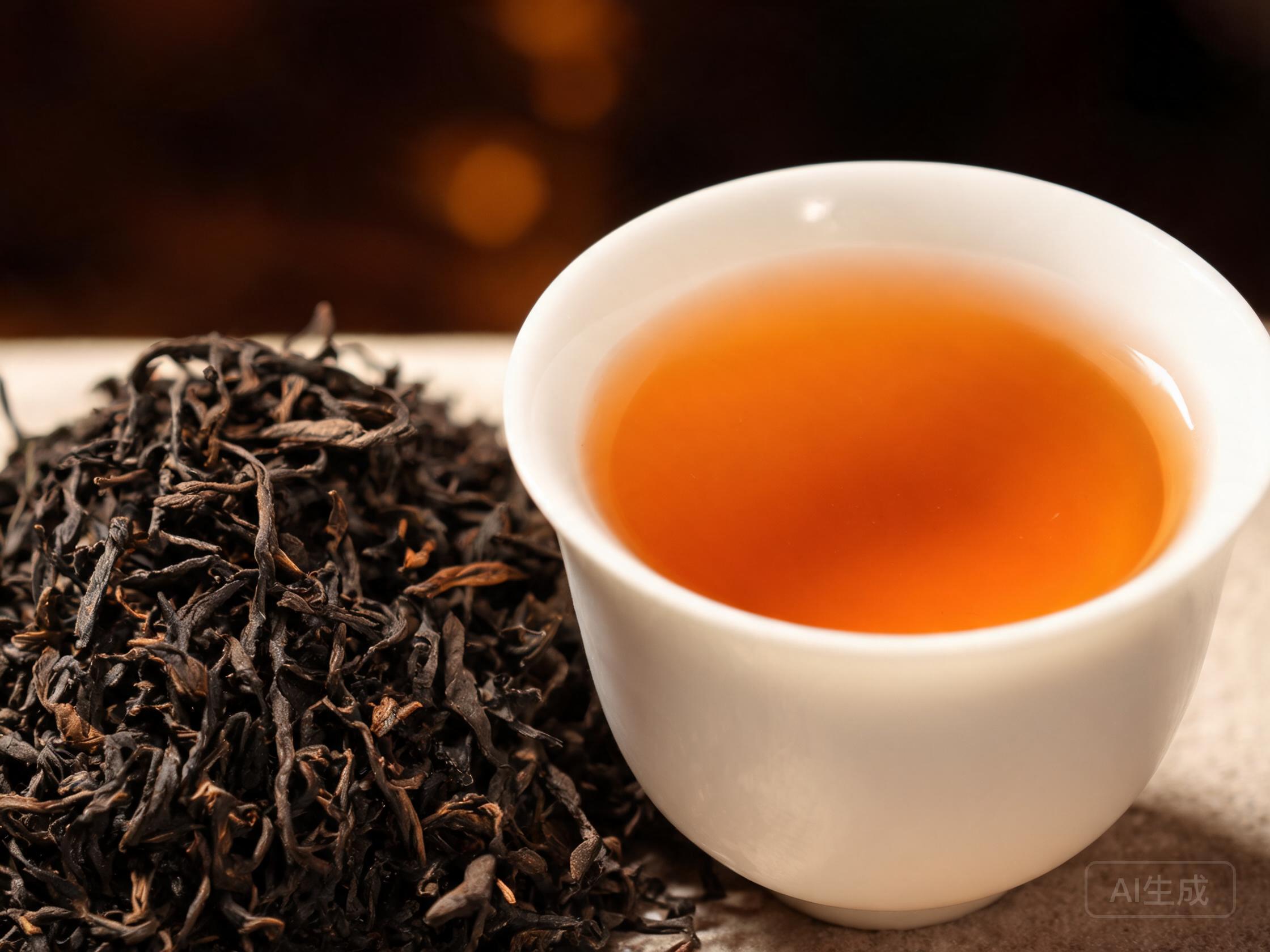
Then judge the dry leaf. Old-tree leaf is small, dark and uneven, with a matte surface and noticeably less down than bud-heavy terrace leaf. A tin of large, uniform, golden-tipped leaf is unlikely to be old-tree material, however it is described.
Then judge the cup across several infusions. Old-tree tea usually holds up for many steepings without turning bitter, because its reserves are higher. A tea that collapses at the third infusion is not demonstrating old-tree behaviour, whatever its label says.
None of these checks settles a claim, and together they eliminate the claims that cannot be true. That is the useful standard for a category where the top of the market is unverifiable and the bottom is unregulated.
There is one more distinction worth keeping straight, between wild and abandoned. A wild bush has never been managed; an abandoned bush was planted and then left, and it sits somewhere between the two categories. Old gardens on mountains that were depopulated in the twentieth century are full of abandoned bushes, and their leaf is often sold as wild.
The distinction is not academic. An abandoned bush may be fifty or seventy years old and genuinely unmanaged, which gives it some of the character of an old tree without the age. It is the most honest bargain in the category, and the least likely to be described accurately on a tin.
Frequently asked questions
Is wild tea the same as ancient tree tea?
No. Wild means unmanaged, ancient means old and large. A bush can be one without the other.
Is old-tree red tea better?
Not automatically. Processing and picking matter as much as age.
Why does old-tree leaf taste different?
Deeper roots, slower growth, shade and lighter picking all contribute.
How can I verify an ancient tree claim?
Only by visiting. Ask for the village, the quantity made and the tree records.
Is the premium justified?
Partly. The leaf is genuinely different; the multiplier usually is not.
What is terrace tea?
Densely planted, regularly pruned rows. It is the baseline, not a defect.