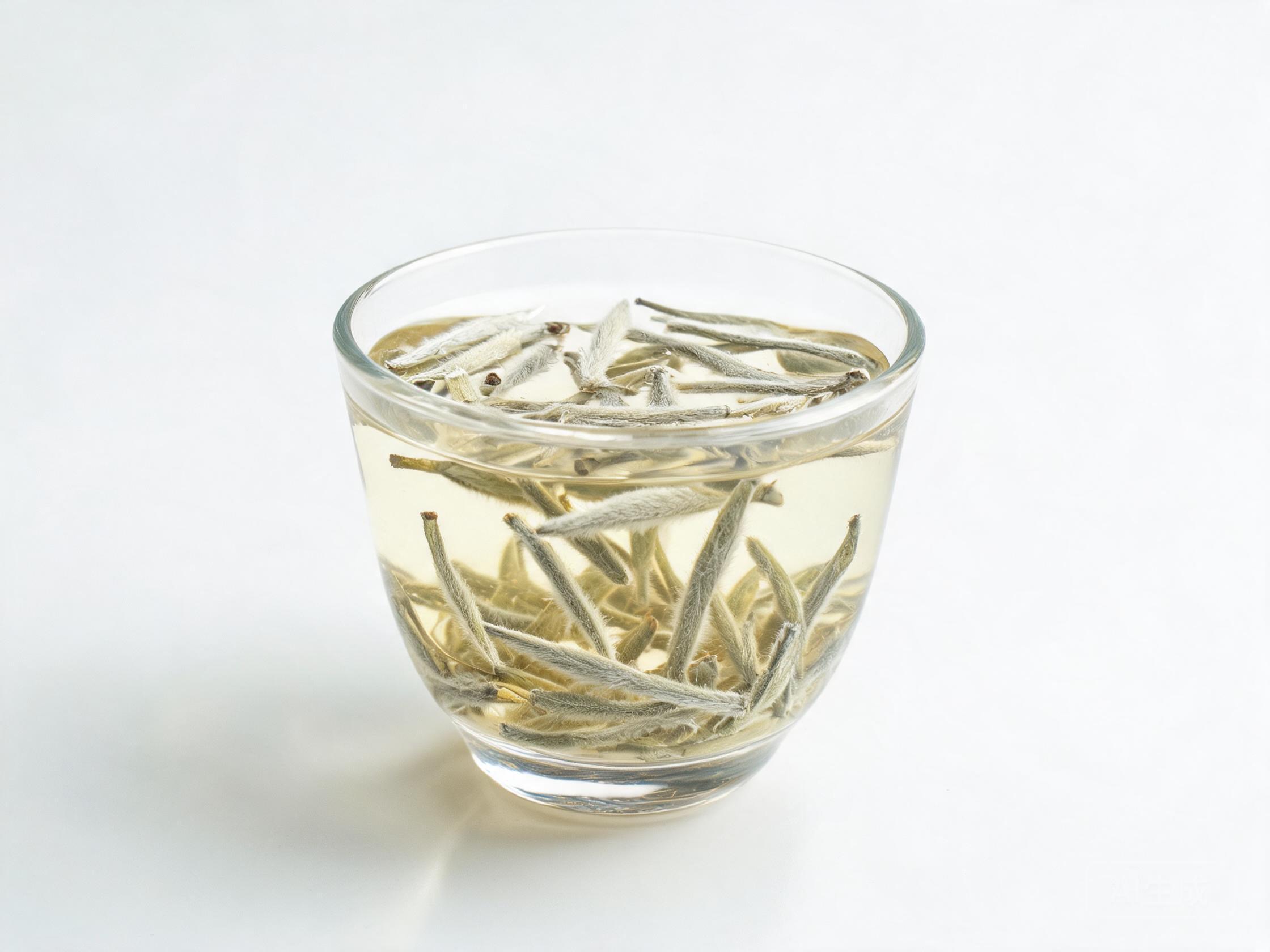
The effect
Elevation has a quieter effect on white tea than on oolong, and the reason is the minimal processing.
There is no roasting and no rolling to intervene, so what the garden did reaches the cup almost intact.
Fuding’s gardens run from near sea level up to about 900 m behind the coast.
The low ones pick first and give a lighter, more floral cup that sells well as Silver Needle.
The high ones pick later, and the liquor from them carries more texture and a longer finish.
Zhenghe is inland and generally higher, with gardens commonly between 400 and 800 m.
That extra height is one reason a Zhenghe tea reads as rounder than a Fuding one at the same grade.
Jianyang and Songxi sit within the same band, and neither is known for a distinct elevation effect.
Yunnan’s white tea is made well above all of them, often on the same hills as its pu-erh.
The broad leaf there gives a deeper liquor, and it is the leaf rather than the height that you taste.
So within Fujian the effect is modest and consistent, and outside it the leaf takes over.
That is a smaller claim than most sellers make for altitude, and it is the honest one.
Why it happens
Cool air is the main mechanism, and it acts on how long the leaf takes to mature.
A slower growing bud is smaller but denser, and it holds its sugars rather than burning them off.
Cloud is the second mechanism, and it matters more here than in any roasted category.
White tea is withered in the open or in a shed, and the weather during that window shapes the result.
High gardens are cloudier and cooler, which stretches the wither instead of hurrying it.
A stretched wither gives a rounder cup, and a rushed one leaves a grassy edge behind.
Drainage is the third mechanism, since steep slopes shed water and keep the roots healthy.
Bushes on flat, wet ground grow fast and soft, and the leaf they give is watery by comparison.
Frost risk is the counterweight, and a spring frost on a high garden can take the whole first flush.
That risk is part of why the high gardens cost more, and part of why the supply is erratic.
Slow growth, soft light and a long wither all move the cup towards sweetness.
Nothing else in the process is strong enough to override them.
Limits of the rule
The rule has clear limits in white tea, and the first is that grade swamps it.
A high grown Shou Mei and a low grown Silver Needle are not comparable, and the bud tea wins on most palates.
Cultivar comes next, and Fuding Da Bai(福鼎大白)behaves differently from Zhenghe Da Bai(政和大白)at the same height.
The county effect and the height effect are tangled together, and no packet separates them for you.
Age is the third limit, and it erases more of the difference than altitude ever created.
After a few years in storage, a Fuding and a Zhenghe of the same grade drift towards each other.
Where the cake was kept decides the outcome, and that has nothing to do with the garden.
Altitude figures on white tea packets are rarely specific, and a vague one carries no information.
A seller quoting a single number for a county with a wide range is guessing or marketing.
Storage conditions are also undisclosed, which makes any comparison between two samples partly fictional.
What you can verify is the grade, the county and the harvest year, and all three beat altitude.
Height is the least checkable of the four.
Practical takeaway
Treat altitude as a tiebreaker between two otherwise similar white teas, and nothing more.
Ask for the county and the grade first, since those are written down and can be checked.
Then ask for the harvest, because freshness decides more of the cup than the garden’s height does.
Brew 5 grams in a 100 ml vessel at about 85 °C and hold the first infusion to 30 seconds.
A high grown white tea shows texture on the middle of the palate rather than a loud aroma.
In the Fuding style the floral note sits on top of that texture, and in the Zhenghe style it sits behind it.
Take both through to the 4th infusion, where the aroma has dropped and the body is what remains.
The tea with more left at that point came from slower growth, which usually means higher ground.
Do not pay extra for a number alone, since the number is the easiest thing on a packet to invent.
Buy from a seller who names the township, because a township narrows the range more than a height does.
For aged white tea, ignore altitude entirely and ask about the room it was kept in.
A well stored low garden cake beats a badly stored high one without any argument.