Where it comes from
Lapsang Souchong is the English trade name for Zhengshan Xiaozhong(正山小种), a tea from Fujian.
It comes from Tongmu Guan(桐木关), a village in the Wuyi(武夷)mountains on the Fujian border.
The name Zhengshan means something close to the original mountain, and it marks a protected origin.
Tea made outside that area is sold as similar, and it is usually a different drink.
This is widely regarded as the earliest black tea, and the claim has real support behind it.
Fully oxidised leaf appears in the historical record here before it appears anywhere else.
The date is usually put in the seventeenth century, and it is tied to the growth of export trade.
European buyers knew the tea as Bohea, a name taken from the same mountains.
That export history is why the English name and the Chinese one are so far apart.
The village still makes it, and the style survives alongside a great deal of imitation.
Altitude and cool nights slow the leaf’s growth, and the bushes are the local Wuyi variety.
The setting is the reason the tea tastes the way it does, and it cannot be moved.
Anyone buying it should look for the origin first, since the name alone guarantees nothing.
How the smoke gets in
The smoke is the famous part, and it comes from the drying stage rather than from an additive.
After oxidation, the leaf is dried over fires fed with local pine wood.
The traditional fuel is Masson pine, and the resin in it is what gives the aroma.
The leaf sits on racks above the fire, and the smoke passes through it for hours.
That step was practical before it was famous, since firing over wood was simply how leaf was dried.
A modern version is made without any smoke, and it is a clean, malty red tea.
Both are sold under the same name, and that is the single biggest source of confusion.
An unsmoked Zhengshan Xiaozhong is not a fake, and it is not the traditional style either.
Outside the origin area, smoke is often applied to unrelated leaf to imitate the aroma.
Some producers go further and use a spray rather than a fire.
That version smells sharp and tastes thin, and it is easy to spot beside a real one.
The difference is whether the aroma is in the leaf or only on the surface of it.
Ask whether the smoke came from a fire, and the answer sorts most of the market.
What it tastes like
A properly made smoked version smells of pine wood, dried longan and a little sweetness.
The smoke should sit behind the tea rather than in front of it.
A version where the smoke is all you can smell was dried too hard over the fire.
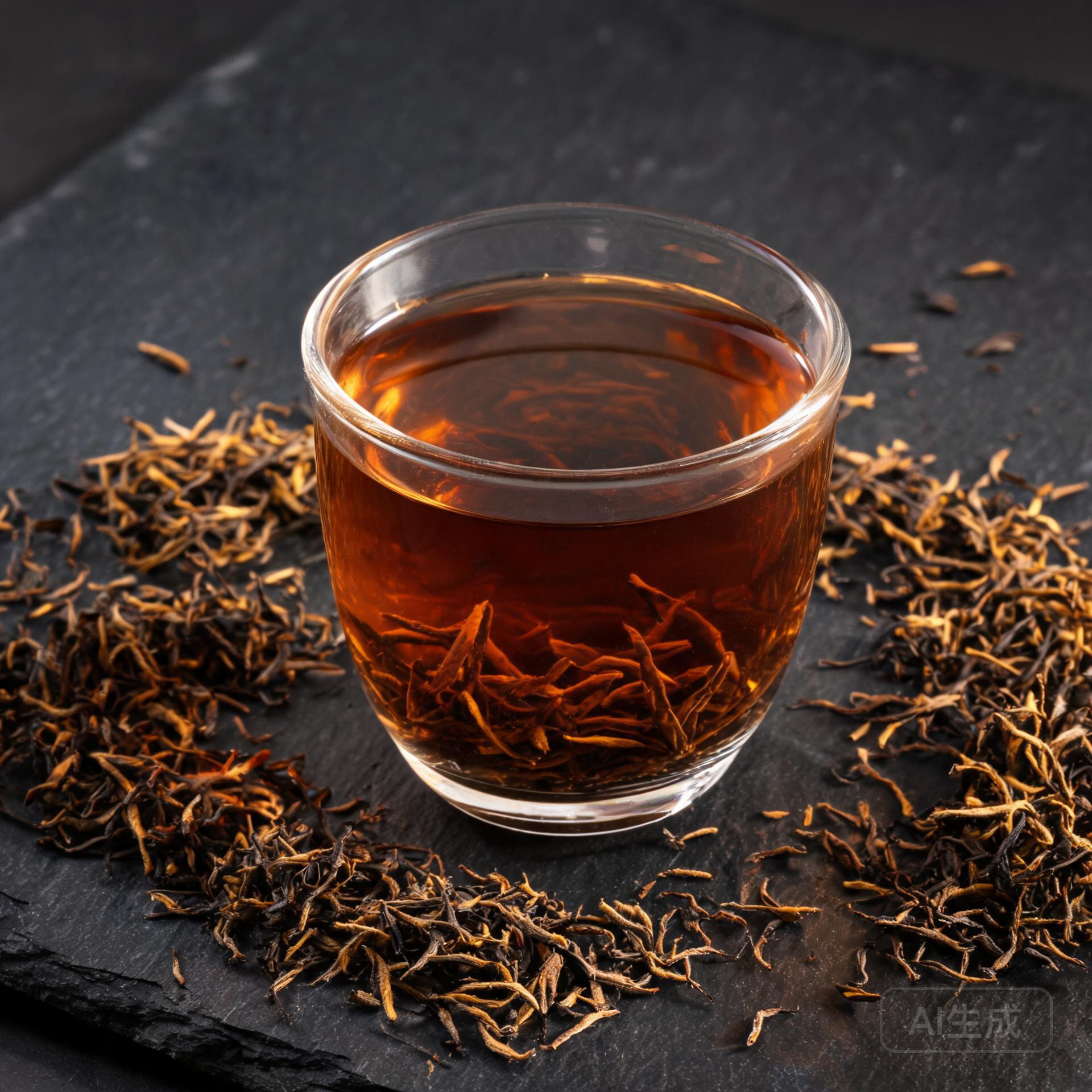
The liquor is a deep amber to reddish brown, and it is clear rather than muddy.
On the palate it is smooth, with a sweet finish that lingers after the smoke.
The unsmoked style tastes like a good red tea, with malt and a faint dried fruit note.
Neither version is strongly astringent, since the leaf is fully oxidised.
Young versions can taste a little rough, and a year of storage rounds them off.
The smoked style is the one to pair with food, and it stands up to rich dishes.
It also takes milk without losing itself, which is not true of every smoked tea.
The aroma is the reason people buy it, and it is also the reason some people avoid it.
Anyone who dislikes smoke should buy the unsmoked version rather than a weaker smoked one.
There is no middle version worth chasing, since the two are separate products.
Buying and brewing it
Buying starts with the origin, and the wording on the packet is the only guide.
Look for Tongmu Guan, or for a producer who will name the village.
A tea sold only as Lapsang Souchong with no origin is usually made elsewhere.
Buy a small amount first, since the aroma is strong and divides people.
Store it away from other teas, because the smoke travels through packaging.
Brew the smoked version with 5 g in a 120 ml gaiwan at 95 °C.
Give the first steep about 20 seconds, and add time as the leaf opens.
It takes 5 to 6 infusions, and the smoke fades before the sweetness does.
Western brewing works, and 3 minutes in a mug gives a strong breakfast cup.
Boiling water suits both versions, since the leaf is fully oxidised.
The unsmoked version is more forgiving, and it is the better everyday choice.
Rinse a compressed or older cake once before the first proper steep.
Everything else about it is ordinary, and the smoke is the only thing to watch.