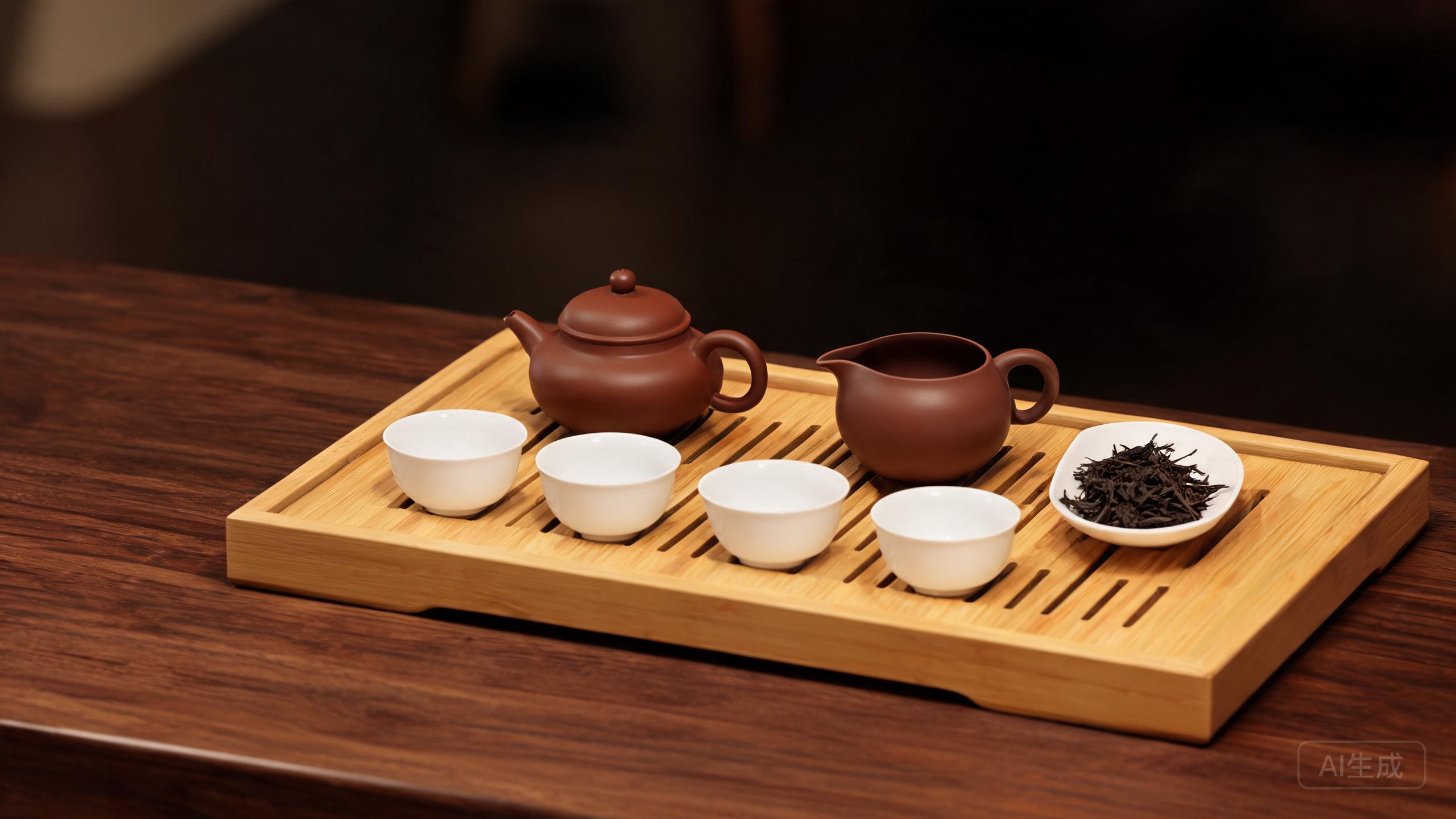
The core vessel
A gaiwan(盖碗)of 100 to 120 ml is the vessel to start with, and it is the most honest tool you can own.
It is glazed porcelain, it adds no flavour of its own, and it lets you watch the leaf open.
The lid holds back the leaf while you pour, and the gap you leave controls how fast the liquor runs.
A wide rim stays cool enough to hold, while the bowl itself sheds heat between one infusion and the next.
Small is the point.
A vessel you can empty in three sips keeps every infusion short and every pour comparable.
An unglazed clay pot, zisha(紫砂)from Yixing or zhuni(朱泥)from Taiwan, is the other serious option.
Clay holds heat far longer than porcelain does, and a roasted oolong answers well to that extra heat.
It also takes on seasoning over years, developing a faint sweetness that many drinkers prize and some distrust.
That memory is the drawback, because a pot kept on one roast will quietly change the next tea you put in it.
Porcelain pots sit between the two, neutral and easy to rinse clean, and they are the fair choice when you are comparing teas.
Glass works for a ball rolled oolong because you can watch the leaf unfurl, though it loses heat quickly.
Choose one vessel and learn it, since switching between clay and porcelain teaches you about pots rather than about tea.
The supporting setup
A fairness pitcher, cha hai(茶海), is the piece people skip and then regret.
Pouring straight from the pot into cups gives the first cup a weaker tea than the last.
Decanting into a pitcher evens the strength out, and after that every cup in the round tastes the same.
A strainer set over the pitcher mouth catches broken leaf, and oolong breaks more than you would expect.
Cups should hold 20 to 50 ml, small enough that one pour is one or two sips.
Large cups go cold before you finish them, and cold oolong loses most of what you paid for.
A tea boat, or any tray with a drain, catches the rinse water and the overflow.
You can improvise with a baking tray and plenty of people do, but a raised lip around the edge saves the table.
A scale reading to 0.1 g and a timer are worth having for the first month.
Most drinkers put both away once the rhythm is in their hands, and that is the sign the setup has done its job.
A kettle that holds a temperature matters more than a kettle that boils fast.
Add a small towel for wiping and a bowl for spent leaf, and the whole kit still fits on one tray.
Rinse, ratio and heat
Weigh the leaf first, and use 5 to 8 g in a 100 to 120 ml vessel.
That is far heavier than a mug brew asks for, and it is what makes ten short infusions possible instead of two long ones.
Rinse once with hot water, swirl it, and pour it off within a few seconds.
The rinse wakes a tightly rolled leaf and washes off the dust of packing and transport.
Skip it for a very light, green style oolong, where the first steep is often the best one.
Water temperature follows the roast, so a charcoal roasted oolong takes 95 to 100 °C and wants it.
A high mountain style prefers 90 °C, and going cooler than that on a rolled leaf gives you aroma with no body.
The first infusion runs a few seconds, and each one after it adds a little more time.
Count seconds in your head at first, then stop counting and taste instead.
Extend each infusion by a few seconds, and pour out the moment the cup tastes right.
Decant fully every time, because leaf left sitting in water keeps extracting whether you are drinking or not.
A session ends when the liquor turns thin and sweet, and pushing past that only gives you warm water.
Why this fits oolong
Oolong is made by shake withering, a step that bruises the leaf edge on purpose.
Aroma compounds sit near the surface, so they arrive early and leave early.
Short steeps catch them before they go, which a long soak in a mug cannot do.
Roast adds a second layer that needs heat to open, and clay is what supplies that heat.
A big mug stews the leaf, and the first sip and the last one taste like different teas.
The small vessel also lets you taste the same leaf change across a single session.
A rolled oolong often peaks at the third or fourth infusion and then gives a long, sweet tail.
A twisted strip oolong peaks earlier and finishes sooner, and knowing which one you have shapes the whole session.
Ten pours is a normal count for a good rolled leaf, and some go further still.
That arc is why the setup exists, and it is not ceremony or tradition for its own sake.
If a tea tastes flat in this setup, the leaf is the problem and no vessel will rescue it.
Fix the water, then the dose, then the time, and the gear stops being the variable.