The minimum
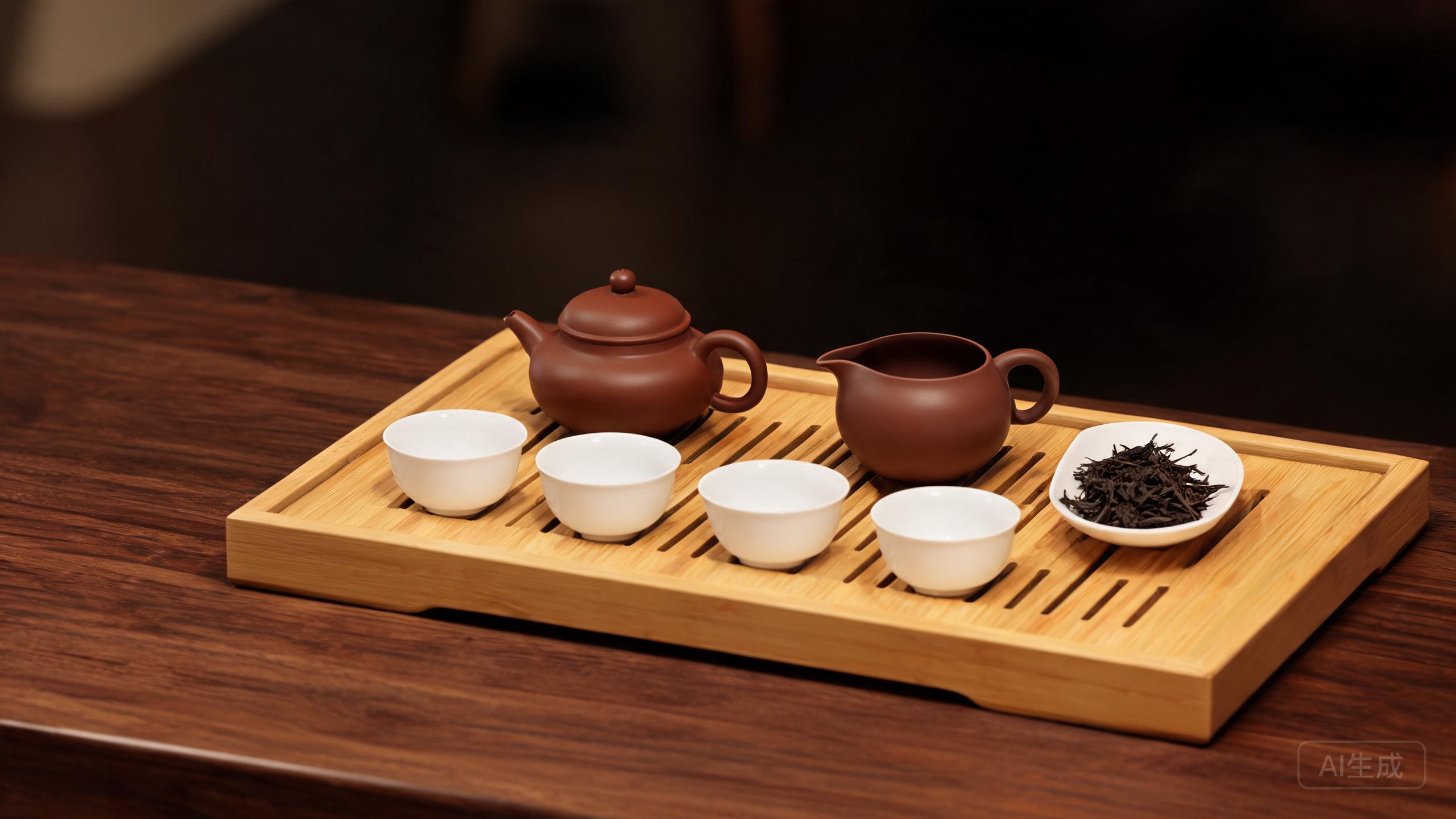
Oolong is brewed at a much higher leaf ratio than black or green tea, and that single fact shapes the whole kit. You are putting roughly one gram of leaf into every twelve ml of water, so the vessel has to be small.
Start with a porcelain gaiwan of 100 to 120 ml. It brews, it pours, it holds the aroma, and it costs very little. It also handles every oolong in the category, which no clay pot does.
Add a fairness pitcher of about 200 ml. Oolong is steeped repeatedly, and you pour each infusion off the leaf immediately. Decanting into a pitcher stops the steeping and lets you serve several cups from one infusion.
Finish with two small cups of 30 to 50 ml. Oolong is judged on aroma and aftertaste more than on volume, and small cups keep the tea hot while you work through six or seven infusions.
A gaiwan also teaches you the leaf as you go. The lid sits loose, so you can lift it and smell the wet leaf between infusions, and with oolong that aroma is a large part of what you paid for. No teapot gives you that as cheaply.
Add as you go
The first thing worth buying after that is a kettle with temperature control. Oolong wants water between 90 and 100 °C, considerably hotter than green tea, and guessing with a boil-and-wait kettle is the most common cause of a flat cup.
A small scale comes next. Rolled oolong varies enormously in density: 5 grams of a tight ball-rolled Tieguanyin fills a fraction of the space that 5 grams of a twisted Dancong does. Measuring by eye drifts by a gram or more.
Then a strainer, because oolong leaf breaks. A fine mesh sitting over the pitcher catches the fragments that a gaiwan lid lets through, and it costs less than a decent cup of the tea itself.
A timer is optional. Oolong steeps are short, usually starting around twenty seconds and stretching to a minute, and most people count accurately enough at that length. Buy one only if you genuinely lose track.
A waste bowl earns its place faster than people expect. Spent oolong leaf is wet and bulky, and six or seven infusions produce a surprising pile. Somewhere to tip it keeps the table workable and the leaf out of the sink.
Where to spend
Spend money on the two things that touch the water and the leaf, which are the kettle and the gaiwan. A precise kettle changes every cup you make afterwards, and a thin-walled gaiwan changes how fast the leaf cools.
Do not spend much on cups early on. Small porcelain cups are cheap and interchangeable, and the difference between a good one and a mediocre one is far smaller than the difference between fresh leaf and tired leaf.
Where people overspend is on the clay pot. A good zisha pot is a real upgrade for roasted oolong, but it is a considered purchase, not a starting one. Buy it once you know which roast level you actually drink.
If you have a fixed budget, put most of it into the tea. Better leaf in a modest gaiwan beats mediocre leaf in an expensive pot, and the gap is obvious in a side-by-side.
Buy the kettle before you buy the pot, every time. Water temperature decides whether a light oolong tastes floral or stewed, and no vessel can rescue leaf that was hit with water that arrived too cool.
One set, many teas
The pleasant surprise is how little of this is oolong-specific. A 120 ml porcelain gaiwan, a pitcher and a temperature-controlled kettle will also brew white tea, red tea, pu-erh and most greens.
What changes between categories is the ratio and the temperature, not the hardware. Green tea wants a lower ratio and cooler water; oolong wants the vessel crowded and the water near boiling. Same pot, different numbers.
The one piece that does not transfer is the dedicated clay pot. If you season a pot with roasted oolong and then brew a delicate green in it, the pot will give back the roast. Keep it to one family.
So buy the neutral set once and use it everywhere. Add the specialised pieces later, and only for the kind of oolong you find yourself buying twice.
The set travels well, which matters more than it sounds. A gaiwan, two cups and a small tin of leaf fit into a bag, and a hotel kettle plus a gaiwan will make better oolong than most office kitchens manage.