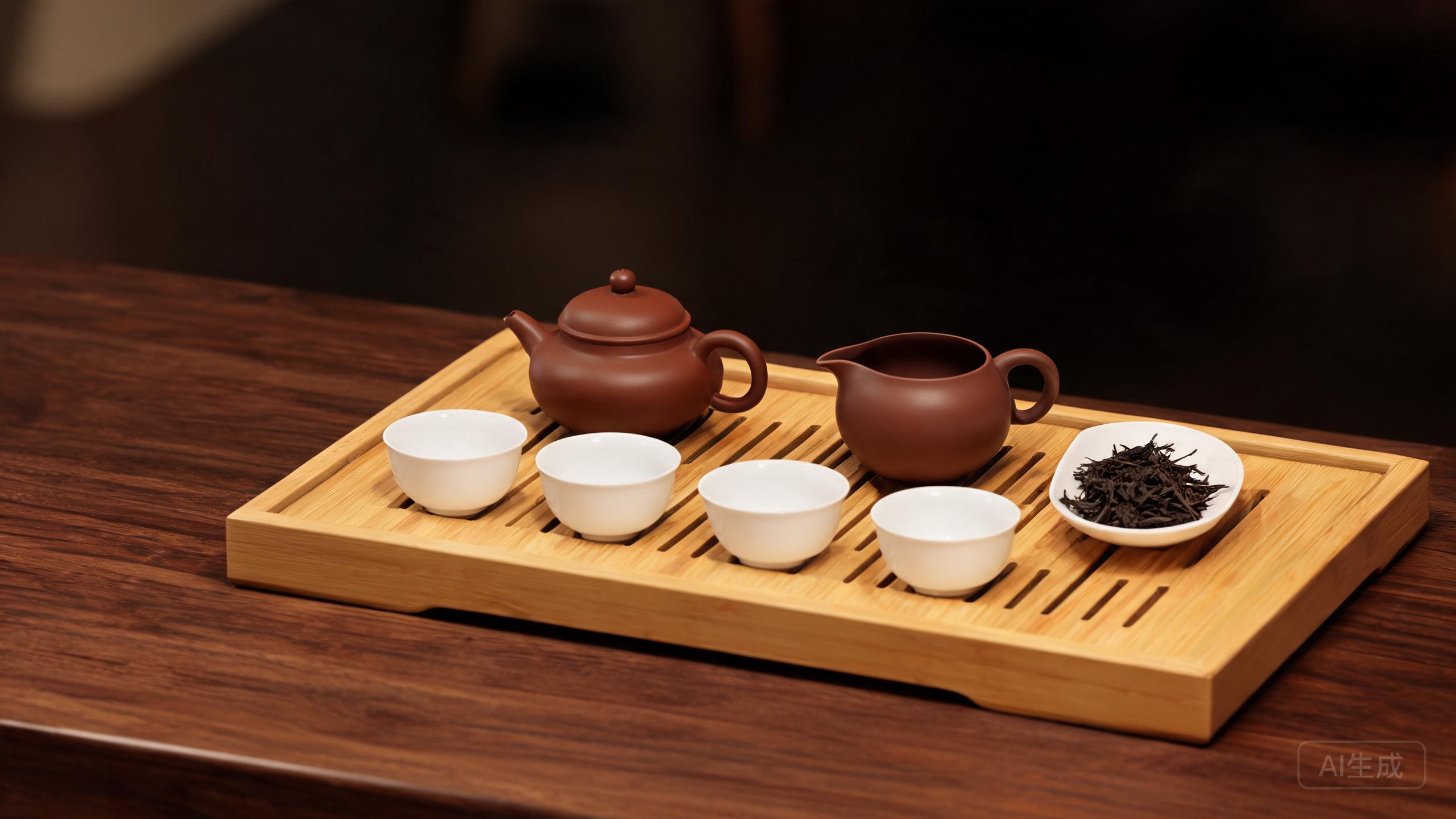
Glass and porcelain
Glass and glazed porcelain are the reference materials, because they do almost nothing to the tea. They hold heat reasonably, they show you the leaf, and they give back the aroma the leaf produced rather than one the vessel added.
Porcelain is the better working material of the two. A thin-walled porcelain gaiwan loses heat fast, which suits light oolong: the leaf cools, the steep slows, and the delicate floral notes of a high-mountain tea survive at 90 °C rather than turning stewed.
Glass is useful for watching ball-rolled oolong open. A rolled Tieguanyin unfolds over the first 2 or 3 infusions, and seeing it tells you when the leaf is fully expanded and the steep should lengthen.
Both materials are easy to keep neutral. Neither holds odour, both can be washed, and both can be moved between roast levels without carrying anything over from the last session.
Both are also forgiving about dose. An 8 g ball of rolled oolong in a 120 ml glass pot gives you room to watch and room to be slightly wrong, which is not true of a tightly packed clay vessel.
Clay
Unglazed clay is the opposite case. It is slightly porous, it retains heat longer than thin porcelain, and it absorbs aroma compounds from the tea it brews. Over months it builds a seasoning that changes what goes into it.
That seasoning softens a roasted oolong in a way drinkers actively want. Yancha and heavy-roast Tieguanyin lose some of their sharp edges in a seasoned pot, and the cup tastes rounder and slightly sweeter.
The same seasoning ruins a light oolong. Brew a delicate Alishan in a pot seasoned with roasted tea and the roast comes through as a background note that was never in the leaf. This is why clay pots get dedicated.
Heat retention also matters more than people expect. A heavy clay pot holds temperature through a long session, which suits roasted leaf brewed at a full boil. The same pot will stew a green-leaning oolong.
Size interacts with the material too. A 250 ml clay vessel holds heat far longer than a 100 ml one, and at that volume the difference between a roasted oolong and a delicate one becomes hard to manage.
Matching to the tea
Match by roast level rather than by region. Lightly oxidised, unroasted oolongs go in porcelain or glass. Medium roast does well in either porcelain or a lightly seasoned pot. Heavy roast is where clay earns its keep.
Ball-rolled oolongs also need headroom. A tight roll expands to three or four times its dry volume, and a vessel packed to the brim when dry will not let the leaf open. Leave the pot a third empty.
Roasted oolongs are noticeably oily compared with green tea, and that oil is what seasons a clay pot. It is also why glazed ware is easier to live with if you drink a lot of yancha and wash up reluctantly.
If you only drink one kind of oolong, match the vessel to it and stop there. If you drink across the roast range, one neutral porcelain gaiwan will serve you better than three specialised pots.
Brewing temperature and material are tied together more closely here than in any other category. Light oolong at 90 °C in thin porcelain gives a clean, aromatic cup, and the same tea at 100 °C in heavy clay gives something flatter and duller.
Buying advice
Buy porcelain first, and buy it thin. Thin walls respond quickly when you pour, so you control the steep rather than the pot controlling it. This is the single most useful property in a first vessel.
When you do buy clay, buy it for a specific tea and be honest about which one. A pot that is right for roasted yancha is wrong for baozhong, and no pot is good at both.
Be sceptical of clay sold cheaply. Genuine zisha at a low price is usually something else with an additive, and a vessel whose material you cannot identify is not one you want to season for years.
Finally, buy for the size you actually brew. A 250 ml pot is too large for one person making oolong at gongfu ratios, and a beautiful pot that is the wrong volume will sit unused.
Handle the pot before you pay for it. Weight, the pour, and whether the lid sits tight matter more in daily use than the maker’s name, and none of them can be judged from a photograph.
Ask what the seller seasoned it with, if it is second-hand. A pot broken in on roasted oolong will keep giving that roast back for months, and there is no quick way to reset it.