How regions differ
Oolong covers a wider spread of regional craft than any other category, and the districts disagree on nearly every step.
Wuyi twists its leaf into strips, then roasts it over charcoal once, twice, or three times across several months.
A heavily roasted Wuyi tea comes out almost black in the dry leaf, and it tastes of mineral and char.
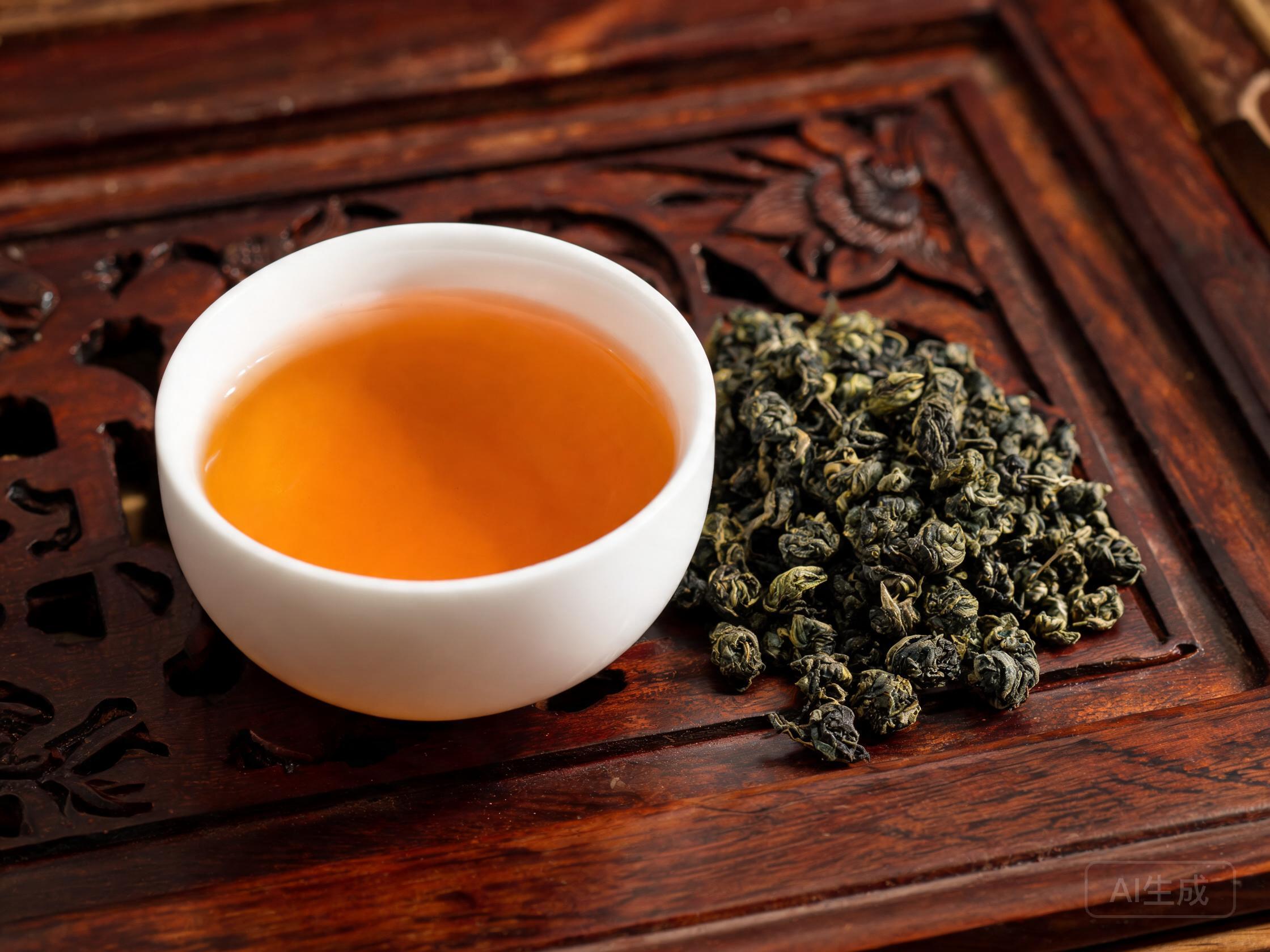
Anxi rolls Tieguanyin into tight pellets instead, and the modern style keeps it green and floral with little roast.
Rolling into a pellet bruises the leaf edge, which is exactly where the oxidation is meant to happen.
Fenghuang in eastern Guangdong works bush by bush, and single tree dancong is picked and made on its own.
That is why names like mi lan xiang(蜜兰香)describe an aroma rather than a grade.
Taiwan sits at the light end: ball rolled, oxidized briefly, and roasted hardly at all.
High elevation slows the leaf down, so the same cultivar grows thicker and sweeter at 1,500 m than at 300 m.
Each of those four regions runs a different sequence of steps on the same kind of leaf.
The shared word oolong describes a degree of oxidation, and it describes nothing else about the craft.
Why the same tea diverges
Divergence starts in the field, because each district grows the cultivar that suits its own process.
Wuyi uses small leaf bushes bred for roast, and a thin leaf would simply burn under charcoal.
Taiwan plants the same Qingxin cultivar at 1,000 m to 2,500 m, where slow growth builds thickness.
Water, slope and fog all enter the leaf before anyone in a workshop touches it.
The second divergence is picking, since a standard of 1 bud with 2 or 3 leaves is not universal.
Wuyi takes a mature shoot, and bud only plucking there would give a thin tea that cannot carry the roast.
Anxi and Taiwan take a younger shoot, which keeps the floral note that their process exists to protect.
Oxidation is where the methods separate most, running from 10 per cent to 70 per cent depending on the district.
Roasting then either confirms the choice or erases it, and Wuyi is the only region that erases deliberately.
Storage finishes the split, since Wuyi improves for years while green style Anxi is best within months.
So the category holds teas that were never meant to be judged against one another.
Learning the signatures
Start with the dry leaf, because shape tells you the district before the water does.
A twisted dark strip means Wuyi, and a tight green pellet means Anxi or Taiwan.
A long uneven strip with red edges is usually dancong from Fenghuang.
Smell the dry leaf next, since roast and flowers are the two axes that most regions sit on.
Charcoal roast smells warm and slightly sweet, and it lingers in the empty cup after the tea is gone.
Green style tea smells of orchid or fresh grass, and the aroma fades quickly once the leaf is wet.
Brew 5 grams at 95°C and read the third infusion, where the regional character is most stable.
Wuyi shows thickness and a mineral finish, and the best of it leaves a sweetness at the back of the throat.
High mountain Taiwan shows a creamy texture and very little astringency, which is the elevation rather than the craft.
Anxi in the modern style is thinner than people expect, and the ball opens fully only by the second infusion.
Compare two regions in one session, because the difference is far easier to taste side by side than from memory.
Tradition versus trend
The trend in oolong for 20 years has been toward green: less oxidation, less roast, and more aroma.
That shift started in Taiwan and Anxi, and it has reached Wuyi, where roast levels have dropped.
Traditional Wuyi was roasted far harder than most of what is sold today, and older drinkers miss it.
The trade off is honest, since a light tea shows the leaf and a heavy roast hides it.
Roasting is also expensive, and one charcoal firing costs several times what an electric cabinet does.
Trend has pushed prices up at both ends, and famous Wuyi names now sell for what the land cannot justify.
Zheng yan(正岩)means leaf from the core rock area, and it is a real and narrow designation.
Much of what is sold under that name comes from outside it, which is the commonest fraud in the category.
Single tree dancong has the same problem, since the number of old bushes is fixed and demand is not.
Buy the taste first, and treat the district name as a hypothesis to check in the cup.
A tea that tastes right is worth more than a famous origin printed on a bag.