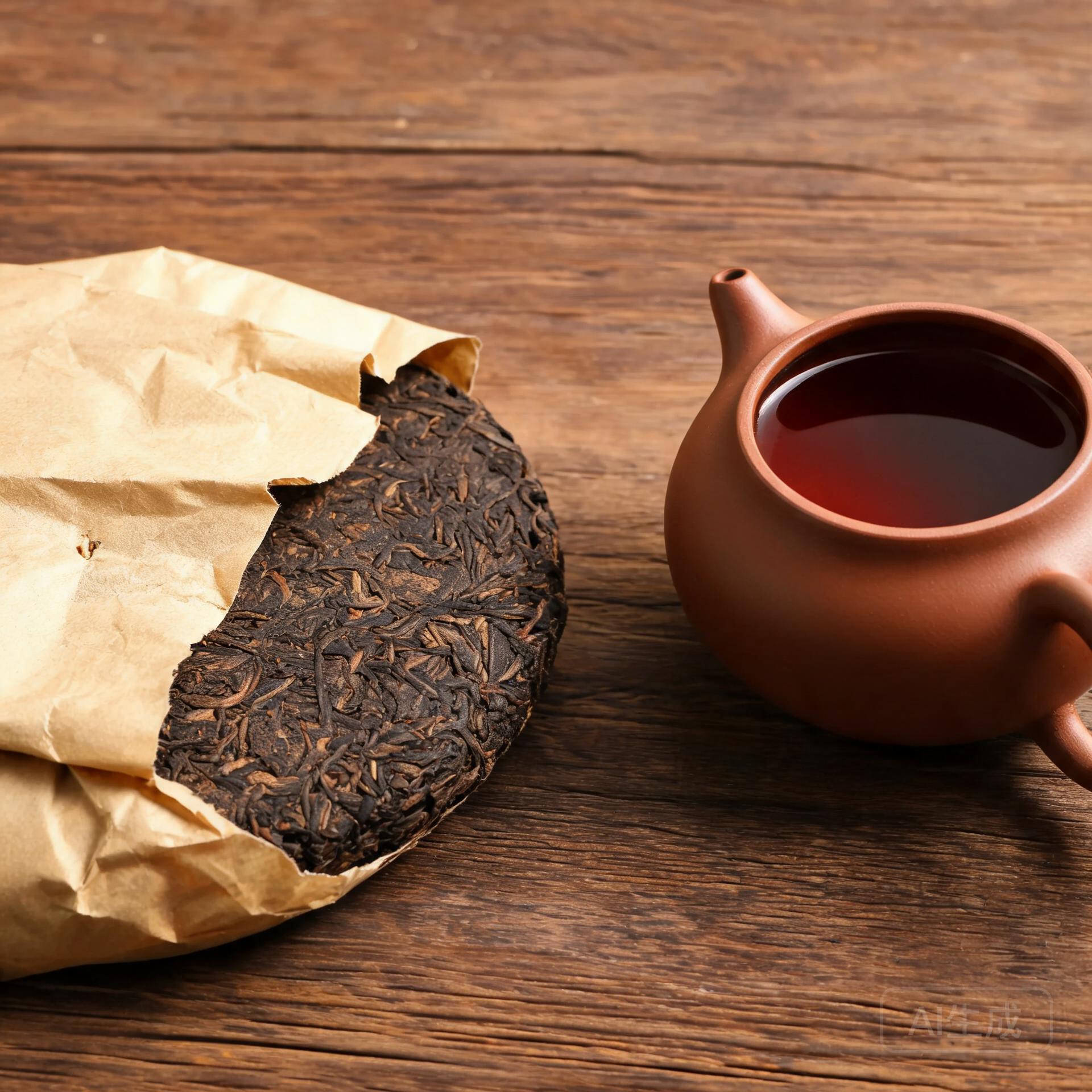
Teas with a documented past
Dark tea has the most precisely dated history of any category, and the dates are unusual.
The term hei cha(黑茶)first appears in a Ming memorial from 1524.
That is a document with a date on it, and it is the oldest written use of the category name.
Pu-erh was a Qing tribute tea, carried north on the tea horse road to the frontier garrisons.
The road is why the tea was compressed, since loose leaf does not travel on horseback.
Fu brick(茯砖)dates to around 1860, in Hunan and Shaanxi.
Its golden blooms, jin hua(金花), were once thought accidental and are now grown deliberately.
Liu Bao(六堡)from Guangxi was shipped to Southeast Asia, and that trade shaped its character.
These teas were made to travel and to keep, and compression and fermentation were logistics.
Nothing about the category was designed for drinking fresh, which is why it confuses newcomers.
The fermentation is not a flavour choice, and it is what happens on a 6 month journey.
Four dates and one road, and the whole category follows from them.
Why history matters
For dark tea, history is the practical key to the category rather than a decoration.
These teas are fermented because they were moved slowly through wet conditions.
Once you know that, the flavours stop being strange and start being legible.
The cellar note in Liu Bao is a shipping note, and the compression is a packing decision.
History also tells you how long to keep them, since the trade kept them for years by default.
A tea designed to survive a season on a road has no reason to be drunk in its first month.
It explains the price structure too, since age is part of the product rather than a bonus.
Vintage is not purely marketing in this category, and it is a genuine variable here.
That makes the record unusually useful when buying.
A factory mark and a year tell you more than any tasting description.
Read the record as evidence about logistics, and drink to judge the storage.
One tells you what the tea was for, and the other whether it survived it.
Tribute and the record
Pu-erh reached the Qing court as tribute, and that status shaped its reputation for 100 years.
Tribute here was also procurement, since the frontier needed a tea that kept and travelled.
The court wanted supply, the growers wanted the contract, and both got what they needed.
Taste entered the record later, once drinkers started ageing cakes on purpose.
That shift happened in the last few decades, and it changed what the tribute history means.
A cake kept for its own sake is a modern idea built on an old trade practice.
Fu brick has no imperial claim at all, and its history is regional and commercial.
It was made for the northwest, and its reputation rests on consistency rather than on ceremony.
Liu Bao was made for export to miners in Southeast Asia, which is a plainer story still.
Read the record as proof of demand and logistics, then judge the cup on its own merits.
A tea bought by a Qing quartermaster has no obligation to please you.
The useful part of the history is that it explains the shape and the fermentation.
A caveat
Dark tea history is borrowed heavily, because vintage claims are worth a great deal of money.
The reliable claim names a factory, a year and a storage history, and the vague one names a mountain.
A cake sold as coming from a famous village may be a blend from across the county.
That is normal practice, and it becomes fraud only when the label insists otherwise.
Age claims are the bigger problem, since a wrapper is easy to print and impossible to verify.
A tea said to be from the 1990s should come with a reason to believe it.
Storage history matters more than age, and a well kept young cake beats a badly kept old one.
No document can tell you how a cake was stored, which is why tasting matters most here.
Buy 25 g before believing any of it, and compare it against a cake with clear provenance.
Check the citation rather than the mood, and treat an unverifiable year as decoration.
A seller with a real source names it without being asked twice.
That test takes 10 seconds, and no other category needs it as much.