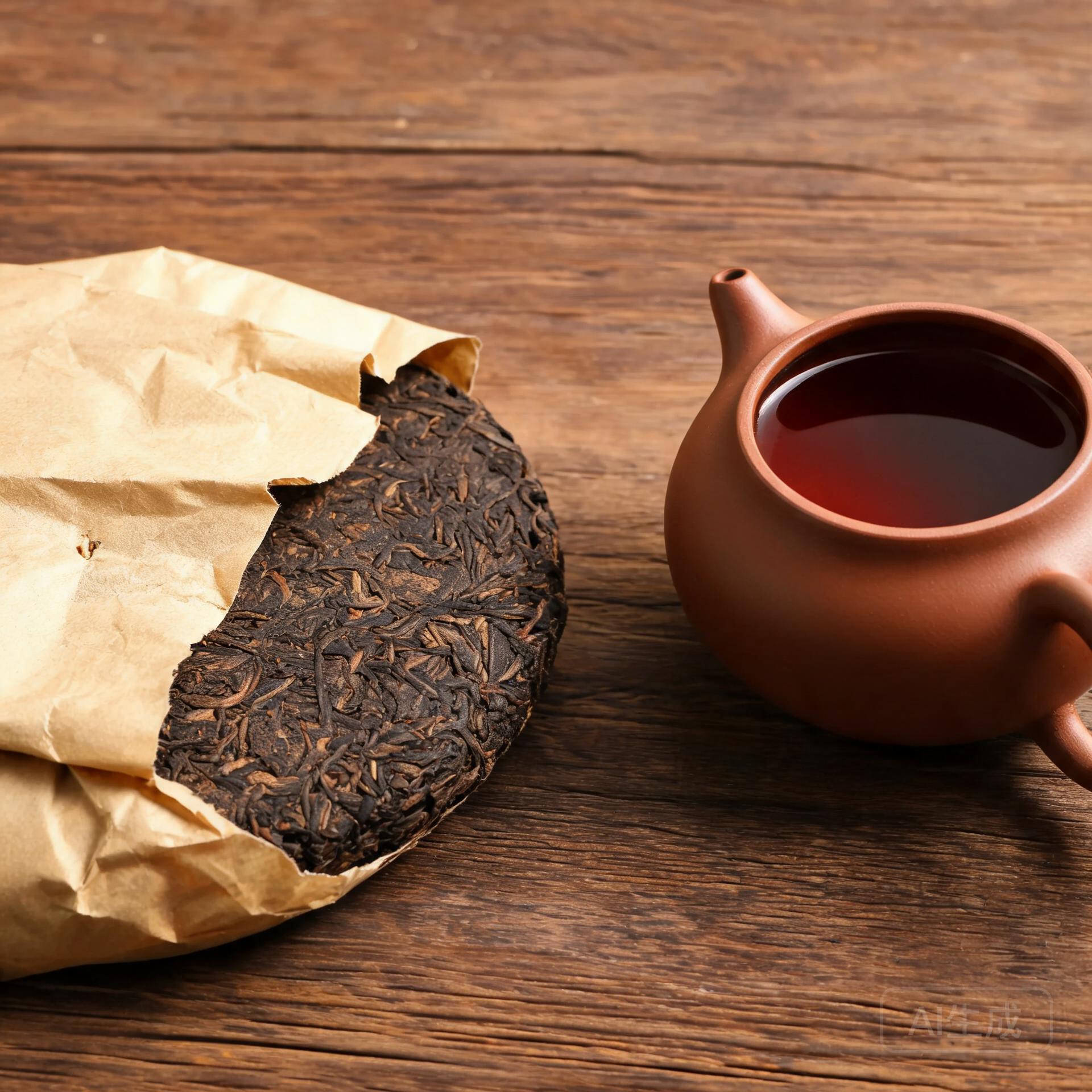
The cultivars that define the cup
Dark tea runs on regional large leaf populations, and fermentability is the whole point.
Yunnan’s Mengku, Fengqing and Menghai dayezhong strains feed most pu-erh.
These are large leaf populations selected over centuries for a thick, bitter leaf.
The bitterness matters, because it is what ages into sweetness in a raw cake.
Anhua uses a local Hunan landrace, and it behaves entirely differently in the pile.
It produces the golden bloom reliably, which the Yunnan strains do not.
Liubao has its own Guangxi stock, tuned to the basket fermentation used there.
These are landraces adapted to piling and to long storage rather than showy new clones.
Aroma breeding would be wasted here, since piling destroys most of what a bush had.
A cultivar here is judged on how it ferments rather than on its aroma.
That is the opposite of oolong, where aroma is the entire breeding target.
That leaves 4 populations across 3 provinces, each fermenting toward its own market.
Learning which population you have explains most of what the tea will become.
Why breeders select
Selection in this category has always been about survival rather than about novelty.
A leaf that will be piled wet and stored for years has to be structurally tough.
Aroma is almost irrelevant to selection, which is why this category confuses oolong drinkers.
Thick cell walls keep the leaf intact through piling, and a thin leaf turns to mud.
Yield and disease resistance matter here as they do everywhere else.
Bitterness and astringency matter in a way they do not in any other category.
A raw pu-erh needs those compounds, since they are what change during ageing.
A cultivar bred them out would make a flat old cake, and nobody wants that.
How the leaf responds to piling is the decisive test.
Some populations heat evenly and others go sour in the middle of the pile.
The same county can carry strains that behave nothing alike.
Knowing which one you have says more than the mountain name usually does.
Cultivar sets the trajectory, and storage decides whether the tea gets there.
Clones versus landraces
Dark tea is still largely landrace grown, which is unusual for a category this size.
A clone would give uniformity, with every plant ripening and processing together.
That suits a factory, and it is how most new pu-erh gardens are planted.
Old arbor trees are individuals, and their leaf varies from tree to tree.
Some drinkers pay a large premium for that, and the difference is measurable in the cup.
Old tree leaf is usually thicker and less astringent than plantation leaf.
Neither is automatically better, and the trade is uniformity against character.
Clones trade genetic diversity for consistency, and the loss shows up over decades.
A planted garden of one genotype is efficient and vulnerable at the same time.
Plantation leaf is not bad leaf, and it is simply built for a different timeline.
Old scattered trees are inefficient and have survived for centuries.
For a tea meant to age for decades, that resilience is worth something.
Both are legitimate, and the market prices them very differently.
Reading the label
A cultivar name on a dark tea is rare, and the useful words here are different ones.
‘Dayezhong’ tells you large leaf and a bitter structure that will age.
‘Old arbor’ tells you the trees are large and scattered rather than planted in rows.
Neither tells you the year, the storage or whether the piling was controlled properly.
Those three facts decide what this tea tastes like, and labels often omit all of them.
The absence of any population or tree description usually means young plantation leaf.
That is fine in a young cake and a serious problem in one sold as aged.
A cake with no tree or population description is one you have to taste before buying.
Buy 25 g before committing to a cake, and brew it at 100 °C with 5 g in 100 ml.
Run it to 8 infusions, since plantation leaf falls away sooner than old tree leaf.
Compare a plantation cake against an old arbor one from the same area and year.
That single comparison teaches the whole argument faster than any label can.
Two cakes, one session, and the category stops being abstract.