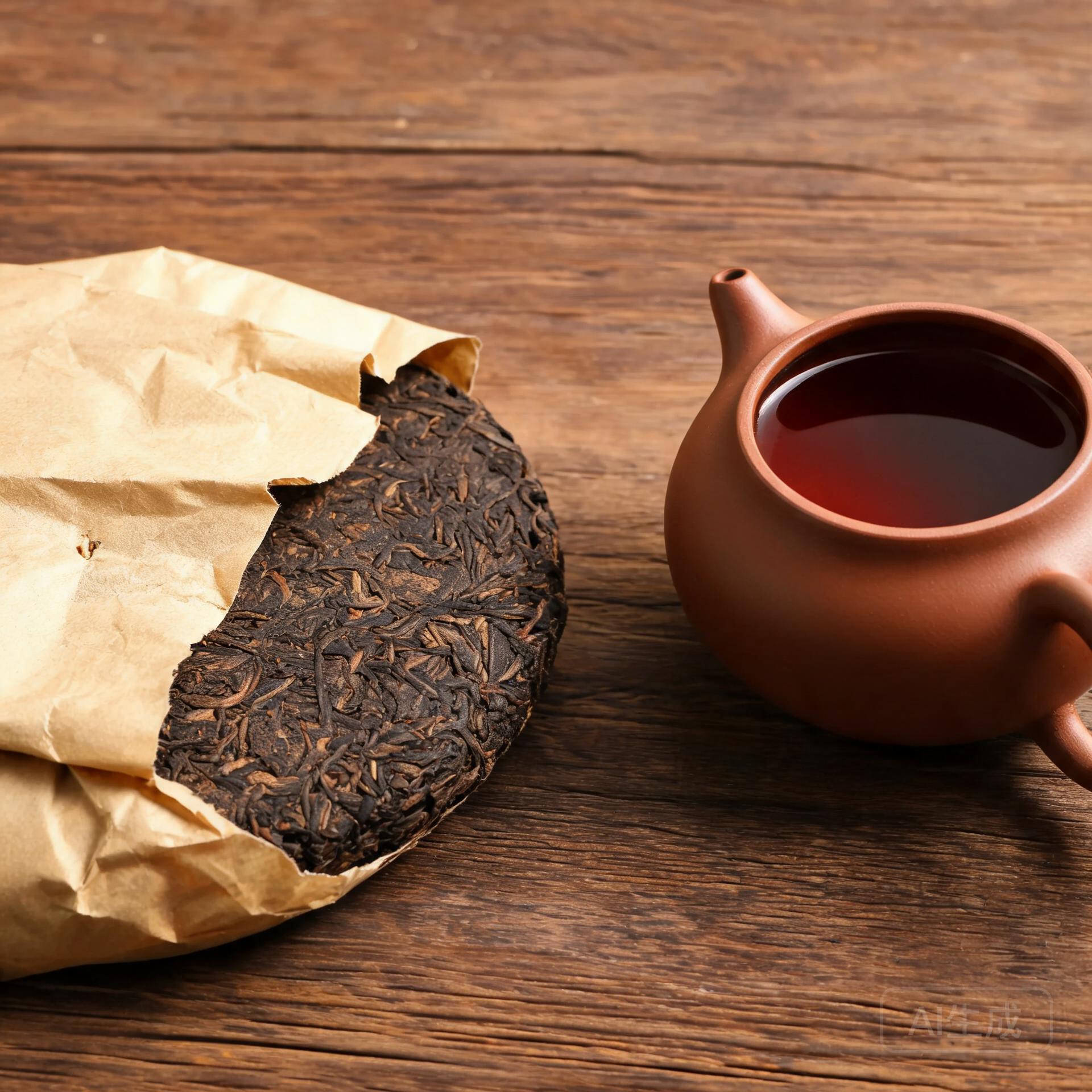
Start with the source
In dark tea the source question is really three: which factory, which recipe, and who has stored it since.
The factory matters most, because recipes are documented and the tea was made to one.
Menghai and Xiaguan are the two names with the longest documentation, and there are many imitations.
Ask for the recipe number, which is a real thing that can be checked against published records.
Then ask for the year of pressing, and be aware that this is the easiest figure to invent.
Then ask where the cake has been kept, which is harder to invent and matters more than the year.
Guangdong storage is humid and fast, and Kunming storage is dry and slow. Both are legitimate.
A seller who has held the cake themselves can usually say which, and one who bought it recently cannot.
Be careful with old arbor and single tree claims, which have no register and no enforcement.
If a seller cannot answer any of the three questions, the price should be the young price.
Taste as proof
Taste is the strongest evidence you have in dark tea, and it is the hardest to acquire.
A clean ripe tea tastes earthy and slightly sweet, with a thick body and no sour or fishy edge.
A bad fermentation tastes fishy, and a bad storage tastes musty, and neither one improves.
Well-aged raw tea is thick, sweet and long in the finish, and it does not dry the mouth.
Young raw tea is sharp, bitter and drying, which is why it needs the years in the first place.
Brew at around 7 grams per 150ml after one rinse, and judge the third pour rather than the first.
A tea that is finished by the third steep has nothing behind it, whatever the wrapper says.
Look at the liquor for clarity, and at the wet leaf for whether it is soft and whole.
Drink as much of other people’s aged tea as you can, because that is how the reference gets built.
The cup will not tell you the year, but it will tell you whether the tea is any good.
At 7 grams per 150ml, a 357 gram cake is about 50 sessions, which is plenty of time to make up your mind.
Packaging and provenance
Dark tea packaging deserves more scepticism than any other, because the prices justify elaborate fakes.
The wrapper carries the year, the factory and the recipe, and any of them can be printed to order.
What is harder to fake is the paper itself, the print quality and the inner ticket.
Factory wrappers from a given decade have known designs, and experienced buyers check those.
An inner ticket tucked into the cake is a better sign than anything printed on the outside.
Recipe numbers can be checked against published factory records, which several collectors have put online.
A standard product code on legally sold Chinese tea is worth looking for.
Vintage claims without a pressing date are decoration rather than information.
Keep the wrapper, the ticket and the receipt together, permanently.
None of it is proof, and a great deal of it is false. It is a filter to apply before tasting.
A practical test
Buy two samples of the same recipe and year from different sellers and drink them together.
Same dose, same water, one rinse, and then compare the third and fourth pours.
One will usually be cleaner and thicker, and the difference is rarely subtle.
Then compare the wrappers and the inner tickets, and see whether the better tea has the better paperwork.
Usually it does, and that tells you which seller to keep using.
Ask both sellers where the cakes were stored, and compare the answers with what you tasted.
Buy a third sample from the seller you prefer and keep it, which starts your own reference.
Record everything: factory, recipe, year, price, storage, and what you tasted.
Repeat this once a year, and in five years you will have a real education in the category.
It is slower than buying a cake on faith, and it is the only route that actually works.
Two samples a year for five years is ten comparisons, and that is roughly what an educated palate costs here.