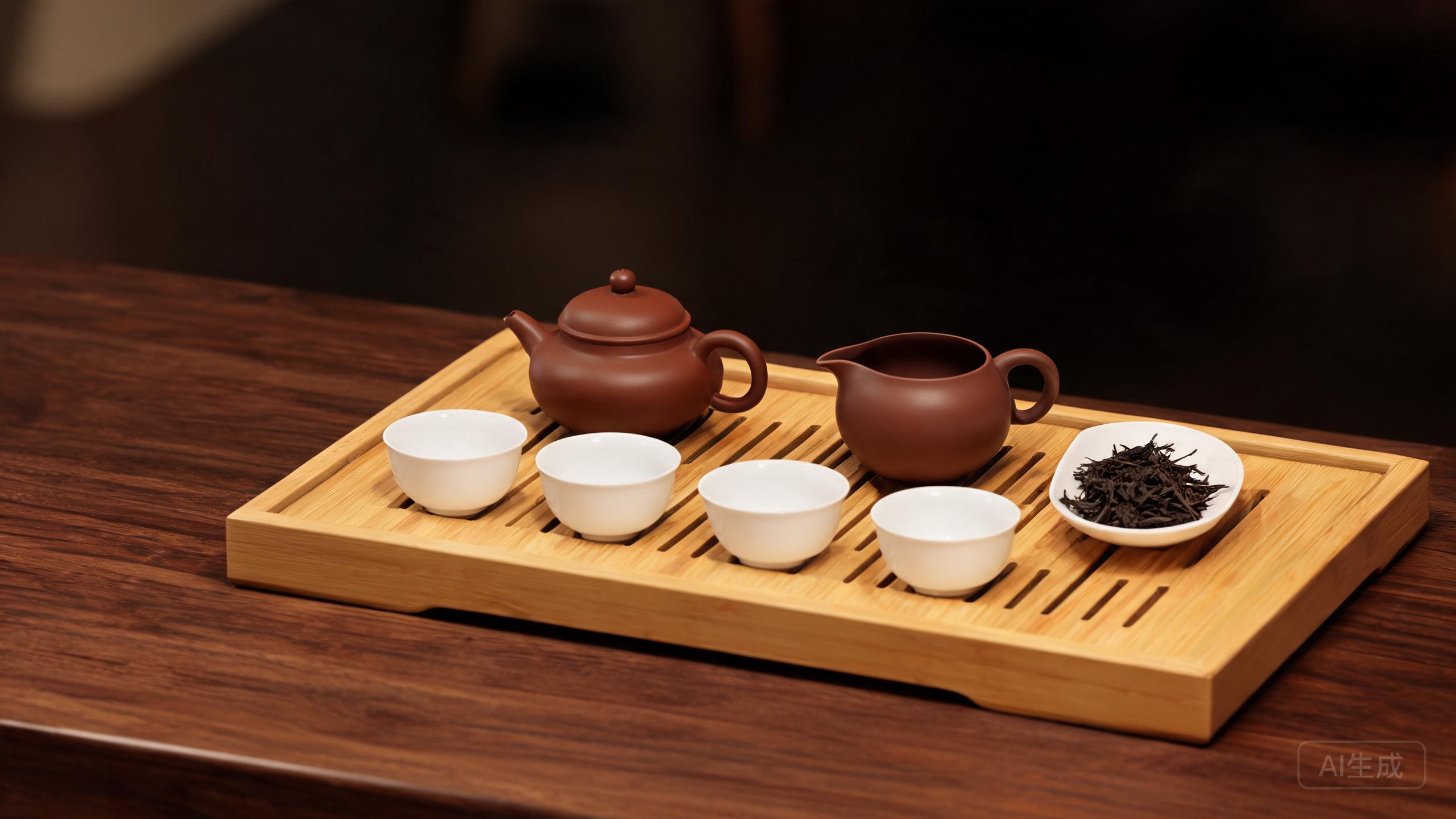
Why Dark tea goes wrong
Dark tea fails in a specific way that newcomers misread as poor quality. It tastes flat, earthy and slightly thin, and people conclude the cake is bad.
It usually is not. Post fermented and compressed leaf needs two things most people skip: a rinse, and water that is actually boiling.
The compression is the reason. Leaf pressed into a cake has been steamed and dried under pressure, and it behaves nothing like loose tea until it opens.
That takes several steeps and a great deal of heat. Cut either one short and you taste the storage rather than the tea.
Both of the mistakes below come from treating a compressed tea as though it were loose.
Water quality matters more than people expect for dark tea. Very soft water gives a flat liquor, and moderately mineral water around 100 parts per million suits it.
Mistake 1: skipping the quick rinse that wakes compressed leaf
A rinse is five to ten seconds of boiling water poured over the leaf and thrown away. For compressed tea it is not optional.
It does three things. It loosens the compression, it warms the vessel and the leaf, and it washes off the dust and the storage smell.
Skip it and the first real steep is spent opening the leaf, while the second one carries whatever was sitting on the surface.
Use boiling water for the rinse even if you plan to brew cooler afterwards, which for dark tea you should not.
Do it twice for a tightly pressed brick or a very old cake. There is no rule against it, and the second rinse often still comes out dark.
The exception is loose ripe pu-erh, which is already broken up and needs only one short rinse.
The rinse water should be thrown away rather than drunk. It carries the surface dust and the storage smell, which is exactly what you are removing.
Rinse with the lid on and swirl briefly. It wets every surface of the chunk instead of only the top.
Mistake 2: water not hot enough to open it
Dark tea wants a full boil, and it wants it for every steep. Anything under 95 degrees gives a thin, earthy liquor with none of the sweetness.
Kettles that switch off at 90 are common, and they are the hidden cause of a great deal of disappointing pu-erh.
Use 8 grams in 200 millilitres. That is roughly double a green tea dose, and halving it is the other common mistake.
Give it several steeps to open. Twenty seconds for the first, then longer, and most cakes improve through the fourth or fifth.
Keep the vessel hot between steeps. A small pot on a warmer, or a thermos for the long approach, both work well.
If you are boiling rather than steeping, keep it at a bare simmer. A rolling boil shreds the leaf and clouds the liquor.
Boiling suits young cakes as well as old ones. A young ripe pu-erh simmered for five minutes gives a thick, clean cup that steeping does not quite match.
A thermos is a legitimate method. Five grams in 500 millilitres of boiling water, left for an hour, and it will carry you through a morning.
The habit that prevents both
Rinse every compressed tea, every time. It takes ten seconds and it changes the whole session.
Boil the water and check that it actually boiled. An automatic cut-off at 90 degrees is worth knowing about.
Use a heavy dose. Eight grams in 200 millilitres is normal, and it is not wasteful because the leaf will run ten steeps.
Judge the cake from steep four rather than steep one. Almost every dark tea is worse at the start than in the middle.
That is the habit: rinse, full boil, heavy dose, patience. Dark tea is the category that most rewards all four.
If the leaf smells of anything other than earth, wood or sweetness, trust that. A musty or sour note means the cake was stored badly, and no technique will fix it.
Old cakes also vary by how they were stored. A dry stored cake needs more steeps to open than a humid stored one, and expecting both to behave alike leads to disappointment.