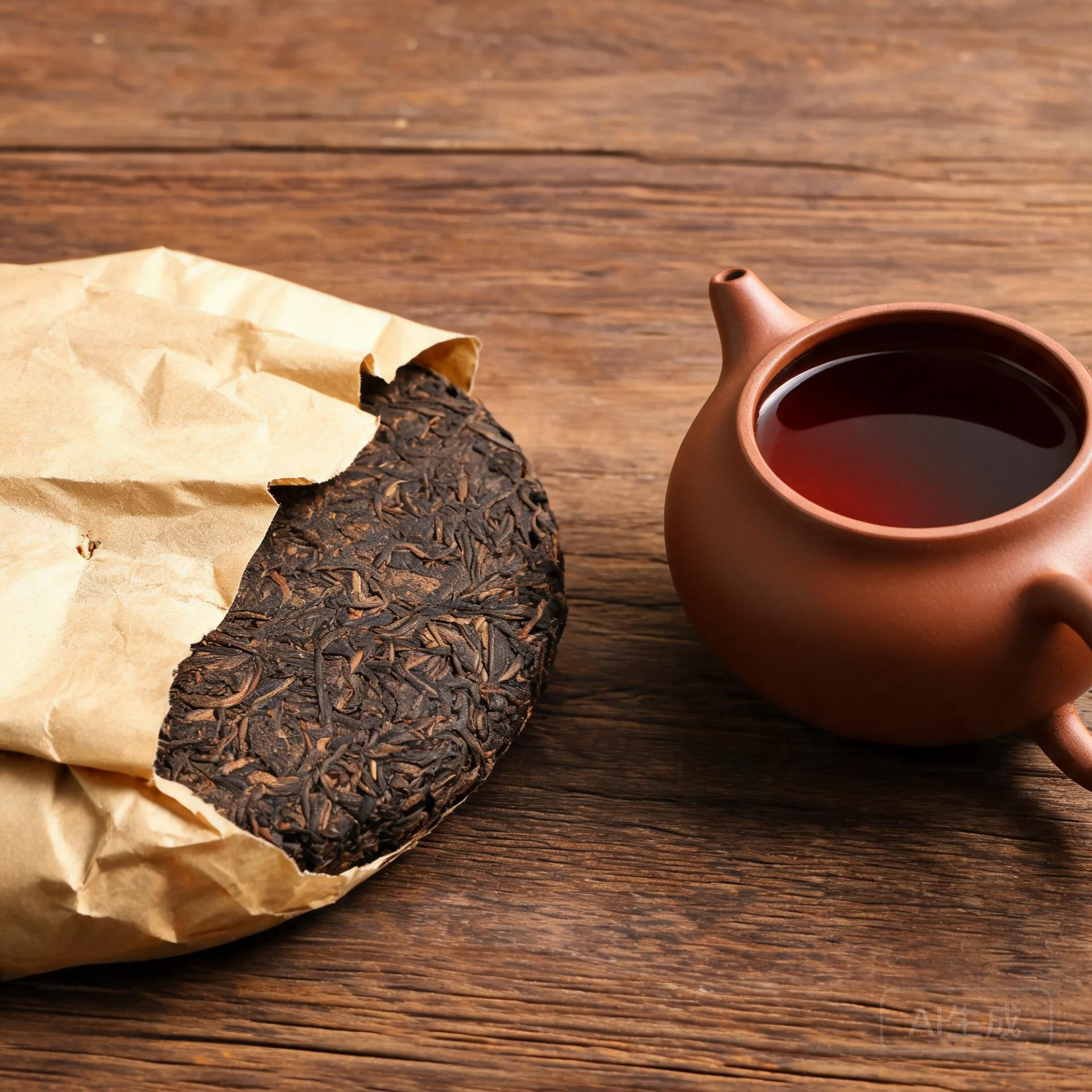
Two questions people actually ask
Two questions come up about dark tea more than any others.
How long can it be kept?
A compressed cake will keep for 20 years or more if the storage is dry and clean, and there is no fixed end date.
What changes is the character rather than the safety, and the direction depends on where it was stored.
Dry storage keeps the tea bright and slow, and humid storage pushes it dark and earthy much faster.
A cake that smells musty was stored badly, and no amount of further ageing will fix that.
Does it need boiling water?
Yes, and a full boil is the right call for every tea in this category.
Compressed leaf needs heat to open, and cooler water gives a thin and disappointing cup.
Rinse the leaf once first, which wakes the cake and rinses off the compression dust.
Those two answers cover most of what newcomers get wrong about dark tea.
The rest of the FAQ is about storage, which is where the real money is.
Buying and storing
Dark tea varies by process and storage more than by origin, which makes buying harder than it looks.
The useful first question is whether the cake is raw or ripened, since they are different purchases.
Ripened tea is ready to drink and tastes dark and smooth, with no bitterness at all.
Raw tea starts greener and more astringent, and it is a project rather than a drink.
Smell the dry leaf, and be alert for any musty or cellar note that suggests wet storage.
A clean cake smells of camphor, dried fruit or damp earth, and never of mould.
Look at the wrapper for a year and a factory, and treat both as claims to check rather than facts.
Ask where the cake was stored, since a year in Guangdong and a year in Kunming are not the same.
Storage at home should be dry, ventilated and free of smells, and never sealed in plastic.
Keep it around room temperature and out of direct light, and leave it in paper.
Buy a sample before buying a whole cake, since no wrapper tells you what is inside.
A 25 g sample is enough to run a full session and decide properly.
Drinking it right
The biggest question about dark tea is strength, and the category is more forgiving than it looks.
Start at 5 g in 100 ml at 100 °C, rinse once, and give the first pour about 20 seconds.
Extend each later infusion rather than adding leaf, and count the pours.
A cake with real substance keeps changing across 10 infusions or more.
One that tastes the same from start to finish has very little left in it.
If the cup is harsh, shorten the steeps rather than lowering the temperature.
This tea wants a full boil, and anything cooler leaves the material behind in the leaf.
If it is thin, check the dose first, since 5 g in a large pot is not enough.
A gaiwan or a small pot suits the category better than a mug, because pour count is the test.
Note where the sweetness arrives, since that marker tells you more than any tasting note.
A raw cake that sweetens in the middle and holds to the eighth pour is a good buy.
One that stays bitter throughout is either very young or poorly stored.
Myths versus facts
Several popular claims about dark tea do not hold up, and they are the most expensive in the trade.
Age does not automatically improve it, since storage dominates the outcome after a decade.
Raw tea does not become ripened tea by sitting around, because wet piling is a process and not a duration.
A darker liquor does not mean an older cake, since storage can produce that colour in a few years.
What is true is that storage outranks age, and process outranks both of them.
That one sentence covers most of what separates a good purchase from a bad one here.
The common misconceptions page for this category takes both claims apart in detail.
It is worth reading before spending real money on a year printed on a wrapper.
Ask for the storage city and the year, and write both down.
Then buy a sample and run the full session before committing to a cake.
A 25 g sample costs very little and tells you nearly everything.
That habit is the difference between collecting and drinking, and both are legitimate.