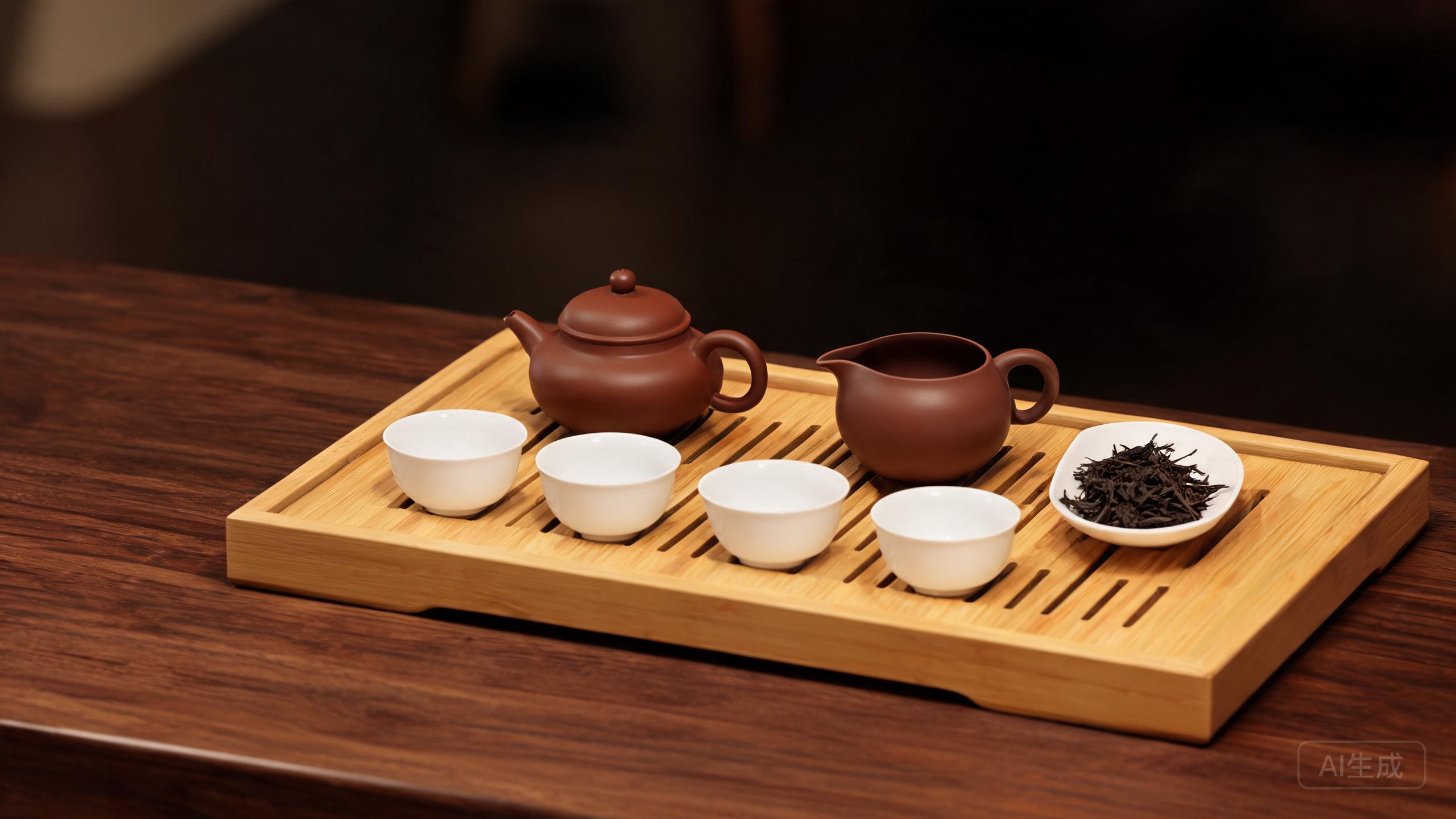
After each use
White tea brewed at 85 °C leaves less behind than any other category, since it has no oils added and no roasting.
The leaf itself is bulky and comes out easily, especially a bud grade that has barely opened.
Empty the vessel within 5 minutes and rinse it with hot water while it is still warm.
Wipe the inside with a soft cloth or a brush kept for the purpose, and nothing stronger.
No detergent on anything you brew in, since a scent in the vessel becomes a scent in the tea.
White tea is delicate enough that a residue of washing up liquid shows up in the cup immediately.
Turn the vessel over on a rack and let it dry in open air.
Leave the lid off, because a gaiwan(盖碗)closed while damp will still be damp tomorrow.
A tall glass of 250 ml dries fastest of all, and it is the easiest piece in the category to care for.
Aged white tea is slightly different, since it leaves a darker film on the ware.
That film rinses off with hot water, and it only becomes a problem if it is left for weeks.
Two minutes after every session keeps the whole category trouble free.
Dedication versus neutrality
Whether to dedicate a vessel to one tea depends entirely on what it is made of.
Glass and glazed porcelain cannot be dedicated even if you want them to be, since they hold nothing.
Brew a young Silver Needle and an aged Shou Mei in the same gaiwan and neither leaves a trace.
That is the practical advantage of neutral ware, and it is why most drinkers should start there.
Clay is the material where dedication is real, and absorption is the whole mechanism.
A pot used on aged white tea for 6 months will smell of it when it is empty.
That smell is what its drinkers pay for, and it is also a permanent commitment.
Keeping clay neutral is not possible, because a pot that never absorbs anything is a pot never used.
For white tea the sensible split is porcelain for everything, and clay later for aged cake only.
A pot dedicated to aged Shou Mei makes a poor vessel for anything delicate afterwards.
The fermentation note is strong, and it sits where a bud grade is most fragile.
Dedicate one pot if you drink one aged tea often, and keep everything else neutral.
What to avoid
Avoid detergent, the dishwasher and anything with a perfume in it.
White tea has less to hide behind than most categories, and a residue shows up at once.
Avoid leaving the leaf in the vessel overnight, which is the mistake that produces the worst smells.
Wet white leaf left for 12 hours turns sour, and the smell lingers in anything porous.
Avoid abrasive scourers on glazed ware, since a scratched surface stops being neutral.
Once the glaze is scratched the vessel begins to hold what you brew, and that cannot be undone.
Avoid putting ware away damp in a closed cupboard, which is how mould gets started.
Aged cake in particular leaves enough behind for mould to take hold in a warm room.
Avoid using one cloth for tea ware and for the kitchen, because it carries the last thing it dried.
Avoid stacking wet pieces together, since the moisture between them has nowhere to go.
A rinse of 10 seconds with hot water after each session prevents all of these at once.
None of these problems needs a cleaning product, and every one of them needs dry air.
Long-term
Over years, glass and porcelain change very little, and that is exactly what you want from them.
Expect a brown film inside a vessel used for aged cake, and treat it as normal.
Lift it with a paste of bicarbonate of soda and water, left for 30 minutes and then rinsed.
That is the only cleaner worth owning, and it works on glass and on glazed surfaces.
Check the glaze for craze lines once or twice a year, since a cracked glaze behaves like clay.
Retire a crazed vessel from comparison tasting, even if it still looks fine on the shelf.
Chips on the rim of a gaiwan are a reason to replace it, because a chipped lid does not seal.
A lid that does not seal spills boiling water onto the hand holding the vessel.
Replace cheap ware freely rather than trying to repair it, since a plain gaiwan costs very little.
Aged white tea stains less than a ripe pu-erh and more than a green tea, which is about what you would expect.
A vessel used daily for 3 years has taught you more than a new one will for a long time.
Clean it, dry it, replace it when it chips, and there is nothing else to learn about the care.