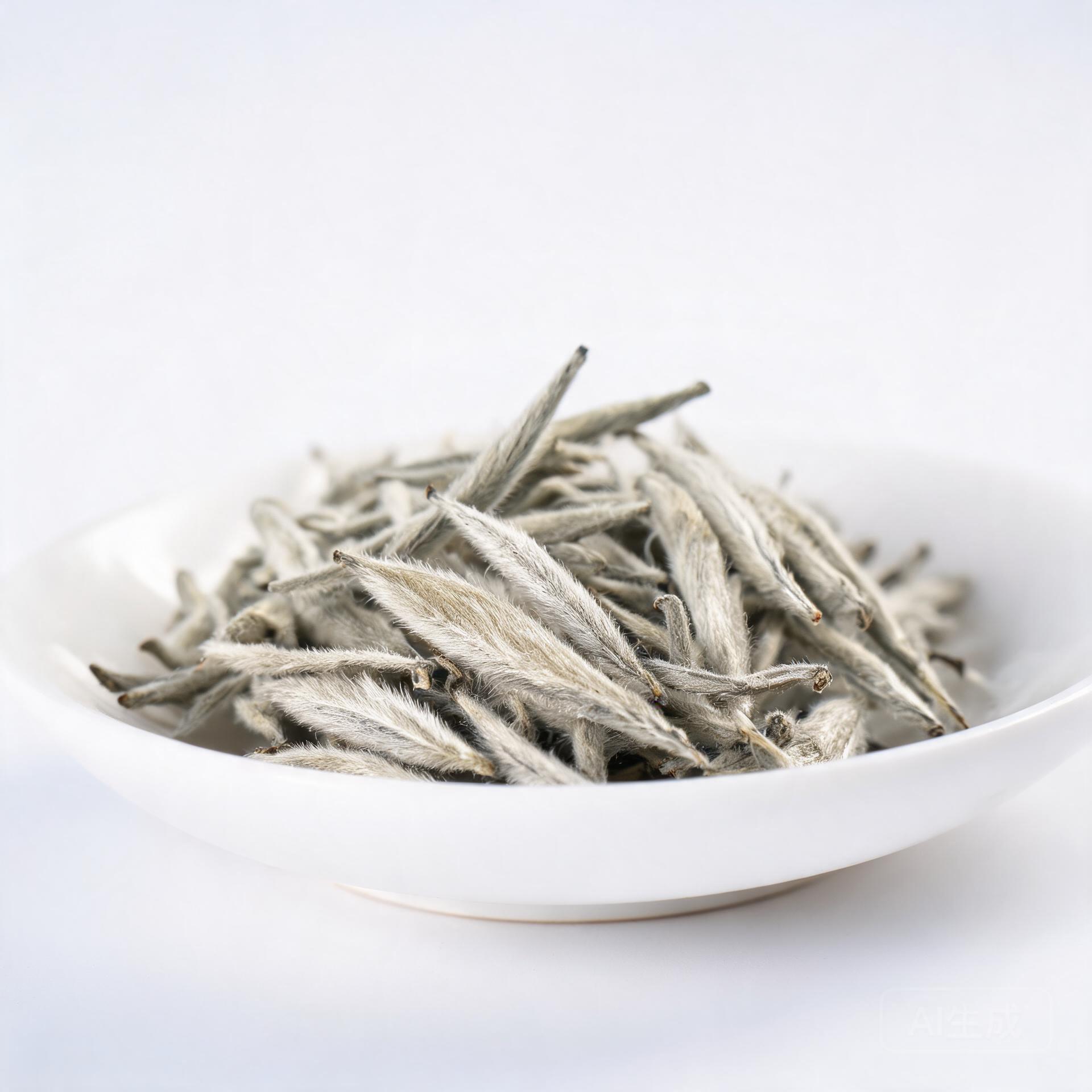
- Myth 1: white tea is unprocessed
- Myth 2: white tea has the most antioxidants
- Myth 3: white tea is caffeine free
- Myth 4: white tea is better than green tea
- Myth 5: silver needle is the best grade
- Myth 6: aged white tea is a medicine
- Why these persist
- The price trap behind the silver needle myth
- How to check a white tea claim
- Frequently asked questions
- Is white tea really unprocessed?
- Does white tea have more antioxidants than green tea?
- Is white tea caffeine free?
- Is white tea better than green tea?
- Is silver needle the best white tea?
- Is aged white tea medicinal?
Six claims about white tea are repeated more often than the evidence supports. It is not unprocessed, it is not the highest in antioxidants, it is not caffeine free, it is not better than green tea, silver needle is not the richest grade, and aged white tea is not a medicine. Each has a grain of truth, which is why each survives.
The pattern is familiar: a real feature of the tea gets exaggerated into a claim nobody has tested. White tea is minimally processed, so it becomes unprocessed. It is high in catechins, so it becomes the highest. Both moves are small and both produce a claim that is false as stated.
Myth 1: white tea is unprocessed
White tea is the least processed of the six classes, not an unprocessed leaf. It is withered for many hours, often a day or more, and then dried. The wither is a controlled process with a target moisture loss, and producers manage temperature and airflow throughout.
A truly unprocessed leaf would be picked and eaten. What makes white tea distinctive is the absence of kill-green and rolling, not the absence of processing. The distinction matters because the wither is where the tea’s character is made, and a badly withered white tea is a bad tea.
Myth 2: white tea has the most antioxidants
This claim rests on a small number of assays, some of which did rank white tea high. The problem is that antioxidant capacity measured in a test tube is a property of a chemical extract, not of a drink in a body.
The standard assays use a synthetic radical and measure how quickly a sample neutralizes it. Different assays give different rankings, and a tea that wins one can place mid-table in another. A 2009 comparison of twenty-four teas found exactly that kind of instability.
The honest statement is that white tea has a catechin content comparable to green tea, 110 to 160 mg per gram against 100 to 200, and that neither figure predicts a health outcome.
Myth 3: white tea is caffeine free
White tea has 15 to 35 mg of caffeine per cup, which is lower than any other tea but not zero. The confusion arises because it is pale, mild and often recommended in the evening, and the sensory impression of a light drink gets translated into an assumption about its chemistry.
For most people the amount is trivial. For someone with a medical reason to avoid caffeine entirely, it is not, and a cup of white tea is not equivalent to a chamomile infusion.
| Claim | Reality | Source of the claim |
|---|---|---|
| Unprocessed | Withered and dried, two controlled steps | Fewer steps than other teas |
| Highest in antioxidants | Comparable to green tea, assay dependent | One or two favorable assays |
| Caffeine free | 15 to 35 mg per cup | Pale color, mild taste |
| Better than green tea | Different processing, thinner evidence | Marketing |
| Silver needle is richest | White peony usually measures higher | Price mistaken for content |
| Aged tea is medicine | Chemistry changes, outcomes untested | Traditional use |
Myth 4: white tea is better than green tea
White tea and green tea come from the same plant and have similar catechin content. The difference is processing: green tea is kill-green, white tea is withered. That produces a different taste and a slightly different compound profile, not a superior one.
On evidence, green tea is far ahead. Hundreds of trials against almost none. Anyone claiming white tea is better is making a claim with less data behind it than the claim it rejects, which is a strange position for a health argument.
The one defensible comparison is about tolerance. White tea is less astringent, so more people can drink it, especially on an empty stomach. That is a real advantage in practice and it is not a health claim.
Myth 5: silver needle is the best grade
Silver needle is the most expensive grade and the most prized for its sweetness. It is not the richest in catechins; white peony, which includes mature leaf, usually measures higher.
The confusion is between rarity and content. An all-bud tea requires picking only the tips, which is slow and yields little. The price reflects labor and scarcity. The chemistry reflects which part of the plant was picked, and buds are higher in caffeine and theanine and lower in catechins than leaves.
Myth 6: aged white tea is a medicine
The traditional claim is that white tea improves with age and that old tea is more medicinal. The first part has a chemical basis: catechins fall, flavonol glycosides and gallic acid rise, and the taste moves from grassy to medicinal.
The second part has no evidence. No trial has compared aged and fresh white tea on any health outcome. The compound change is real, and the inference from it is a reasonable hypothesis rather than a finding.
- Check whether the study used brewed tea or an extract.
- Check the grade, since bud and leaf differ in caffeine and catechins.
- Check the age, since fresh and aged white tea are different substances.
- Check the assay, because antioxidant rankings depend on which one was run.
- Check whether the claim is about the leaf or the cup.
- Check whether green tea data is being relabeled as white.
Why these persist
Each myth has a hook. White tea really is minimally processed. It really is high in catechins. It really is low in caffeine. It really does change with age. The exaggeration happens in the last step, where a true observation becomes a superlative or a health claim.
The test is the same each time: what was measured, in what, at what dose, and against what? White tea’s chemistry is well characterized and genuinely interesting. Almost every claim beyond that is inference, and saying so is more accurate than repeating the inference as fact.
The price trap behind the silver needle myth
Silver needle is picked as a single bud per shoot, in early spring, by hand, and it takes tens of thousands of buds to make a kilogram. The labor is the reason for the price, and the price is the reason for the assumption that it must be the best.
The chemistry runs the other way on the measure most often discussed. Mature leaves carry more catechins than buds, so white peony, which includes both, usually measures higher. What silver needle has more of is theanine and caffeine, which is why it tastes sweeter and feels slightly more stimulating.
None of this makes silver needle a bad buy. It is a different tea with a different profile, and someone who wants the sweetest, lightest white tea is right to choose it. The mistake is buying it for a compound it does not have the most of.
How to check a white tea claim
The fastest test is to look for a number. A claim with no dose, no grade and no study design is a marketing statement. A claim that names a trial, a sample size and a duration can be checked, and the check usually reveals a smaller effect than the headline.
The second test is to ask which tea the study used. Much of what circulates as white tea evidence is green tea work with the name changed, and the two are different products even though they come from the same plant.
The labor point is worth a sentence of its own because it explains so much of the pricing. A kilogram of silver needle requires roughly sixty to eighty thousand buds, picked by hand over a few weeks in spring. A kilogram of shou mei can be made from the same bushes in a fraction of the time with a fraction of the handling.
That is a real cost difference and it is why the price gap exists. It says nothing about which tea is better for anything except the picker’s back and the buyer’s wallet. Conflating rarity with quality is one of the most reliable ways to overpay in tea.
The same logic explains why aged white tea commands a premium. Storing a cake for seven years ties up capital and loses volume to moisture and handling, and some cakes spoil. The price reflects those costs and the market’s belief in age, not a measured improvement in the drink’s effect.
- A claim with no dose is marketing, not evidence.
- Check whether the study used a brew or an extract.
- Check the grade, because bud and leaf measure differently.
- Check the age, because fresh and aged are different substances.
- Check which assay produced an antioxidant ranking.
- Check whether green tea data is being relabeled.
Frequently asked questions
Is white tea really unprocessed?
No. It is withered for up to two days and then dried. It skips kill-green and rolling, not processing.
Does white tea have more antioxidants than green tea?
No. The catechin content is comparable and slightly lower. Some assays rank it high, others do not.
Is white tea caffeine free?
No. It has 15 to 35 mg per cup, the lowest of any tea but not zero.
Is white tea better than green tea?
Not on evidence. Green tea has far more research. White tea is milder and less astringent, which is a practical advantage.
Is silver needle the best white tea?
It is the rarest and most expensive. White peony usually has more catechins.
Is aged white tea medicinal?
Its chemistry changes with age, but no study has tested whether that produces a health benefit.