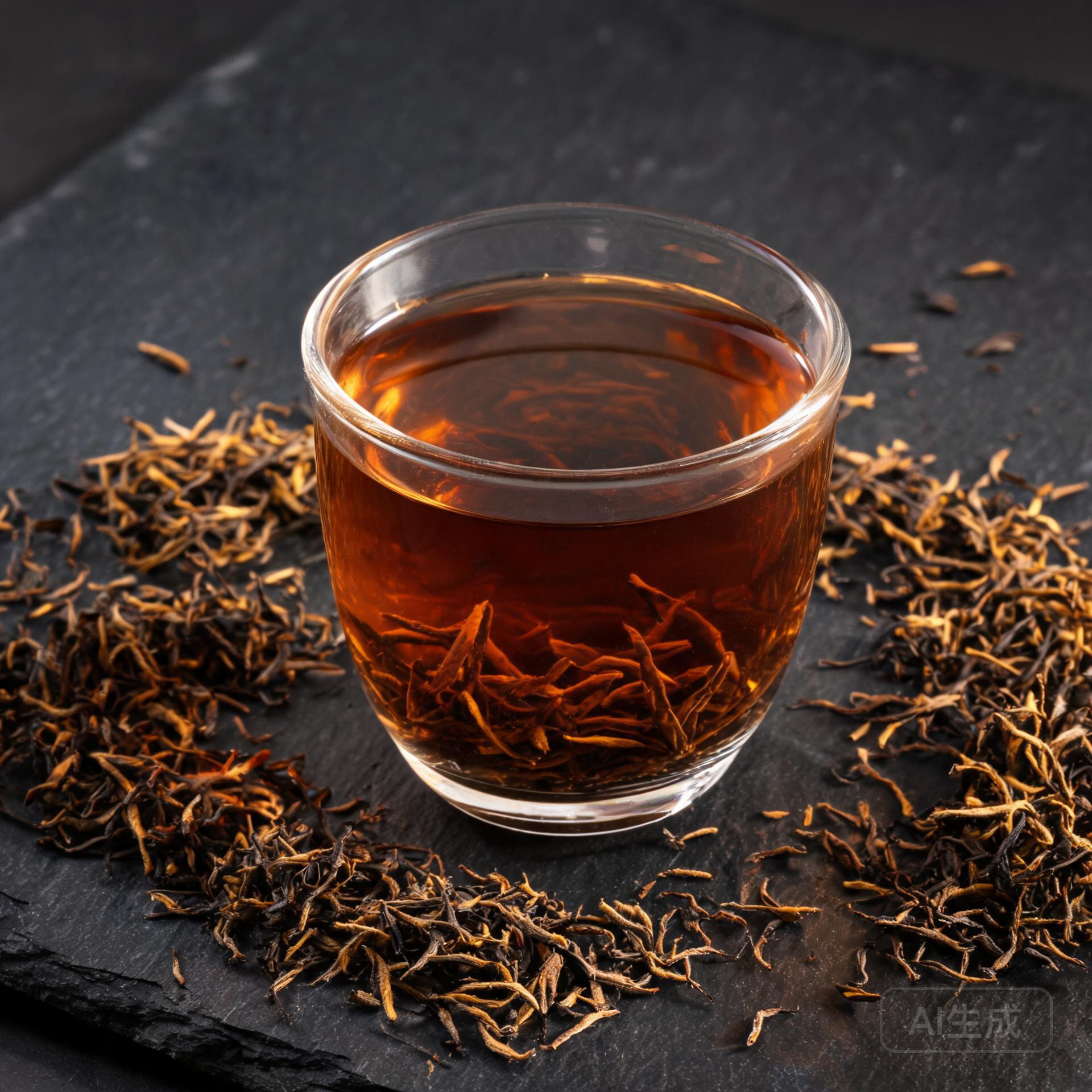
- Four verification methods
- What cannot be verified
- Reading a certificate
- The protected-origin system in practice
- A practical routine for a shop
- What the documents are worth together
- Frequently asked questions
- What is the strongest check available?
- Can I verify a garden?
- What does a laboratory test detect?
- Does a traceability code prove origin?
- What does the wet leaf prove?
- Is a certificate reliable?
Red tea authenticity can be checked in four ways: a protected-origin mark with a registration number, a traceability code that resolves to a producer and a batch, a laboratory test for residues and added colour, and the wet leaf after brewing. Each proves something narrower than buyers assume, and no method proves that a tea came from a named garden.
The order matters. Documents are quick to check and easy to fake; laboratory tests are hard to fake and expensive; the wet leaf is free and decisive only about gross substitution. A buyer who uses all four in that order gets as close to certainty as the trade allows.
This is the positive side of the problem. What counterfeiters do and how they do it is a separate question, and the two are best kept apart so that a buyer ends up with a method rather than a list of fears.
Four verification methods
| Method | What it proves | Cost | Can be faked |
|---|---|---|---|
| Protected-origin mark | The producer is registered in the defined area | Free | Yes, by printing it |
| Traceability code | A batch exists and a producer claims it | Free | Yes, if there is no database |
| Laboratory test | No added colour, residues within limits | Moderate | Very rarely |
| Wet leaf inspection | The leaf is whole and of the grade claimed | Free | Only by using real leaf |
A protected-origin mark is the strongest document available in China, because the registration is held by a defined set of producers within a boundary and the mark carries a number that can be looked up. It proves that the packer is entitled to use the name, which is not the same as proving that the contents are what the packer says.
A traceability code is weaker in practice than in principle. A code that resolves to a page showing a producer, a batch and a date is a real chain of custody; a code that resolves to a marketing page with a photograph of a mountain is decoration. The test is whether the code tells you something you did not already know from the front of the tin.
A laboratory test is the only method that detects adulteration directly. Testing for artificial colour, for sugar and for pesticide residues will catch the common adulterants, and it costs enough that it is done at the wholesale level rather than by shoppers.
Wet leaf inspection is free and it catches the grossest substitutions. A tea sold as whole-leaf Keemun that shows broken, coarse leaf after brewing is not what it claims, and no document is needed to establish that.
What cannot be verified
A garden cannot be verified by a shopper. Proving that a leaf came from one slope rather than a neighbouring one requires a chain of custody from the picker onward, and almost no retail chain in China has one. The claim is common and the proof is essentially unavailable.
A harvest date cannot be verified either. A date can be printed accurately or invented, and the only practical check is the behaviour of the leaf, which distinguishes fresh from old but not this April from last April.
A tree’s age cannot be verified without visiting it. Claims about century-old trees rest on the producer’s honesty and on the plausibility of the volume offered, which is a weak form of evidence and the best available.
What can be verified is narrower and more useful: that the tea is the grade it claims, that it contains no added colour, that it is not a gross substitution, and that the packer is entitled to the name on the front.
- A mark proves entitlement, not contents.
- A traceability code is only as good as its database.
- Laboratory tests catch adulteration, not origin.
- The wet leaf catches gross substitution for free.
- Garden, date and tree age cannot be verified by a shopper.
Reading a certificate
A certificate should name a producer, a product, a batch and a date, and it should be issued by a body that can be looked up. A certificate that names only a brand and a year is a marketing document with a seal on it.
The issuing body matters more than the wording. A provincial tea research institute, a national testing centre or an accredited third-party laboratory all issue documents that mean something; a seal from a body with no address means nothing at all.
The scope of the test matters too. A certificate for pesticide residues says nothing about authenticity, and a certificate for sensory grade says nothing about origin. A buyer who reads what was tested learns more than one who reads the conclusion.
And a certificate covers a batch rather than a tin. A producer who tested one batch in March and sold eleven batches since is not making a false statement when they display the certificate, and is not making a useful one either.
The protected-origin system in practice
China registers geographical indications at two levels, through the quality supervision system and through the agriculture ministry, and the marks look different and mean slightly different things. A tin may carry one, both, or a mark that imitates both without being either.
The registered boundary is the important part. Keemun’s protection covers a defined set of townships in Qimen County, Lapsang Souchong’s covers Tongmu and its surroundings, and Dianhong’s covers a very large part of Yunnan. The larger the boundary, the less the mark narrows anything down.
That is why the mark helps more with small regions than with large ones. A Tongmu mark is a genuine restriction; a Yunnan mark covers a province that produces red tea across hundreds of thousands of hectares.
Enforcement is the weak point. Registration creates a right to use the name, and it does not create an inspection system that catches every misuse. The mark raises the cost of cheating slightly and the cost of honest production not at all, which is both its value and its limit.
| Region | Boundary size | What the mark narrows |
|---|---|---|
| Lapsang Souchong | Tongmu and nearby villages | Strongly, to a small area |
| Keemun | Defined townships in Qimen | Substantially |
| Dianhong | Much of Yunnan | Very little |
| Yingdehong | Yingde county | Substantially |
A practical routine for a shop
Before asking anything, look for the mark and the standard number. A tin with neither has told you it is not making documented claims, which is not automatically disqualifying but narrows what you can check.
Then ask for the batch and the date, and watch whether the answer comes from memory or from a label. A batch number read off a carton is real; a batch number invented at the counter is not, and the hesitation is usually visible.
Then ask to see the leaf and, if the shop permits it, to brew a sample. Most shops selling tea by weight will brew one, and a shop that will not is telling you something about its confidence in the leaf.
Then look at the wet leaf. This is the single check that requires no trust, because the evidence is in the vessel and the seller cannot intervene once the water is in.
Finally, weigh the price against the claim. A protected-origin tea at a price below the cost of producing it is either a loss leader or a mislabelled product, and over a whole shelf it is almost always the second.
What the documents are worth together
Taken as a set, the four methods cover different failures. The mark and the code address origin and entitlement; the laboratory addresses adulteration; the wet leaf addresses grade. No single one covers the others, which is why a buyer needs the set rather than a favourite.
Taken one at a time, each has a characteristic failure that a cautious buyer should expect. The mark gets copied, the code points at a marketing page, the laboratory tests a batch that is not in the tin, and the wet leaf only catches substitutions large enough to see.
The combination is not airtight and it is far better than the alternative, which is trusting the front of the pack. A buyer who runs the routine has moved the question from what the seller says to what the tea does, and that is the only move that reliably improves a purchase.
One last point about expectation. Verification is worth doing in proportion to the price. On a modest everyday tea the routine takes a minute and is worth a minute; on an expensive claimed single-garden tea it is worth insisting on a brewed sample, because that is where the money is at stake and where the claims are largest.
Frequently asked questions
What is the strongest check available?
A protected-origin mark with a number that resolves to a registered producer.
Can I verify a garden?
No. It needs a chain of custody that almost no retail chain has.
What does a laboratory test detect?
Added colour, sugar and residues. Not origin.
Does a traceability code prove origin?
Only if it resolves to a producer and batch, not to a marketing page.
What does the wet leaf prove?
That the leaf is of the grade claimed, and that it is not a gross substitution.
Is a certificate reliable?
Only if it names a batch and an issuer that can be checked.