- The five factors and their weight
- The procedure step by step
- What each factor actually reveals
- Common faults the method catches
- The equipment and why it is standardised
- Why the score and your preference diverge
- Frequently asked questions
- What are the five factors?
- Which factor matters most?
- How long is the infusion?
- Why weigh the leaf?
- What does cloudy liquor mean?
- Why might a good tea score low?
Professional red tea review scores five factors: the appearance of the dry leaf, the colour and clarity of the liquor, the aroma, the taste, and the appearance of the infused leaf. Each is assessed against a written description, weighed and totalled. The procedure is designed to be repeatable between graders rather than to measure pleasure.
It takes about twenty minutes per sample once the water is boiling, and the equipment is ordinary: a weighed sample, a standard tasting cup, a bowl, a timer and a spoon. What makes it a review rather than a tasting is the fixed quantities and the fixed times.
Knowing the method is useful even for a drinker who never grades anything, because it separates the factors that can be judged quickly from the ones that need attention, and it explains what a professional means when they say a tea is well made.
The five factors and their weight
| Factor | What is assessed | Typical weight |
|---|---|---|
| Dry leaf | Colour, evenness, size, tips | 20 to 25 per cent |
| Liquor | Colour, brightness, clarity | 10 to 15 per cent |
| Aroma | Intensity, type, purity, persistence | 25 to 30 per cent |
| Taste | Sweetness, body, astringency, finish | 30 to 35 per cent |
| Infused leaf | Evenness, tenderness, colour | 10 to 15 per cent |
Taste carries the most weight because it is what the drinker experiences most, and aroma is close behind because it is what the trade sells on. The dry leaf matters more than a beginner expects, because a great deal can be read from it before any water is added.
The weights are not fixed across all standards and all competitions, and a provincial contest may weight aroma more heavily than a factory’s internal sort. The principle is consistent: taste first, aroma second, appearance last.
The procedure step by step
Weigh three grams of leaf into a standard tasting cup, or five grams if the cup is the larger size used for red tea. The quantity matters because the ratio of leaf to water determines the strength, and an unweighed sample makes the result incomparable with anything else.
Bring water to a full boil and pour it onto the leaf, then start a timer. Red tea is usually infused for five minutes in a formal review, which is longer than anyone would drink it, and the point is to extract everything so that defects show.
Pour the liquor off into a bowl, look at it against a white background, and smell the infused leaf while it is still hot. Then taste the liquor, at first plain and then held in the mouth for a few seconds so that the finish can be judged.
Finally tip the infused leaf out onto a lid or a plate and look at it. Whole, even, coppery leaf indicates careful picking and even oxidation; torn, dark, uneven leaf indicates the opposite, and patches of green indicate uneven oxidation.
What each factor actually reveals
The dry leaf reveals the pick and the sort. Golden tips indicate buds, even colour indicates a single grade, and a mix of dark and light pieces indicates a blend. It cannot reveal the cup, which is why it carries a minority of the score.
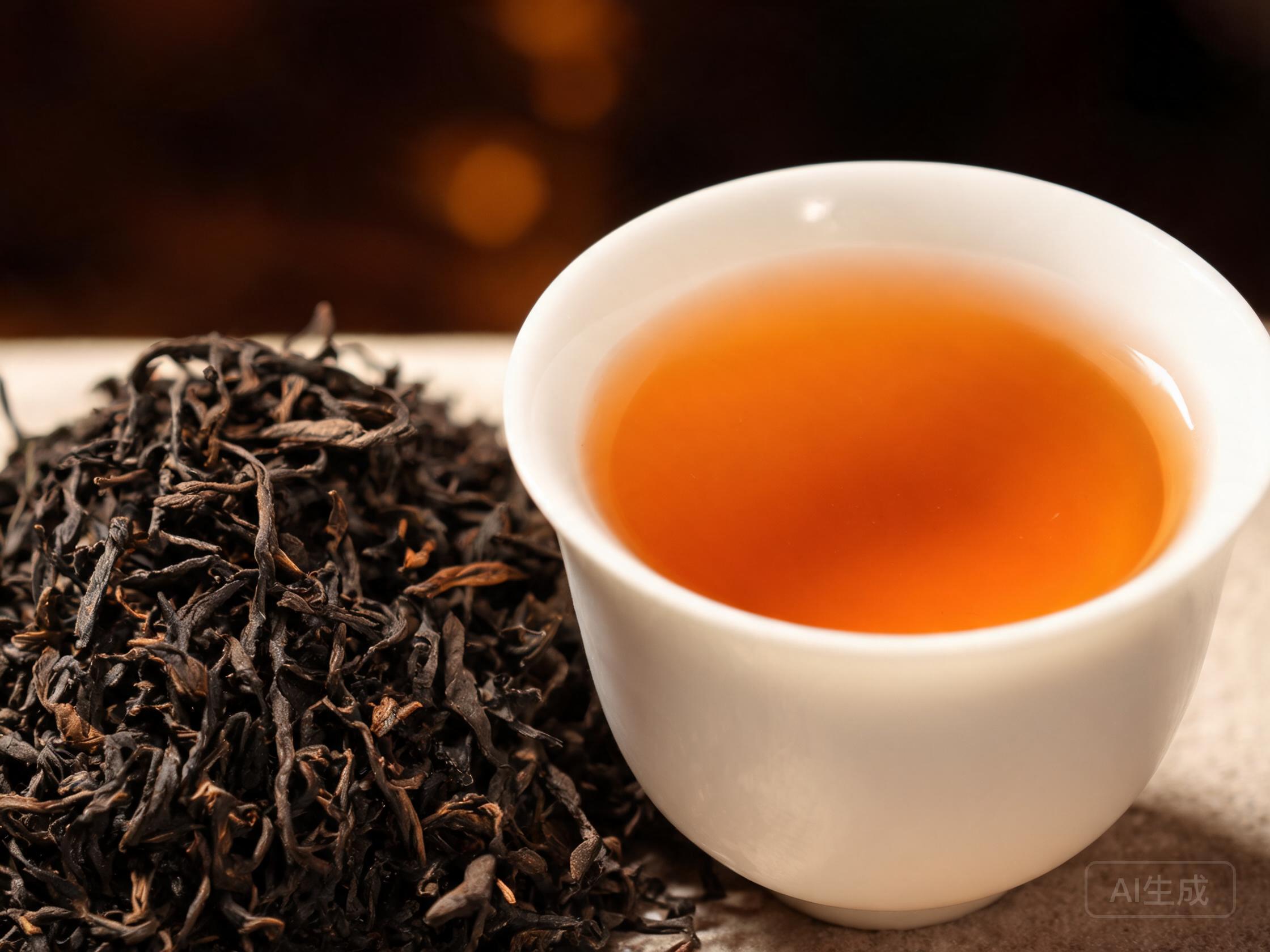
The liquor reveals oxidation and firing. A bright, clear, red-gold colour indicates full oxidation and a clean fire; a dull or cloudy liquor indicates under-oxidation, over-firing or a dusty batch. Clarity is a more reliable signal than depth of colour.
The aroma reveals the firing and the leaf. A Keemun should show cocoa and orchid, a Lapsang pine smoke, a Dianhong malt and honey. The assessment is for type, intensity, purity and persistence, and purity is where most faults appear: a smoky or tarry note in an unsmoked tea is a defect.
The taste reveals everything at once and is hardest to score. Sweetness, body, astringency and finish are judged together, and the balance between them is what separates a good tea from a merely correct one.
The infused leaf reveals consistency. An even coppery colour across the pieces means the batch oxidised evenly; a patchwork of green, copper and brown means it did not, and the cup will taste muddled as a result.
- The dry leaf cannot predict the cup, only the pick.
- Clarity of liquor is a better signal than depth of colour.
- Purity of aroma is where most faults show up.
- Taste is the hardest factor and carries the most weight.
- An uneven infused leaf means uneven oxidation.
Common faults the method catches
| Fault | Where it shows | Likely cause |
|---|---|---|
| Smoky note in unsmoked tea | Aroma | Contaminated drying or storage |
| Sour taste | Taste | Over-oxidation or damp storage |
| Dull, cloudy liquor | Liquor | Under-oxidation or dust |
| Green patches in the leaf | Infused leaf | Uneven oxidation |
| Thin body with harsh finish | Taste | Late picking or a coarse grade |
| Flat aroma throughout | Aroma | Old tea or a re-fired batch |
The table is the practical core of the review, because faults are easier to agree on than virtues. Two graders who disagree about how good a tea is will usually agree about whether it is smoky, sour or cloudy, and the fault list is therefore the most reliable part of the score.
A single fault does not necessarily fail a tea. A faint smokiness may be within the character of a Lapsang and a defect in a Keemun, and the standard’s descriptions distinguish between the two. The context of the claimed type decides whether a note is a feature or a flaw.
The equipment and why it is standardised
A tasting cup is a lidded porcelain vessel of about 150 millilitres, with a notch at the rim to pour through. The lid is used to hold the aroma after the liquor is decanted, and the same cup is used for every sample so that the vessel is not a variable.
The bowl is white inside so that the liquor can be judged against a neutral background. Colour judged against a coloured bowl is not comparable between sessions, which is why the trade insists on white.
The scale and the timer are the two instruments that make the method a review rather than an opinion. Three grams and five minutes are arbitrary numbers, and their value is that they are the same arbitrary numbers everywhere in the trade.
Water matters and is often overlooked. A hard water flattens aroma and dulls the liquor, a very soft water makes tea taste thin, and a chlorinated supply introduces a note that no tea can survive. A review done with poor water grades the water as much as the leaf.
The room matters less than the water and more than most people expect. Strong smells in the room, from coffee to cleaning products, will contaminate the aroma assessment, and a professional tasting room is deliberately plain and unperfumed.
Why the score and your preference diverge
The review rewards conformity. A tea that matches the written description of its grade scores well, and a tea that is unusual in an interesting way may score badly because it does not match. The method is built to sort batches, not to find pleasures.
It also rewards intensity, because a five-minute infusion extracts heavily and a strong tea shows better than a delicate one. A subtle, light-bodied red tea that drinks beautifully at three minutes can look thin and harsh under review conditions.
That is not a flaw in the method; it is what the method is for. A wholesaler needs a repeatable comparison across hundreds of batches, and a drinker needs a cup they enjoy. The two questions are related and not identical, and a drinker who understands the difference can use professional scores as information without treating them as a verdict.
The practical use of the method for a home drinker is the discipline rather than the score. Weighing the leaf, timing the infusion and looking at the wet leaf will teach more about a tea in three sessions than a year of casual brewing.
One more practical note is worth adding about repetition. A grader who assesses twenty samples in a morning loses sensitivity, and the trade’s answer is to taste the reference sample again at the end of the session. If the reference has changed, the scores given earlier are suspect and the session should be treated as unreliable.
A home drinker can borrow the same discipline cheaply. Keep one tea you know well beside the one you are judging, taste them in the same session with the same water, and compare rather than assess in the abstract. Comparison is far easier than absolute judgement, and it is what the professional method is really doing.
Frequently asked questions
What are the five factors?
Dry leaf, liquor colour, aroma, taste and infused leaf.
Which factor matters most?
Taste, then aroma. Appearance carries a minority of the score.
How long is the infusion?
Usually five minutes in a formal review, which is longer than drinking strength.
Why weigh the leaf?
Without a fixed ratio the result cannot be compared with anything.
What does cloudy liquor mean?
Under-oxidation, over-firing or a dusty batch.
Why might a good tea score low?
The method rewards conformity and intensity, not subtlety or pleasure.