- What changes and when
- Why red tea does not age like pu-erh
- What the chemistry actually does
- How to spot old stock
- The exception worth knowing
- How to store it to slow the decline
- Frequently asked questions
- Does red tea improve with age?
- Why is red tea different from pu-erh?
- What is the best window to drink it?
- How can I tell old red tea?
- Should I store red tea in the fridge?
- Is aged red tea ever worth buying?
Red tea peaks within six to twelve months of making and declines steadily after two years. Unlike pu-erh, it has no microbial or enzymatic process left to develop, so nothing improves in the tin; the aroma volatiles escape, the lipids oxidise and the cup goes flat. Ageing red tea is not a craft, it is a slow loss.
The exception is real and narrow. A few heavily fired, tightly rolled teas from strong-leaf gardens hold up for several years and change in a way some drinkers prefer, and a small market has grown up around them. That market is not the general case.
The practical consequence is that a harvest date on a red tea is more useful than on almost any other class, because it tells you how much of the decline you are buying. The difference between this spring’s Keemun and last year’s is larger than the difference between two adjacent grades.
What changes and when
| Stage | Aroma | Liquor | Taste |
|---|---|---|---|
| Under 3 months | Fresh, sometimes green | Bright red-gold | Lively, slightly sharp |
| 3 to 12 months | Full and integrated | Deep red-gold | Peak balance |
| 1 to 2 years | Flattening | Slightly dull | Still pleasant, less complex |
| 2 to 4 years | Papery | Dull | Thin, with a dry finish |
| Over 4 years | Little left | Brownish | Flat and woody |
The first three months are a settling period rather than a peak. A very fresh red tea can carry a green or slightly sharp edge from the firing, and a few weeks in a sealed tin rounds it off. The trade sometimes calls this resting the tea, and it is a genuine if modest effect.
Between three and twelve months the tea is at its best. The aroma has integrated, the body has filled out, and the firing edge is gone. This is the window a producer wants the tea drunk in, and it is the window most retail tea misses because of shipping and shelf time.
After a year the decline begins in the aroma and shows in the liquor last. A two-year-old red tea can still look handsome in the cup and taste merely ordinary, which is why colour is a poor guide to age in this class.
Why red tea does not age like pu-erh
Pu-erh is aged raw or as a wet-piled tea with live microbial activity, and the microbes continue to transform the leaf for decades. Red tea is fully oxidised and then fired dry, which leaves no substrate for that kind of transformation.
The difference is the fire. Red tea is dried at a temperature high enough to denature the enzymes that drive oxidation, which is the point of the process. Once those enzymes are gone, the chemistry that remains is slow oxidation by air, and that is decay rather than development.
Storage conditions change the speed and not the direction. A cool, dry, dark, airtight tin slows the decline; heat, light and moisture accelerate it. Nothing reverses it, and no storage regime turns a two-year-old red tea into a better one.
What the chemistry actually does
The essential oils that carry a red tea’s aroma are volatile and slowly escape through any packaging that is not airtight. Aroma therefore falls first and fastest, and it falls even in a sealed tin, because the tin itself is not a perfect barrier over years.
The lipids in the leaf oxidise, producing the papery and slightly rancid note that characterises old tea. This is the same reaction that turns old cooking oil, and it is accelerated by heat and light, which is why a tin on a sunny shelf ages faster than one in a cupboard.
The polyphenols continue to condense slowly, which darkens the liquor and softens the astringency. A very old red tea can taste smooth and be entirely without interest, because the compounds that gave it structure have combined into larger, less soluble forms.
The amino acids decline more slowly, which is why an old red tea does not turn bitter in the way an old green tea does. It goes flat rather than harsh, and the flatness is easy to mistake for smoothness by a drinker who is not comparing.
| Compound | Change over two years | Effect on the cup |
|---|---|---|
| Essential oils | Escape and oxidise | Aroma fades first |
| Lipids | Oxidise | Papery, slightly rancid note |
| Polyphenols | Condense | Darker liquor, softer body |
| Amino acids | Decline slowly | Less savoury depth |
| Caffeine | Stable | No change |
How to spot old stock
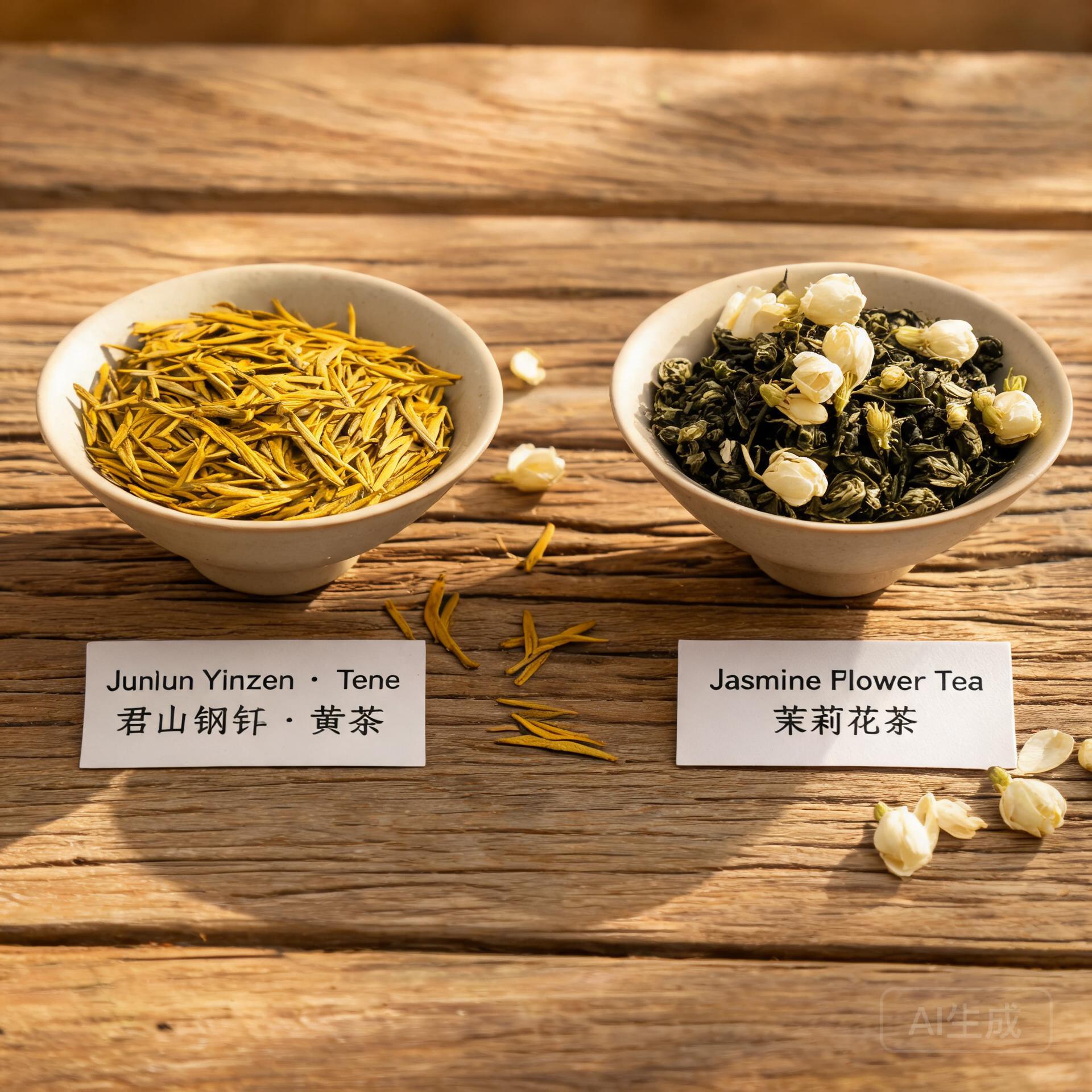
Look at the dry leaf. Fresh red tea has a glossy, slightly oily sheen from the essential oils; old leaf looks matte and dusty, and the golden tips dull to a brownish yellow.
Smell it twice. The top note of an old tea can be revived by re-firing, but the base note cannot, and a base of paper or dust is decisive. A tea that smells of nothing at all is old rather than subtle.
Brew it and look at the second infusion. Fresh red tea holds its body into the third or fourth steep; old tea collapses at the second, and the drop is steeper than the colour suggests.
Check the packaging for a date and treat its absence as information. A producer selling a perishable product without a date is either careless or hoping you will not ask, and both are reasons to look elsewhere.
- A glossy sheen on the dry leaf means fresh oils remain.
- A matte, dusty leaf means the oils have gone.
- The base note cannot be revived by re-firing.
- Fresh tea holds body into the third infusion.
- A missing date is itself a signal.
The exception worth knowing
A small number of heavily fired red teas from strong-leaf gardens do hold up, and some drinkers prefer them at three or four years. The firing sets the leaf harder, the roll is tighter, and the decline is slower and shallower.
Some Wuyi red teas and a few traditional Fujian congous fall into this group, and so do a handful of old-style Yunnan productions. They do not improve in the way pu-erh improves; they decline more slowly and settle into a different character, woodier and less aromatic.
The distinction matters because the market has begun to sell ageing as a general virtue. A tin described as aged red tea is usually an old tin with a story attached, and the story is worth what the cup says it is worth.
How to store it to slow the decline
An airtight tin, opaque, in a cool dark cupboard, away from anything with a smell. That is the whole method and it is enough for the year or two in which a red tea is worth drinking.
Refrigeration is a bad idea for red tea. The cold does slow the oxidation, and the condensation that forms every time the tin comes out is worse than the slowing is good. A red tea kept in a fridge will usually smell of the fridge within a season.
Buying in smaller quantities is the most effective storage decision available, because a tea drunk in three months does not need to keep. Two hundred grams bought twice is better than four hundred bought once, even at a slightly higher price per gram.
None of this suggests a red tea goes bad in a food-safety sense. A five-year-old red tea is not dangerous, it is merely dull, and it will still make a decent milk tea or a cooking liquid. The loss is pleasure rather than safety.
The one habit worth adopting is to buy from a shop that turns its stock. A merchant who sells red tea quickly will have fresh tea on the shelf, and a merchant with dusty tins at the back has probably had them there for years.
One further distinction is worth making, between age and vintage. A tea made in a bad year can be worse at six months than a good tea at eighteen, because the quality of the raw leaf dominates the first year of decline. This is why a date alone does not predict the cup, and why a date plus a garden does.
The same asymmetry explains why producers rarely age red tea deliberately. The upside of holding stock is small and the downside is steady, and a business that holds tea for three years to sell it at a premium has to beat the decline before it starts making money. Very few do.
Frequently asked questions
Does red tea improve with age?
No. It peaks within a year and declines after two.
Why is red tea different from pu-erh?
Red tea is fully oxidised and fired, so no microbial activity remains to develop it.
What is the best window to drink it?
Three to twelve months after making.
How can I tell old red tea?
A matte dusty leaf, a papery base note, and a collapse at the second infusion.
Should I store red tea in the fridge?
No. A cool dark cupboard in an airtight tin is enough.
Is aged red tea ever worth buying?
Rarely. A few heavily fired teas hold up; most aged stock is simply old.